
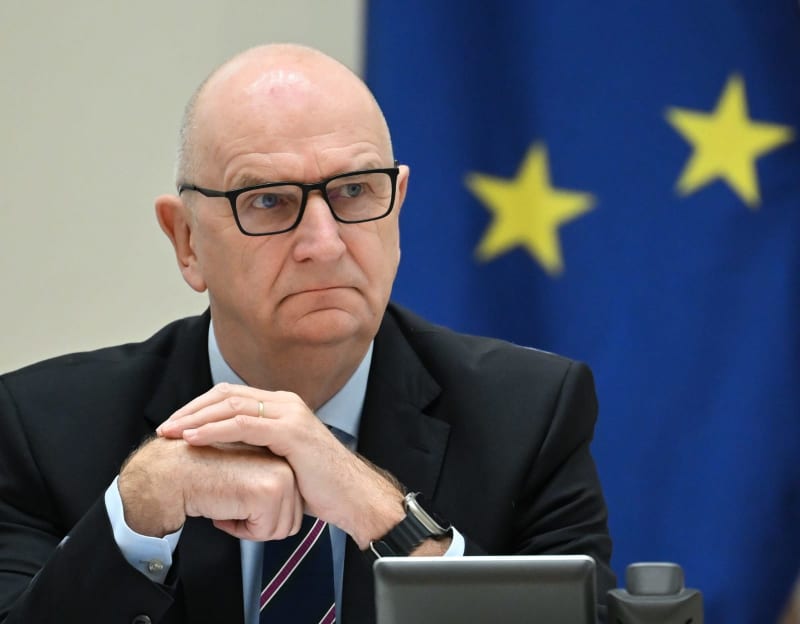
The premier of the German state of Brandenburg, Dietmar Woidke, has urged the federal government to provide greater relief for industry through lower electricity costs or face a major threat to its transition to renewable energy.
“We are currently facing the biggest problems in energy-intensive sectors affected by the transformation, such as the steel, chemical and pharmaceutical industries,” Woidke told dpa this week.
“The central challenge for the federal government is therefore to reduce electricity prices,” said the member of the centre-left Social Democrats (SDP), one of the three partners in the coalition government of Chancellor Friedrich Merz.
This would provide security for investments, Woidke said with a warning: “If we don’t manage to reduce electricity prices, the transformation in Germany is in danger of failing.”
Germany is working towards a climate-neutral economy in which, on balance, the atmosphere is no longer polluted by climate-damaging gases. This entails a shift from coal and gas to renewable energy sources.
On Tuesday, the European Commission approved more state aid for energy-intensive industries. The steel and chemical industries, which are already supported, will also be able to receive more state funding.
Specifically, companies will be indirectly relieved of the costs of CO2 emissions trading, which Woidke welcomed.
So far, the government’s measures are on track, for example with the industrial electricity price and the reduction in grid fees, said the politician. “But further steps are needed.”
Competitive electricity prices are necessary, even without subsidies, he argued. Wind turbines should only be built where the electricity can be used and it must be possible to use the electricity regionally, he added.
The expansion of renewable energies is possible through low electricity prices in his and other German states and for business and industry, said Woidke. “However, there are still legal regulations that partially prevent this.”
Economy Minister Katherina Reiche has announced that a state-subsidized, lower industrial electricity price is due to be introduced on January 1, 2026.
The grid fees for private households and businesses, which are part of the electricity price, are also set to fall.
In regions with a high proportion of renewable energies, such as in the north of the country, these fees are often higher than in the south.