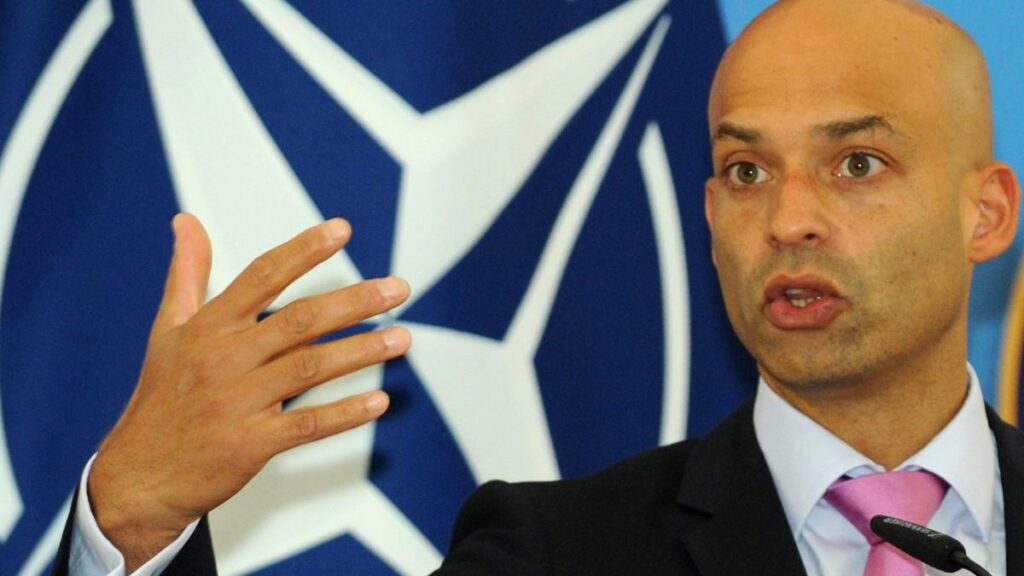
Top Nato official James Appathurai warns Russia’s ‘pre-war’ aggression against the West is increasing
Nato is preparing for “generations-long” hostilities with a Russian state “intent” on invading European nations in the near future, a top alliance official has told The i Paper.
James Appathurai is leading Nato’s mission to develop technology to defend the alliance’s members against hybrid warfare. He warns Russia’s “pre-war” aggression against the West is increasing.
“The number of assassinations and assassination attempts has gone up, the amount of sabotage has gone up to damage critical infrastructure, underwater pipelines, and cables,” he said. “We find ourselves in a sort of boiling frog situation in which we’re getting used to it”.
His stark warning for the UK is that we are dealing with a Russia that is military focused and determined on expanding further into Europe.
“We just need to get stronger, and the way to defend ourselves is to be strong so Russia doesn’t attack,” he said. “That’s the bottom line.”
When asked if a peace deal for Ukraine would ease tensions with Moscow, he recalled a face-to-face meeting he had with Vladimir Putin at the Kremlin in 2009.
While sat at one end of Putin’s infamously long table, the Russian President opened the meeting by telling him and the then-Nato Secretary General, Anders Fogh Rasmussen, “I want Nato to disappear”.
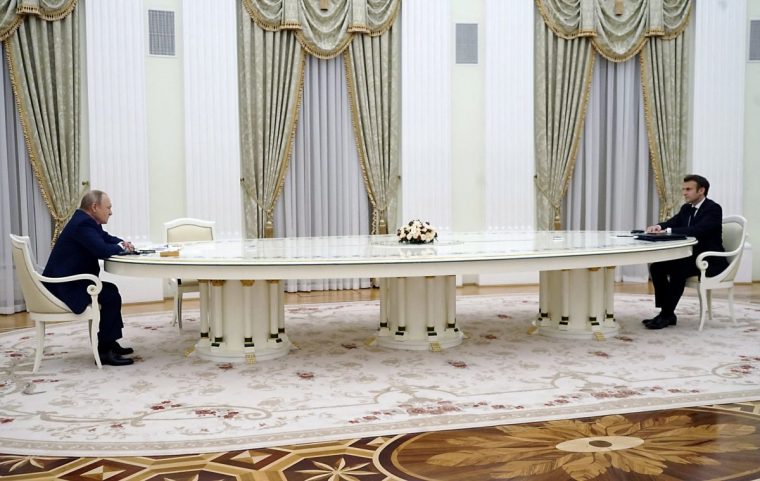 The Kremlin’s famed long table has often set the scene for diplomatic showdowns. (Photo: Sputnik/ AFP)
Appathurai recalled that the Secretary General responded by telling Putin “that’s unfortunate, because I’m going to make it stronger”.
Speaking to The i Paper the Nato official said Putin “wasn’t subtle then, and he isn’t subtle now about what he wants.”
A generations-long fight
His comments come amid a series of sobering speeches from UK military and intelligence chiefs about the growing prospect of all-out war between Russia and Europe.
Earlier this month, Nato secretary-general Mark Rutte said “conflict is at our door” as he told European leaders to prepare for “the scale of war our grandparents or great-grandparents endured”
Rutte’s warning that Nato allies are the “next target” for Russia came days before the new head of MI6, Blaise Metreweli, said Moscow’s growing threat means that the “front line is everywhere”.
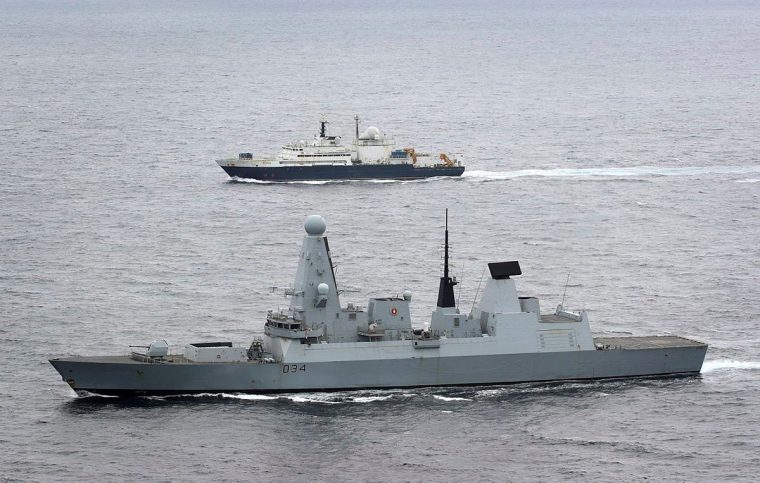 The Royal Navy’s HMS Diamond, foreground, shadowed a Russian spy ship, the Yantar, in 2021 (Photo: MoD)
According to Europol’s 80-page serious and organised crime threat assessment for 2025, there has been an increase in cyber attacks, criminal network activity and clandestine operations designed to destabilase infrastructure, that have originated “from Russia and countries in its sphere of influence.”
The Ministry of Defense (MoD) claims that hostile intelligence activity against the department has risen by more than 50 per cent in the past year alone.
Appathurai was recently responsible for a Nato unit dedicated to combating the growing threat from Russia’s hybrid warfare and was involved in updating the alliance’s strategy to track and deter “grey-zone attacks” against the West.
He welcomed the recent language from chiefs in Nato and the UK, and urged European leaders to “keep the foot on the gas”.
“What we see is a greater sense of urgency and a shorter time frame to get there, and that’s driving this language,” he said. “You will continue to hear our political leaders and officials sounding the alarm so that we can keep the pressure up and make sure we have the defences we need in time.”
He added that allies need to “build resilience” and “put pressure” on Russia to show the continent is willing to call-out and respond to Russian aggression and prepare for a potential conflict in “three to five years”.
Putin has dismissed such talk as “hysteria”, telling Moscow’s defence officials: “I’ve said it repeatedly – it’s a lie, nonsense, pure nonsense, about some imaginary Russian threat to European countries”.
But Appathurai says allies must be alert. Russia has moved to a war time economy and is teaching its future generations and fighters that the West is an enemy.
“We face generations-long hostility with state intent on expansion into Europe,” he said.
Appathurai recently took over as interim Managing Director of Nato’s new unit, Defence Innovation Accelerator for the North Atlantic (DIANA) – it’s purpose is to find and fund advanced technology from start-ups to help keep the Alliance secure.
He says this is a race with Russia, who are introducing new technology on a two to 12 week cycle – far outmatching the alliance who have a “fundamental improvement” to make when it comes to innovation.
“Everybody in the system wants it to work faster and better, and they know how to make it work faster and better.
“They just needed political support to kind of ram it through”.
‘Trump is right – Europe is rich enough to defend itself’
Donald Trump’s second term in the White House has shattered long-standing US assurances for Nato and European security.
The US President has consistently criticised European allies for spending too little on defence. Republican lawmakers have even pushed forward a bill urging the US to formally withdraw from Nato, claiming it places financial and diplomatic burdens on the country while labelling the alliance as a “Cold War relic”.
Trump’s rhetoric against the decades-long alliance has pushed members to pledge to spend 5 per cent of their economic output on defence spending.
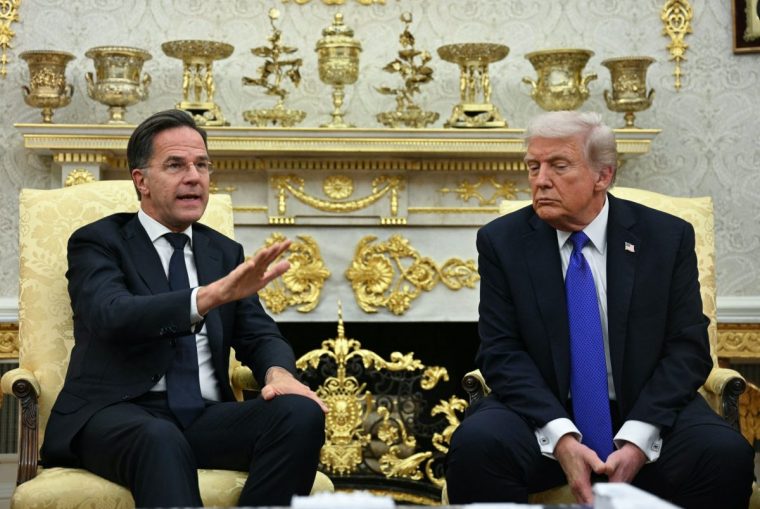 US President Donald Trump meeting with Nato Secretary General Mark Rutte in the White House (Photo: Jim Watson)
It’s a move welcomed by Appathurai, he said: “Trump is right”, and while Europe will still need US support, Washington will no longer foot 80 per cent of the Continent’s defence bill.
“Europe is rich enough to defend itself,” he said. “We need to make this transition, we need to do it fast. Europe needs to step up, Canada too… I think it can be done as long as we keep the pedal down.”
War after peace
US envoys have been locked in intense negotiations with Ukrainian officials over a peace plan for Ukraine. After an initial proposal which was heavily criticised for favouring Moscow’s conditions, US officials indicated they were ready to offer Ukraine guarantees modelled on Nato’s Article 5 clause of mutual protection.
Whatever conditions are hammered out, Appathurai warned that an end to the conflict will not result in an end to Moscow’s aggression.
“When there’s a ceasefire, there will be those who come out and say now we can relax. There will be those who say, ‘Why should we spend money on defence, We have other priorities, It’s peace’… and this is a narrative we have to fight back,” he said.
Appathurai warned that a Russia, no longer locked in a war of attrition with Ukraine, would have more resources and energy to “dial up” hybrid aggression against the West, and urged European leaders to keep building up defences.
“By the time you’re sure you need to run, it’s too late to run,” he said. “We cannot find ourselves in that situation.”