
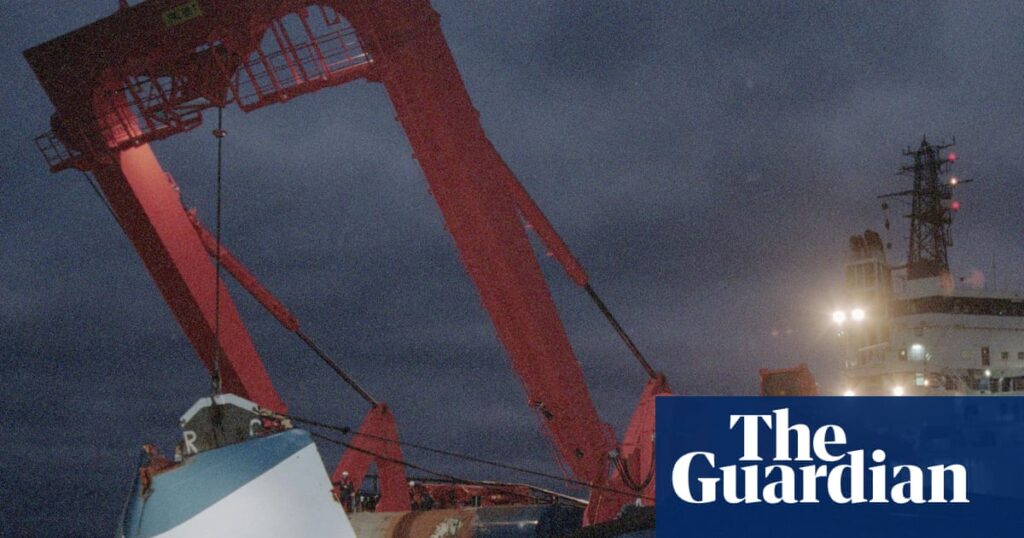
The sinking of the Estonia ferry more than 30 years ago was caused by the failure of its bow section, not an explosion or collision as claimed by some, authorities have said, in a report aimed at finally closing the case on Europe’s worst civil maritime disaster since the second world war.
“The MV Estonia sank as a result of the collapse of its bow construction,” Estonian, Swedish and Finnish investigators said. “There is, therefore, no reason to start a new full-scale … investigation of the accident.”
On the night of 28 September 1994, the roll-on, roll-off ferry sank in the Baltic Sea during a storm, claiming the lives of 852 people.
An official investigation in 1997 concluded that the ferry’s bow shield had failed, causing rapid flooding and sending the vessel to the bottom.
But alternative theories have continued to propagate and in 2020, video from a television documentary showed hitherto unseen holes in the ship’s hull, prompting authorities to take a fresh look at the disaster.
The report, which was based on six separate examinations of the wreck site, interviews with survivors, modelling and technical analysis, concluded that the damage to the hull was caused by rocks on the sea bottom.
“The inspections do not reveal any signs that the MV Estonia collided with any other vessel or object during its voyage,” the investigators said. “Nor are there any signs that an explosion occurred on the ship.”
A preliminary report in 2023 blamed rocks for the holes in the hull. It also concluded that the ferry was not seaworthy at the time of its final voyage.