
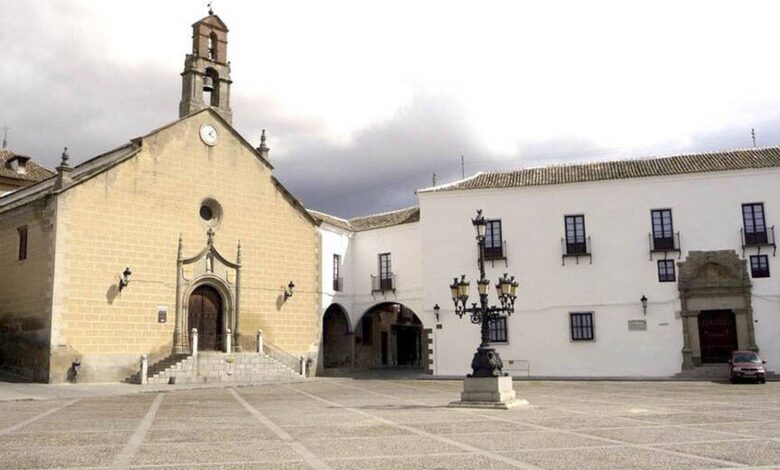
Spain is home to places where time seems to stand still, preserving the legacy of past centuries untouched. Nestled between the Tajo River valley and the Castilian plateau lies a town that has recently added a new distinction to its rich historical and cultural heritage. Its ancient streets, stately houses, and a central square that forms the heart of local life create a unique atmosphere that truly deserves attention.
We are talking about La Puebla de Montalbán, located in the province of Toledo. This town proudly hails as the birthplace of Fernando de Rojas, author of ‘La Celestina’—one of the greatest works of the Spanish Renaissance. Its recent inclusion in the prestigious 2026 ‘Magic Towns of Spain’ network shines a spotlight on its vibrant historic centre, where literary traditions are seamlessly woven into daily life. The main square, Plaza Mayor, with its picturesque arcades, is the ideal starting point for exploring this town steeped in history. Many consider it one of the most beautiful in Castilla-La Mancha.
A journey through its historical heritage begins right from the main square. From here, you can explore landmarks such as the Palace of the Dukes of Osuna, whose Plateresque façade and unique ceilings combine Mudéjar, Gothic, and Renaissance elements to stunning effect. Passing through the Arco de la Manzanilla, visitors find themselves in a maze of ancient streets. Religious architecture enriches the cityscape: the Church of Nuestra Señora de la Paz, the Monastery of Nuestra Señora de la Concepción, and the former Franciscan monastery. Towering over all this is the imposing San Miguel tower— the only remnant of the church that once stood here.
Fernando de Rojas holds a special place in the city’s cultural life. The Celestina Museum is dedicated to him and his immortal work, celebrating both the author and the traditional way of life in the municipality. The exhibition explores his literary legacy, the historical context of his era, and the collective memory of the townspeople. This cultural connection comes to life every August, when the Celestina (Spain of Rojas) Festival becomes one of the province’s most important cultural events. All of it is framed by a striking natural landscape, where the fertile Tajo valley gives way to vast grain fields on the plateau, making a visit to this ‘magical city’ truly unforgettable.
Incidentally, Fernando de Rojas was a Spanish lawyer and writer who lived at the turn of the 15th and 16th centuries. His only known work, the “Tragicomedy of Calisto and Melibea,” better known as “La Celestina,” became a cornerstone of Spanish literature. Written in dialogue form, the book is seen as a transitional piece between the Middle Ages and the Renaissance. It explores themes of passion, deception, and the tragic consequences of human vice. Due to its explicit content and critique of societal morals, “La Celestina” was controversial for a long time, but its influence on later Spanish and world literature cannot be overstated.