
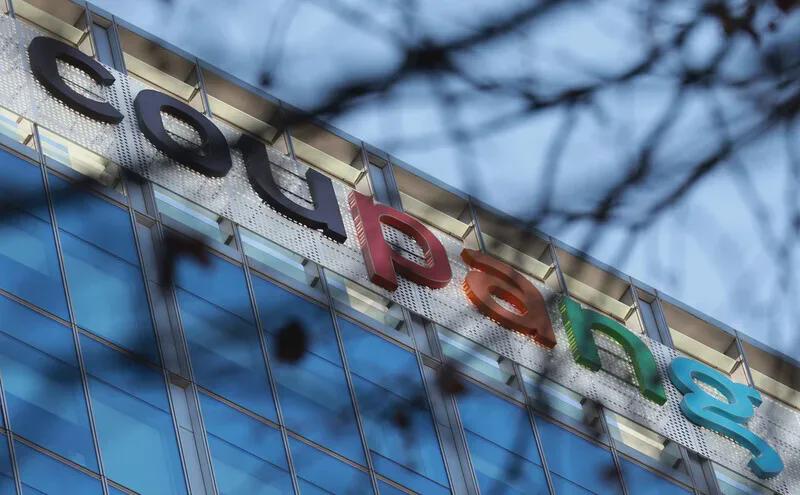
Two essential symbols of US politics stand on Pennsylvania Avenue, the diagonal street that cuts through Washington, DC: the White House and the US Capitol. E-commerce giant Coupang’s Washington office is situated somewhere in between. A magnificent ribbon-cutting ceremony for the office was held on Dec. 9.
When the new office’s location, size and facilities became public, many people wondered why a company that primarily focuses on the South Korean market would build such a big office in the middle of the US capital. The answer to that question is becoming clearer following Coupang’s massive data breach incident.
There is a pattern for Washington influence campaigns. A lawmaker puts out an opinion piece in defense of a certain “threatened” group to slam those who are “oppressing” them. Think tanks publish reports that bolster said opinion. New media, as opposed to traditional media, spread the word through online articles. The problem is now framed as one that concerns not just the well-being of a certain group, but of the interests and values of the US as a country.
This was the pattern followed by conservative Christians presumably tied to the Unification Church ahead of the first summit between Lee Jae Myung and Donald Trump, when the religious group found the walls closing in around it amid a special counsel probe into alleged corruption and influence-peddling by Korea’s former first lady. Now, we’re seeing the same moves from Coupang.
Rep. Darrell Issa, a member of the Republican Party and the House Judiciary Committee, published an opinion piece in the right-wing outlet the Daily Caller called “American Business Demands a Strong US Response.” In the piece, Issa claimed that the South Korean government was discriminating against American businesses, using Coupang as an example.
Steve Cortes, a political commentator and stalwart Donald Trump supporter, has also railed against South Korea and its “betrayal” of American companies. Real America’s Voice, a right-wing streaming and television channel, has also echoed the same sentiments.
Former senior officials also appear in this scheme. Much like how Mike Pompeo, who served as the US secretary of state and as the director of the Central Intelligence Agency during Trump’s first term, released a piece to condemn the investigation into the Unification Church, former White House national security adviser Robert O’Brien has also decided to speak out against perceived unfairness.
O’Brien, who currently heads the American Global Strategies consulting firm, essentially speaks on behalf of the US Computer and Communications Industry Association — which Coupang belongs to — and has long opposed South Korea’s Online Platform Regulation Act, which aims at regulating tech firms like Coupang.
Sometimes, supposedly “American businesses” like Coupang successfully manage to bully South Korea by leaning on US power. The joint fact sheet released on Nov. 14 delineates issues agreed upon during the South Korea-US summit, including the promise that the US and South Korea “commit to ensure that US companies are not discriminated against and do not face unnecessary barriers in terms of laws and policies concerning digital services, including network usage fees and online platform regulations.”
This move appears to scrap one of the provisions regulating monopolies included in the Online Platform Regulation Act. The act in question aims to prevent unfair practices such as bundling through the designation of certain large-scale platforms. Many US-based companies have campaigned long and hard for that act to be abandoned.
Will Washington’s influence campaign save Coupang from the mess it’s currently in? While all kinds of outlets are having a field day with the current situation, the Coupang debacle hasn’t been touched upon in official governmental lines of communication between South Korea and the US.
Mass data breaches are issues that the US does not take lightly, meaning that the circumstances are very different from when the Online Platform Regulation Act sought to introduce unprecedented regulations.
https://english.hani.co.kr/arti/english_edition/english_editorials/1236734.html
Posted by coinfwip4
1 Comment
>This was the pattern followed by conservative Christians presumably tied to the Unification Church ahead of the first summit between Lee Jae Myung and Donald Trump, when the religious group found the walls closing in around it amid a special counsel probe into alleged corruption and influence-peddling by Korea’s former first lady. Now, we’re seeing the same moves from Coupang.
Do Americans even realize that this so-called “Christian church” is the Unification Church, aka the Moonies? They call themselves Christian, but mainstream Christian denominations don’t recognize them, and they’re widely considered a cult. Former members and courts (especially in Japan) have documented coercive fundraising and psychological pressure used to drain members financially.
This group also has a long track record of political meddling in South Korea, Japan, and the U.S. The late Japanese Prime Minister, Shinzo Abe, wasn’t a member of the church, but he was assassinated by the son of a woman whose family was financially ruined by donations to it, and the motive was Abe’s perceived political support for the organization.
The Moonies were also closely tied to South Korea’s past military dictatorships under Park Chung-hee and Chun Doo-hwan, receiving protection and favors. For decades, they’ve used religion to extract money from followers and then turn that money into political influence across multiple countries. In my opinion, they really should be stripped of the religious group status and should be forced to pay taxes to the state. They are a business (in the business of defrauding their members using religion), a group heavily involved in politics supporting Yoon Suk Yeol, who showered favours on the church in return for bribes. Something is rotten in Denmark that they are still allowed to operate as a legitimate religious entity for this long, over 70 years.