
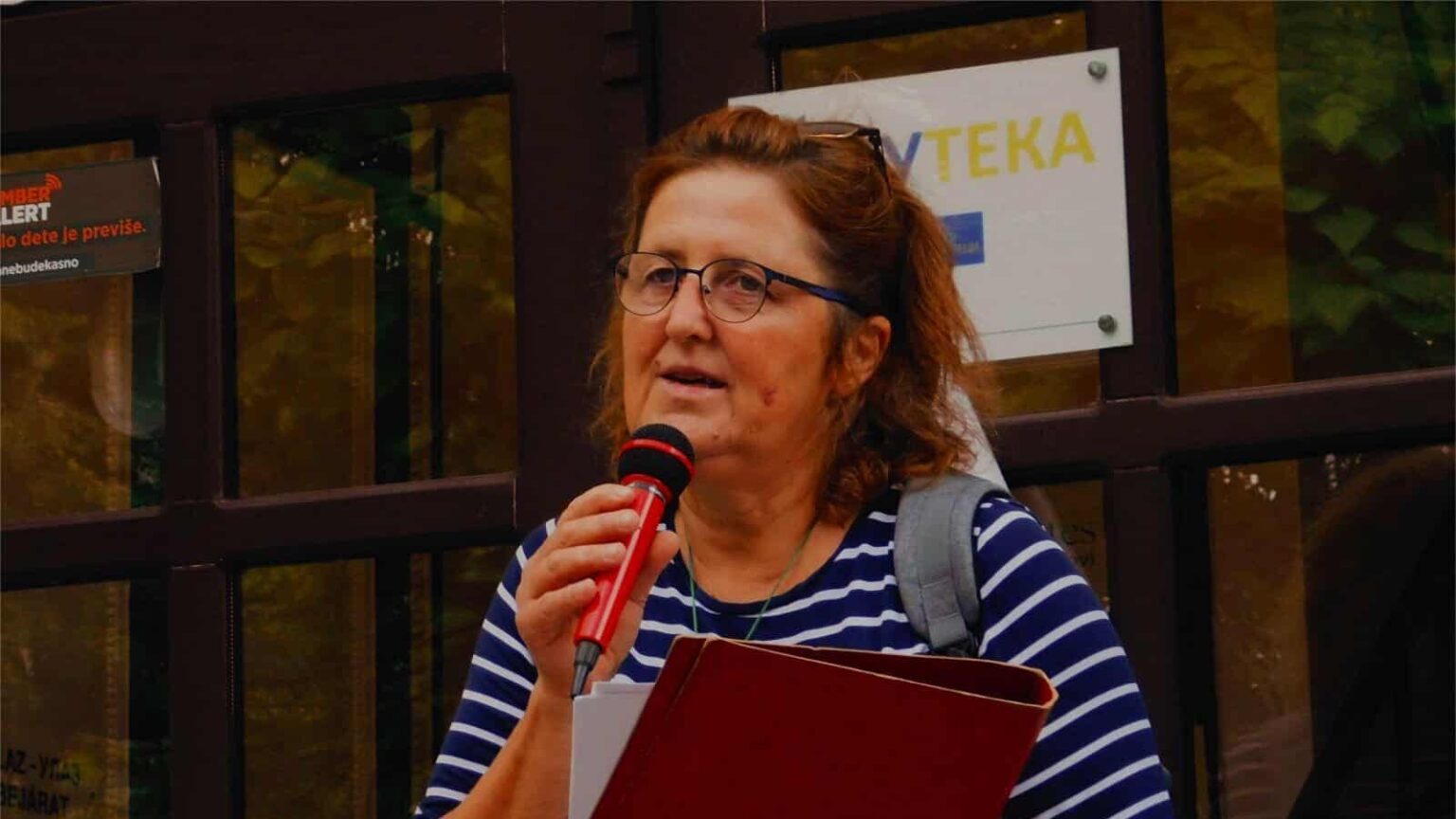
Marking the most significant challenge yet to the ruling party’s 13-year grip on power, the protests have been led by students but encompassed swathes of Serbian society, often pitting employees against employers either directly controlled by the ruling party or beholden to it for public contracts or favours.
Schools were on the frontline, as Marko Milivojevic found out when, like Beszedes, his contract as a primary school history teacher was not renewed. Milivojevic worked in North Mitrovica, a part of northern Kosovo predominantly populated by ethnic Serbs and where public services are largely controlled and financed by Serbia despite Kosovo’s 2008 secession.
His crime? Taking part in regular 16-minute silent vigils for the victims of the railway station tragedy.
“As not many people came, everyone knew who participated,” Milivojevic told BIRN. “Each time we stood in silence, local media reported and it simply could not stay hidden. Nor did I want to hide.”
He said there was “no other reason” for the school not to renew his contract, or that of another colleague who also took part in the vigils. Milivojevic said the only reason he did not have a fixed contract, but only a 12-month agreement, was that he had spent years resisting pressure to attend SNS rallies or vote for SNS-backed candidates in elections in Kosovo.
Support for the students was never given as the formal reason for a dismissal, but some of those BIRN spoke to did offer evidence.
One, who was fired from the national airline, Air Serbia, cited emails from bosses complaining about posts the person had shared online in support of the protests, saying they were impacting the “working environment and discipline”.
“They literally do not allow you to express an opinion,” the person said. “I shared my opinions on my Instagram profile, which, by the way, is private.”
The person said Air Serbia cited their failure to send a sick note to the proper email addresses justifying an absence from work.
Air Serbia did not respond to requests for comment.
Private sector not immune