
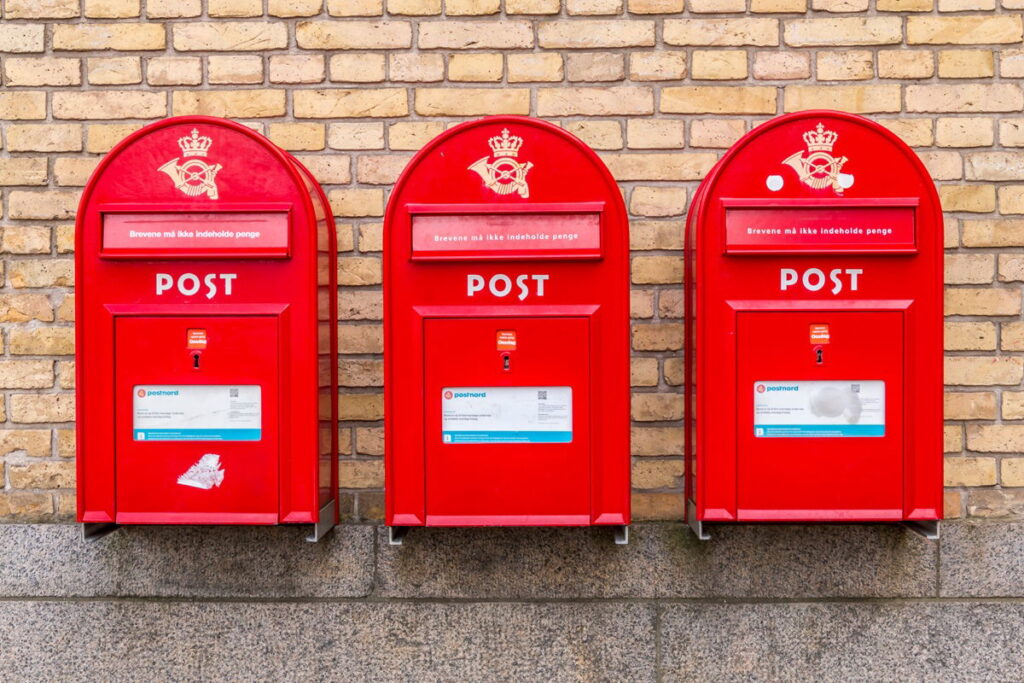
Denmark will end letter delivery after more than 400 years of postal service.
Credit : Karl Aage Isaksen, Shutterstock
For centuries, it was part of daily life. A letter in the post, a red mailbox on the corner, a delivery that arrived without anyone thinking twice about it. In Denmark, that routine is about to disappear.
From December 30, the country’s state postal service will stop delivering letters altogether, bringing an end to a service that dates back to 1624. After more than 400 years, PostNord says letter delivery has simply become unsustainable.
The announcement has been met with a mix of resignation and surprise. Not because people didn’t see it coming – but because of how final it feels.
Most Read on Euro Weekly News
Why Denmark decided to pull the plug
PostNord, which was created in 2009 after the merger of the Danish and Swedish postal services, has been warning for years that traditional mail is fading fast. Now the numbers have made the decision unavoidable.
According to the company, letter volumes have fallen by more than 90 per cent over the past 25 years. In today’s Denmark, paper mail has been pushed aside by digital communication. More than 90 per cent of the population now receives official documents online, whether it’s tax information, bank statements or government notices.
Keeping a nationwide letter delivery network running under those conditions no longer makes sense, PostNord says. From the end of the year, it will remove around 1,500 red postboxes from streets across the country and focus solely on parcel deliveries, which continue to grow thanks to online shopping.
The shift won’t be painless. Around 1,500 jobs are expected to be cut in Denmark. PostNord will still exist, but letter delivery – the service that defined it for generations – will be gone.
Private mail steps in, against the odds
For anyone in Denmark who still wants to send a letter, the solution will now be private. The company Dao is set to take over letter delivery, and it’s betting that mail isn’t quite as dead as many assume.
Dao expects its letter volumes to rise sharply, from around 30 million letters in 2025 to roughly 80 million in 2026. Even more surprising is where it expects that growth to come from: young adults aged 18 to 34.
While Denmark is often seen as a cashless, paperless society, Dao believes there is still space for physical mail – just not under the old model.
For the company, PostNord’s exit isn’t a warning sign, but an opportunity.
Could other countries follow Denmark’s lead?
Denmark’s move is already being closely watched elsewhere in Europe. Falling letter volumes are a shared problem, not a Danish exception.
In France, for example, the Cour des comptes warned in December 2024 that letter delivery now accounts for less than 15 per cent of La Poste’s revenue, compared with more than 50 per cent in 2010. According to regulator ARCEP, 82 per cent of French people send fewer than five letters a year.
Against that backdrop, the idea of reducing – or even ending – daily letter delivery regularly returns to the table.
Denmark may simply be the first country to accept what others are still debating: that the letter, as a public service delivered six days a week, no longer reflects how people communicate.
For most Danes, the change will barely affect everyday life. Messages arrive instantly, bills are digital, parcels still turn up at the door. But symbolically, it’s a big shift.
A service that survived wars, industrial revolutions and centuries of change has finally been overtaken by email and online portals. When the last red postbox disappears, it won’t just mark the end of letter delivery – it will mark the end of an era.
And it may not be the last country to say goodbye.
Stay tuned with Euro Weekly News for more news from Denmark