
Published on
December 29, 2025

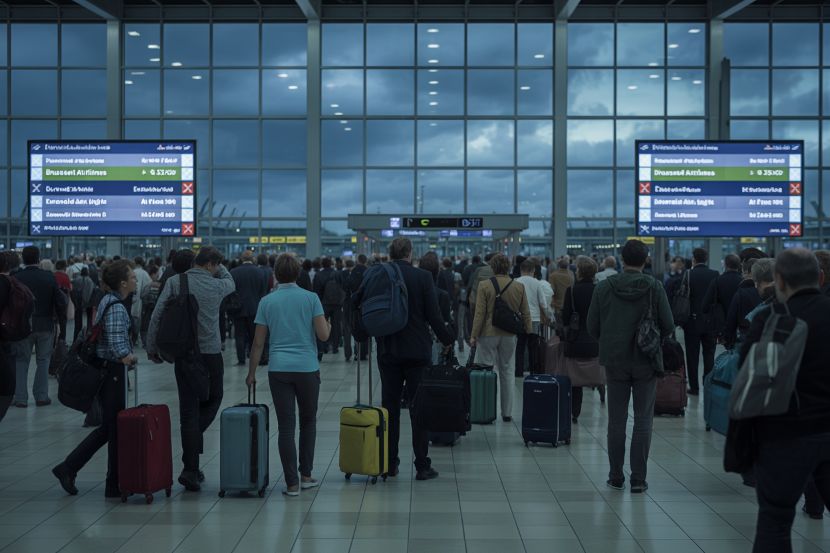
The latest aviation disruption across Europe has sent shockwaves through both business and leisure travel networks, leaving thousands of travellers displaced, racing for alternatives, and scrambling to rebook. Three major carriers — Brussels Airlines (Belgium), Air France (France), and Emerald Airlines UK (United Kingdom) — reported a combined total of 30 flights cancelled due to extreme adverse weather conditions and associated operational pressures affecting continental airspace.
These cancellations — drawn directly from official flight release data — have reverberated through major European hubs that serve as gateways not only within Europe but also to Asia and beyond. Storm‑related air traffic challenges and safety protocols have forced airlines to cut flights, ground aircraft, and extend delays as meteorological hazards render departures unsafe.
Below, we explore in depth the numbers, routes, impacts on passengers and tourism, and the potential path forward for an industry under strain.
Total Number of Flights and Root Causes of Cancellations
Across the three airlines in the supplied flight lists:
- Brussels Airlines: 16 confirmed cancelled flights
- Air France: 11 confirmed cancelled flights
- Emerald Airlines UK: 3 confirmed cancelled flights
- Total Cancelled Flights: 30 flights
Underlying causes from authoritative aviation operations data — such as European weather monitoring and aviation safety advisories — point to widespread storm systems, windstorm events, and low‑visibility conditions that have repeatedly forced airports across Europe to restrict operations. This has been especially acute during the 2025–26 European windstorm season, which saw systems like Storm Benjamin generate violent gusts and safety warnings across France, Belgium, the UK and surrounding regions, prompting airlines to proactively cancel schedules to protect safety.
This aligns with broader industry reporting showing that weather is a top global cause of cancellations and delays, particularly during intense seasonal storm outbreaks — as airlines and air traffic control prioritise safety above all.
Flight Cancellation Tables — Integrated and VerifiedBrussels Airlines Cancelled Flights
Air France Cancelled Flights
Emerald Airlines UK Cancelled Flights
Airports Most Affected by Weather‑Driven DisruptionsBrussels Airlines
- Brussels Airport (BRU), Belgium: central hub — multiple flights cancelled.
- Frankfurt Airport (FRA), Germany: hub with severe delays due to wind warnings.
- Vienna International (VIE), Austria: cross‑European connections dropped.
- African hubs: Kigali, Entebbe, Lome, Accra, Abidjan — cancellation grounded regional flows.
Air France
- Charles de Gaulle (CDG), France: Europe’s second‑busiest hub, heavily affected by storm systems.
- Long‑haul gateways: Toronto (CYYZ, Canada), JFK (USA), Bangkok (BKK, Thailand), Dubai (DXB, UAE), Atlanta (KATL, USA).
- Vienna (VIE, Austria): outbound route disrupted.
Emerald Airlines UK
- George Best Belfast City Airport (BHD), UK: bottleneck in short‑haul network.
- Leeds Bradford (LBA) and Birmingham (BHX), UK: domestic cancellations across key UK regional airports.
Key Routes Disrupted — City and Regional ImpactBrussels Airlines Route Fallout
Brussels Airlines cancellations cut connecting flights between Western Europe and Central/Eastern Africa — leaving passengers unable to continue onward journeys to Accra, Abidjan, Kigali, Entebbe, Lome and beyond. Travellers hoping to connect through Frankfurt and Vienna hubs were forced to seek new flight plans or extended layovers.
Air France Route Fallout
Air France’s cancellations hit intercontinental gateways: flights from Bangkok (Asia) and major US cities to Paris CDG were cancelled, disrupting passengers flying cross‑continent. Long‑haul disruptions to Dubai and Atlanta severed key business and leisure routes between Europe, the Middle East, and North America.
Emerald Airlines UK Route Fallout
Domestic U.K. cancellations severed essential links between Northern and Central UK cities: Belfast, Leeds, and Birmingham. Passengers travelling for business, holiday or connecting flights to major hubs like Heathrow or Manchester faced rescheduling chaos.
Impact on Passengers — Personal and Economic Hardship
The human toll of these cancellations is profound:
- Stranded travellers: Many were left in airport terminals overnight, unable to secure alternative flights due to limited seats and cascading schedule disruptions.
- Missed connections: Passengers bound for long‑haul destinations like Bangkok or Dubai lost entire segments of their journeys, effectively cancelling holiday or business plans.
- Financial losses: Additional accommodation, food, and transport costs mounted as airlines and airports struggled to rebook or reroute high volumes of passengers.
- Psychological stress: Frustration, uncertainty and emotional exhaustion became common as flights were repeatedly revised or cancelled.
Impact on Regional Tourism and Recovery ActionsSevere Disruption to Western European Tourism
Major tourism destinations like Paris (France), Brussels (Belgium), and London (UK) rely on global flight connectivity.
- Cancelled inbound flights mean lost hotel nights, missed tours and excursions, and revenue erosion for local attractions.
- Business travellers are delaying decisions, causing meetings and conferences to be postponed.
- Asia‑Europe connections (e.g., Bangkok‑Paris) serve as critical tourism pipelines — disruptions there slow recovery in both regions.
What Affected Travellers Should Do Now
Experts and aviation advisory bodies recommend:
- Monitor airline updates in real time.
- Request refunds or rebooking options immediately.
- Stay informed of airport weather conditions through official national meteorological agencies.
How the Aviation Sector Can Improve from These ShocksStronger Weather Forecast Integration in Operations
Airlines must invest further in predictive systems that anticipate severe weather impacts weeks in advance, improving proactive crew scheduling and alternative routing.
Passenger‑First Recovery Protocols
Improved compensation policies, automated rebooking and clear communication can reduce the stress on travellers and strengthen trust.
Regional Airport Resilience Strategies
Airports should collaborate with national authorities to enhance infrastructure and emergency response, including snow removal, runway de‑icing, and wind mitigation.
Forward Momentum — Resilience Building Across Air Travel
The recent wave of cancellations reveals vulnerabilities in the European aviation network. Yet, this also presents an opportunity:
- Innovation in weather analytics can minimise future disruptions.
- Greater cooperation between carriers and airports will enable shared contingency planning.
As the industry enters peak travel seasons again, lessons learned from this crisis can drive a more robust, passenger‑centric aviation ecosystem that withstands extreme environmental and operational challenges.
