
Published on
December 29, 2025

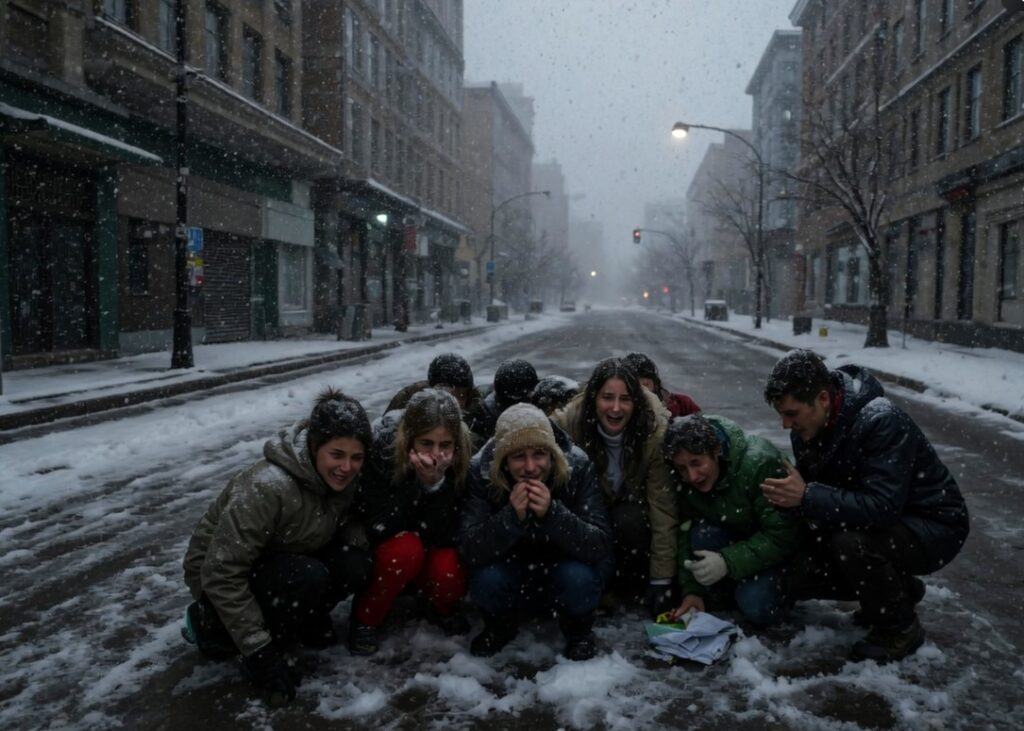
Europe’s Christmas celebrations in 2025 were accompanied by a barrage of winter storms that inconvenienced travellers and threatened infrastructure across multiple countries. In contrast to the mild weather expected in the United Kingdom, the rest of the continent faced heavy rain, snow and gale‑force winds, with many countries issuing official warnings that continued into early January 2026. The December storms were not merely scenic; they disrupted travel, caused flooding and avalanche hazards, and forced emergency services into high alert. The following section summarises how these storms affected travellers in Ireland, France, Switzerland, Italy, Spain, Sweden, Norway and other European destinations.
On 13 December 2025 a deepening low‑pressure system approached Ireland, and Met Éireann’s hydrology unit issued a detailed commentary. The service warned that a weather front would sweep heavy rain across Ireland on 13–15 December, leading to “high risk of river flooding” in counties Cork, Kerry, Limerick, Clare, Galway, Mayo and Donegal because soils were saturated and rivers swollen[1]. The commentary described the expected impacts: surface and river flooding, hazardous driving conditions, poor visibility and potential flash floods in hilly areas[1]. It cautioned travellers to stay away from swollen rivers, avoid flooded roads and check for updated warnings and transport alerts[1]. In response, local authorities placed emergency crews on standby and urged tourists in western Ireland to factor extra travel time and keep supplies ready for possible delays. The rains dissipated by mid‑December, but the saturated ground meant subsequent showers continued to cause localised flooding into late December.
As holiday makers descended on France, Météo‑France issued an advisory on 24 December 2025 warning that a cold air mass from the north‑east would sweep across the country, dropping temperatures and strengthening the bise, an east‑northeast wind. The agency noted that on Christmas Eve afternoon in cities such as Paris, temperatures would fall from around 6 °C to 3 °C and strong winds of 50–70 km/h would make conditions feel even colder[2]. During the night of 24–25 December, a “goutte froide” (cold air pocket) would trigger widespread snow at low altitudes; 2–5 cm of snow was expected in the Drôme and Ardèche regions and locally 5–10 cm with pockets of freezing rain[2]. Light snow was anticipated from Grand‑Est to Normandy and northern Nouvelle‑Aquitaine, and the cold could make it the coldest Christmas since 2010[2]. Météo‑France urged motorists to limit travel, carry snow chains and prepare for icy roads during this orange‑level snow/ice vigilance[3]. The agency also predicted that Mediterranean cities like Perpignan would receive heavy precipitation from a disturbance over the Roussillon region on 25–26 December, dumping wet snow in the Aude and Pyrénées‑Orientales mountains[2]. Travellers heading to ski resorts faced unpredictable road conditions and possible closures.
Switzerland’s meteorological service, MétéoSwiss, warned of a similar cold episode. On 23 December 2025 it highlighted that a cold air pocket detaching from a north‑east European trough would pour continental air into Switzerland, producing a strong bise with gusts of 60–70 km/h on the Swiss Plateau and temperatures near 0 °C; Christmas Eve was expected to be the coldest since 2010[4]. The agency predicted that slight humidification of the cold air could produce 0–2 mm of snow, particularly on slopes exposed to the bise along the Jura arc[5]. Meanwhile, the southern Alps were forecast to receive more significant precipitation with the snowline at 700–1,100 m and up to 15 cm of snow above 1,200 m[5]. MétéoSwiss emphasised that the cold would be short‑lived; after 25 December, anticyclonic conditions would return, bringing sunshine to the mountains but leaving foggy lowlands[6]. Tourists on the Gothard and Simplon passes were advised to prepare for gusty winds and possible snowdrifts before conditions improved.
Italy’s Civil Protection Department (Protezione Civile) issued an orange alert on 23 December 2025 for sectors of Emilia‑Romagna due to a large depression over the western Mediterranean. The department warned of scattered to widespread precipitation, strong northeasterly winds with gale‑force gusts along Friuli Venezia Giulia, Veneto, Emilia‑Romagna and Marche, storm surges on exposed coasts, and persistent heavy rainfall along the Tyrrhenian coasts of Lazio and Campania[7]. Snow was expected above 1,000–1,200 m in Piedmont and Emilia‑Romagna, locally lowering to 400–600 m[7]. The press release emphasised that these phenomena could trigger hydrogeological and hydraulic emergencies and noted that local authorities would activate civil protection systems and road closure protocols[7]. As rainfall intensified, the department convened its Crisis Unit on 24 December and later upgraded the alert to red for parts of Emilia‑Romagna, requiring travellers to avoid non‑essential journeys and monitor updates. Late in December, the national criticality bulletin indicated no significant phenomena for 28 December, but yellow alerts for thunderstorms and hydrogeological risks persisted for southeastern Sicily on 29 December, cautioning travellers headed to Catania and Syracuse[8].
Spain’s meteorological agency AEMET issued a special Christmas forecast on 28 December 2025. For Monday 29 December, it predicted continuing instability in the eastern peninsula and Balearic Islands, warning that very strong storms and hail could strike the Valencian Community and the Balearics; snow levels were expected between 1,400 and 1,700 m in eastern Spain[9]. Elsewhere, stable weather prevailed but persistent fog reduced visibility; minimum temperatures dropped sharply and frost was forecast in northern interior and mountain regions[9]. For 30–31 December, AEMET predicted that high pressure would dominate mainland Spain and the Balearics, with dense fog in the interior, occasional showers on the Mediterranean coast and Balearics, and moderate rain in the Cantabrian region[10]. The agency warned of strong tramontana winds in the Ampurdán, Ebro valley and Balearics. Looking ahead to 1–4 January 2026, AEMET expected a shift as Atlantic depressions would penetrate the Iberian Peninsula, bringing widespread rain and storms across Spain from 2 January; the heaviest rainfall would affect western Spain, the Pyrenees, Alboran and the Canary Islands, with snow in northern mountains and very strong south‑westerly winds[11]. AEMET encouraged travellers to monitor daily updates and be aware that the situation could significantly impact flights and road travel[12].
On 25 December 2025, Sweden’s national crisis information site Krisinformation reported that the Swedish Meteorological and Hydrological Institute (SMHI) had issued weather warnings for strong winds accompanied by snow across the northern mountain ranges. The warning anticipated that on 27 December, winds would increase over much of northern Sweden and parts of Gotland, affecting train and ferry services; some departures were expected to be cancelled[13]. The article urged travellers to follow authorities’ instructions, plan their journeys carefully and prepare for potential power and telecommunications outages[13]. The warnings remained in place into late December, with authorities advising caution on mountain roads and remote hiking trails.
At the same time, Norway’s meteorological service (via Yr.no) issued orange‑level avalanche danger warnings for several northern regions. For Finnmarkskysten (northern Norway) on 29 December, the service warned that large, naturally triggered avalanches could occur; travellers were cautioned that avalanches might impact roads and settlements and that travel in avalanche terrain required advanced knowledge[14]. Similar warnings were issued for Vest‑Finnmark and Nord‑Troms, advising against entering avalanche‑prone terrain and noting that avalanches could reach infrastructure[15]. These warnings were expected to persist into early January as strong winds and heavy snow continued in the region.
While central and northern Europe experienced notable winter storms, some regions remained relatively calm. The UK Met Office’s long‑range forecast for late December 2025 emphasised that high pressure near the UK would bring generally settled conditions and that there were no strong signals for significant or widespread snowfall[16]; travellers in London, Edinburgh and Belfast saw minor weather disruptions compared with their continental counterparts. Reports from other national meteorological agencies, such as Germany’s Deutscher Wetterdienst and Austria’s GeoSphere, indicated minor cold spells and fog but no major storms. Even so, travellers were reminded that localised snow and ice could still disrupt flights and roads, emphasising the need for flexibility.
The storms described above had tangible impacts on tourism. Flights at Cork and Shannon airports were delayed or cancelled as flood‑prone runways required maintenance; tour operators along the Wild Atlantic Way adjusted itineraries to avoid flooded roads. In France and Switzerland, ski resorts reported mixed fortunes: heavy snow in the Alps excited winter sports enthusiasts but closures of access roads and avalanche fears forced temporary lockdowns. The Italian alert in Emilia‑Romagna affected holiday travellers between Bologna and Rimini, with motorway sections closed due to landslides and high winds, and trains subjected to reduced speeds. In Spain, travellers heading to Valencia, Balearic beach resorts and the Pyrenees faced weather‑related flight diversions and ferry cancellations as storms and strong winds moved through.
Looking ahead to January 2026, the situation remained dynamic. AEMET’s projection of Atlantic storms reaching Spain from 2 January suggested new rounds of rain, snow and gales across the Iberian Peninsula[11]. Italian authorities continued to monitor rivers and slopes in Emilia‑Romagna, prepared to issue fresh alerts if heavy rainfall returned. In Scandinavia, SMHI and the Norwegian Meteorological Institute expected that strong winds and snowfall would persist into early January, maintaining avalanche dangers and possible transport disruptions.
December 2025 was a month of stark contrasts across Europe: while the UK enjoyed relatively benign weather, countries on the western, southern and northern fringes of the continent faced intense storms that disrupted travel plans and highlighted the importance of official warnings. Government agencies from Met Éireann to AEMET responded with timely advisories, providing travellers with essential information about heavy rain, snow, wind and avalanche hazards. As climate variability continues to influence European weather patterns, tourists planning winter holidays must remain vigilant, consult official channels and be prepared to adjust itineraries when nature unleashes its winter fury.
- Met Éireann, “Heavy rain affecting Ireland on Saturday 13th and through Sunday 14th December,” commentary published 13 Dec 2025[1].
- Météo‑France, “Météo : quel temps pour Noël ?” article published 24 Dec 2025[2][3].
- MétéoSwiss, “Aperçu du temps à Noël et des jours suivants,” blog post dated 23 Dec 2025[4][5][6].
- Dipartimento della Protezione Civile, “Maltempo: allerta arancione in Emilia‑Romagna,” press release 23 Dec 2025[7]; National criticality bulletin for 29 Dec 2025[8].
- AEMET, “Predicción especial. Fiestas de Navidad,” special forecast issued 28 Dec 2025[9][10][11].
- Krisinformation, “SMHI varnar för vind och snö i stora delar av landet,” update published 25 Dec 2025[13].
- Norwegian Meteorological Institute/Yr, “Weather warnings in Norway,” avalanche warnings for Finnmarkskysten and Nord‑Troms, December 2025[14][15].
- Met Office (UK), long‑range forecast for Christmas 2025[16].
