
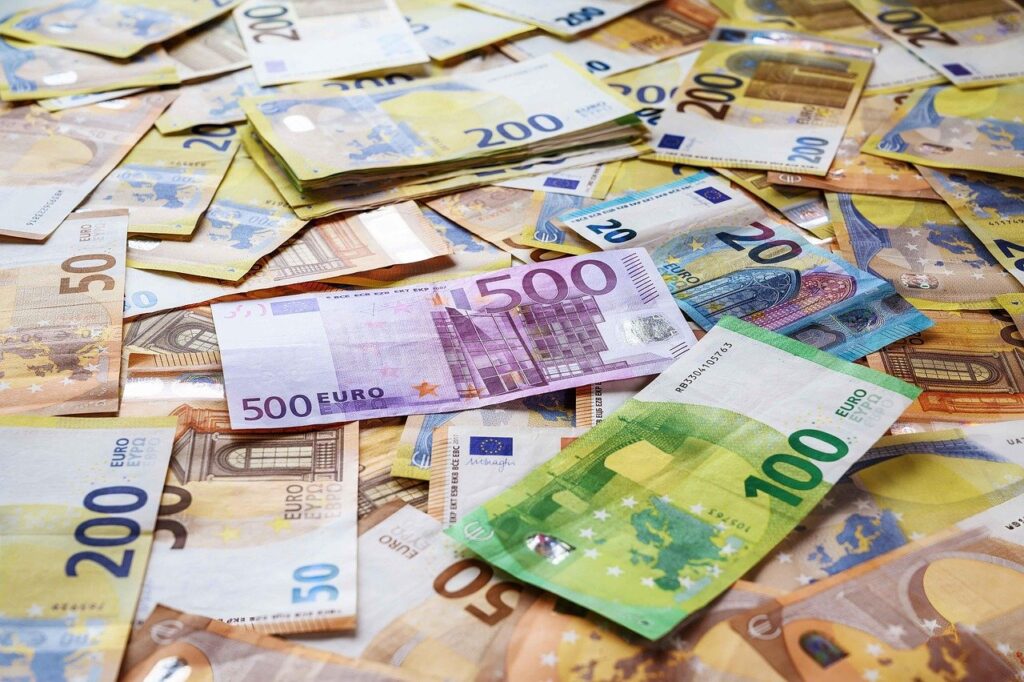
In recent years, remittance inflows to Serbia have amounted to around five billion euros per year. This is confirmed by the latest data from the National Bank of Serbia, which show that over the first 10 months of 2025, 4.34 billion euros arrived on this basis, which is 4.5 percent more than in the same period of the previous year, when inflows totalled 4.15 billion euros, reports Bloomberg Adria.
By comparison, in the first nine months of this year, foreign investment influx amounted to 2.5 billion euros gross, or 1.5 billion euros net.
The central bank assesses that foreign remittance inflows, after strong growth in the years following the outbreak of the coronavirus pandemic, have now stabilised, and that a similar level can be expected in the coming years as well.
“At the same time, with the strengthening of macroeconomic stability, the acceleration of gross domestic product growth, and rising employment and living standards, the way remittances are used is also changing,” the National Bank of Serbia told Bloomberg Adria.
As a result, citizens who receive remittances are spending this money less and less on current consumption and increasingly directing it towards investments, primarily in flats, houses and land, but also into entrepreneurship and savings.
Data on the geographical structure of remittances during 2025 show that it has remained almost unchanged compared to the earlier period. The largest amount of money sent to Serbia still comes from Germany, with a share of 24.6 percent, according to the National Bank of Serbia. Given that 4.34 billion euros arrived by the end of October, around 1.07 billion euros in remittances were sent from Germany alone this year.
Switzerland ranks second with 11.7 percent, followed by Austria with 8.6 percent, the United States with 6.8 percent, and Croatia with 6.5 percent. These are the countries from which the largest share of remittances to Serbia has traditionally come.
Developments in Serbia fit into the broader picture of money flows between the European Union and other European countries. According to the latest Eurostat data, households resident in the EU sent a total of 52.1 billion euros in personal transfers to households outside the Union in 2024, which is six percent more than the year before. At the same time, inflows of personal transfers to households in the EU amounted to 14.8 billion euros, with annual growth of seven percent.
Seasonal workers send the most money
Over the past five years, a strong increase in net outflows of money from the EU has been recorded. Outflows of personal transfers rose by 51 percent, while inflows grew much more slowly, by 26 percent. As a result, the EU’s negative balance vis-à-vis non-EU countries reached 37.3 billion euros in 2024, indicating that the EU has become an increasingly large net source of remittances for the rest of the world.
In absolute terms, the largest economies that contributed to outflows of personal transfers and employee compensation in 2024, both within the EU and towards non-EU countries, were Germany, with 13 percent of total outflows of all EU countries, France, with 11 percent, and Luxembourg and the Netherlands, each with 10 percent.
“Outflow streams from Germany, Luxembourg and the Netherlands mainly originated from income earned through cross-border, seasonal or short-term work in those countries, while outflows from France largely resulted from personal transfers sent abroad,” the Eurostat report states.
It is interesting to note that among EU countries, Croatia, Latvia and Luxembourg were the most dependent on inflows of personal transfers and employee compensation in 2024. The degree of dependence is measured by the share of inflows from personal transfers and employee compensation relative to a country’s GDP. According to this indicator, Eurostat reports that the highest degree of dependence in the EU in 2024 was recorded in Croatia, at 7.2 percent of GDP, Latvia at 3.1 percent of GDP, and Luxembourg at 2.7 percent of GDP. The least dependent were Ireland, with 0.1 percent of GDP, Greece with 0.2 percent, and Finland with 0.3 percent.
By comparison, countries in south-east Europe that are not EU members showed significantly higher dependence on this source of income. In Bosnia and Herzegovina, inflows of personal transfers and employee compensation amounted to 11 percent of GDP, in Montenegro 10.3 percent of GDP, in Albania 8.4 percent, and in Serbia 6.4 percent of GDP.
Personal transfers are in surplus in nine EU countries, with the greatest relative importance in Croatia, where the surplus amounts to 2.6 percent of GDP, Bulgaria with 1.3 percent, and Portugal with 1.2 percent. On the other hand, the largest deficits relative to the size of the economy are recorded in Malta, Cyprus and Belgium, as well as Greece, Spain and France, Eurostat reports.
(Euronews, 28.12.2025)