
Estonia has lost herd immunity against measles due to low vaccination coverage, and has already seen several locally transmitted cases this year, the Health Board has said. Nine people have contracted the illness in Estonia this year.
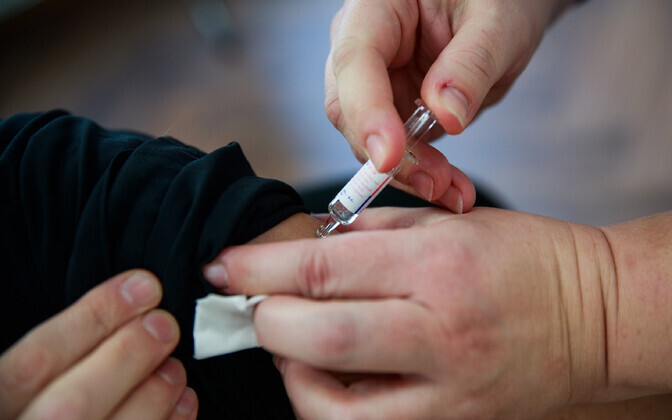
The Tabasalu Family Medical Center (Tabasalu perearstikeskus) in Harju County recently treated a child who had not been vaccinated for measles, but requested an inoculation after exposure to the illness to mitigate the potential effects.
As measles is a highly contagious virus, the staff had to rethink the logistics of the whole clinic to keep other patients safe.
“If that measles-exposed child were to sneeze once in our family health center, they would contaminate the entire hallway, and the measles virus can remain airborne for two hours,” said family doctor Piret Rospu.
“We have completely healthy small babies coming here for vaccinations and for height and weight checks – babies who are not yet eligible for the measles vaccine. It took quite an effort for us to figure out how to organize the vaccination in a way that would not put all our other little patients at risk,” she explained to “Aktuaalne kaamera.”
The child still became ill, despite the vaccination. The clinic then had to send a nurse to the child’s home to collect samples, which were delivered by courier to the Health Board’s lab.
While measles is not yet spreading widely in Estonia, due to a fall in vaccination rates to 83 percent, the country is no longer free from it either.
“According to WHO recommendations, the protective level should be 95 percent,” said Olga Sadikova, senior specialist at the Health Board.
“That means we are seeing more and more infections. We may start seeing hospitalizations and severe cases. Already now, we see that local transmission of measles has begun. It is not very intense, but it is there. While previously we only saw imported cases, now we already have local cases, and that is a real warning sign,” she said.
Rospu said the vaccination rates began to decline years ago due to widespread misinformation at the time, which has now been scientifically debunked, about the dangers of the measles vaccine.
“Lately, it seems to be more about general distrust toward vaccines or anxiety surrounding the topic of vaccination overall,” she said.
Both recovering from measles and receiving the vaccine provide lifelong immunity against the disease.
“It is worth remembering to always check whether you have actually received the measles vaccine and whether it was administered during a time when the vaccine was effective. People born in the early 1980s and 1990s should confirm which vaccine they received and, if necessary, get a booster to ensure protection,” said family physician Jelizaveta Kaledina.
The measles virus is extremely aggressive and highly contagious.
Family doctor Piret Rospu said: “If an infectious person sneezes once, the virus remains airborne and contagious for two hours. So, someone who is unknowingly already contagious, and if susceptible people enter the same space even hours later, the infection can spread through the air. The incubation period can be up to three weeks. A person may become contagious even before showing symptoms.”
—
Follow ERR News on Facebook and Twitter and never miss an update!