
Photo: Unsplash
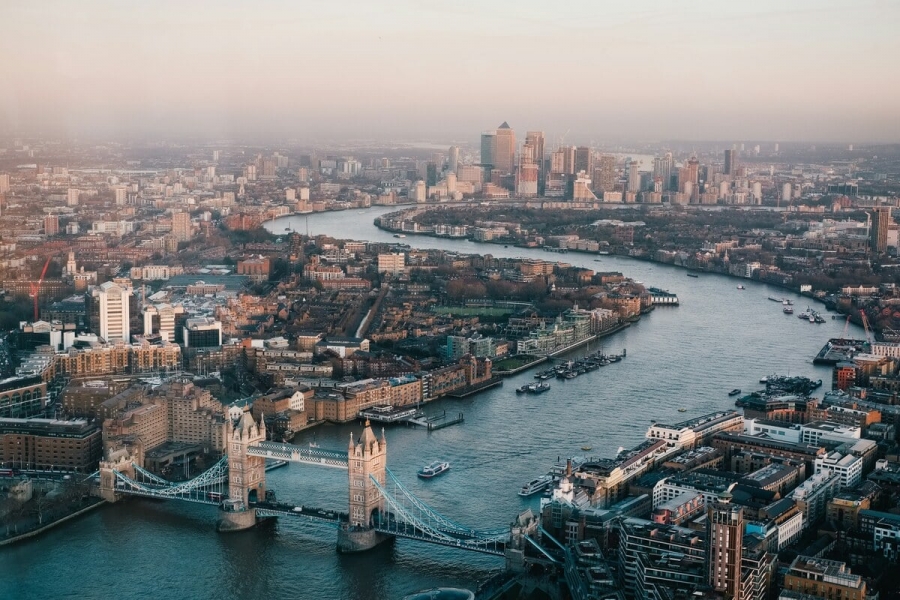
Siarhei Nasonau, lived in Munich, now in London: “The longer you live abroad, the less you communicate with compatriots.”
A strong desire to move abroad appeared when I was around seventh grade. It wasn’t an an escape from problems or a relocation in the modern sense.
It all started with a classic bus tour of Europe. I looked out the window and saw different architecture, a different quality of life, and realized I wanted to explore and experience that. I wanted to see the world from different angles to form my own opinion, rather than live a fixed and familiar life.
When I finished university in Minsk, I was already working at a very good company. But I wanted to grow professionally beyond our classical IT. My springboard was studies — I enrolled in a master’s program in Germany.
My sister once took this path, and I still believe it’s the most “gentle” way to move. Thanks to studying, you can integrate into society before the work routine. You start a “real” life on par with the locals. So there’s time to learn the language and find friends with common interests, not just acquaintances who are in the same situation; there’s time to explore life.
Student life was difficult, but it taught me to solve problems creatively. There was an interesting point here. While I was studying and working part-time, my Belarusian experience was an advantage — I could earn a higher salary than local students. But as soon as I received my master’s diploma, that experience was reset. Even if you were a senior specialist in Minsk, here you often have to take a step back to then take two steps forward.
Geography matters: German experience isn’t as valued in Britain, and British experience isn’t as valued in the USA.
I’m not ashamed to say I’m from Belarus
In Germany, I mostly communicated with Belarusians online: we helped each other with advice and documents. This was encouraging and very helpful. Now I live in London, and the community here is different. People meet in person more often, go to exhibitions, and plays.
By the way, the chance of accidentally meeting a Belarusian in London is small; there aren’t that many of us here. And there’s a certain romance to that, a kind of exclusivity for those who meet you.
I know people in London who do much more to preserve Belarusian culture than those living in Belarus. Of course, there are reasons for this, but in fact, that’s how it turns out.
When you tell locals where you’re from, it sparks interest. For the past 8-10 years, I haven’t been ashamed to say I’m from Belarus, and I haven’t used tricks like “I’m from Russia” to avoid explaining the geography. In Europe, people understand the context and generally know the geography of neighboring countries.
But the longer you live abroad, the less you seek communication solely with compatriots. It becomes more important whether a person is good or interesting to communicate with, rather than which country they were born in.
Павялічыць
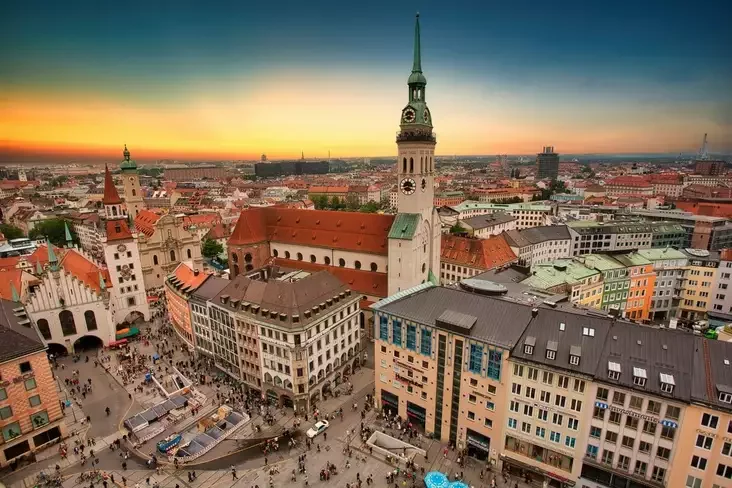
Munich
A passport is just a piece of paper
After so many years, I no longer have Belarusian citizenship. But for me, a passport is just a piece of paper, part of a bureaucratic institution. It doesn’t make you Belarusian.
Identity is what you do. Do you cook national dishes, do you support the culture and language, do you discuss and support current issues?
Of course, those of us who left and those who stayed home have become different. Views, values, daily life – everything diverges. I have no illusions that I’ll immediately have a heartfelt conversation with any compatriot living in Belarus. To understand each other across this distance, openness and patience are needed from both sides.
But there’s a fundamental human solidarity that transcends borders. That solidarity, along with mutual respect, connects me with my old friends who live in Belarus.
My “rituals” are simple. I love cooking our dishes – draniki (potato pancakes), Olivier salad. Even if similar food exists among neighbors and other ethnicities, for me, it’s a taste I enjoy and that represents the country I come from. I like to treat foreign friends to this and share it with them and with people dear to me who are not originally from Belarus.
I also like to have some authentic Belarusian items at home, and I enjoy showing them off. It makes my story tangible.
For me, Belarus is not just a line in a biography, but a living culture, a part of me that I enjoy sharing.
Belarus is a foundation
Previously, our information sphere often imposed complexes, tried to make us feel “small” and unwelcome in Europe or other regions. Later, you realize that a person’s belonging to a certain country doesn’t make them better or kinder.
When you achieve success in the wider world, this imposed complex disappears. The focus shifts from where you came from to who you are, what you’re capable of, and what your views are. You become more than just a citizen of one country. Your passport is merely an insignificant legal detail.
What is Belarus to me now? It’s a foundation. A place where I lived for 20 years, where I gained valuable experience. But nostalgia is good in moderation. It shouldn’t be more important than the present or the future. There’s no great sense in living constantly looking back. It’s much more interesting and within our power to create the future and explore the world.
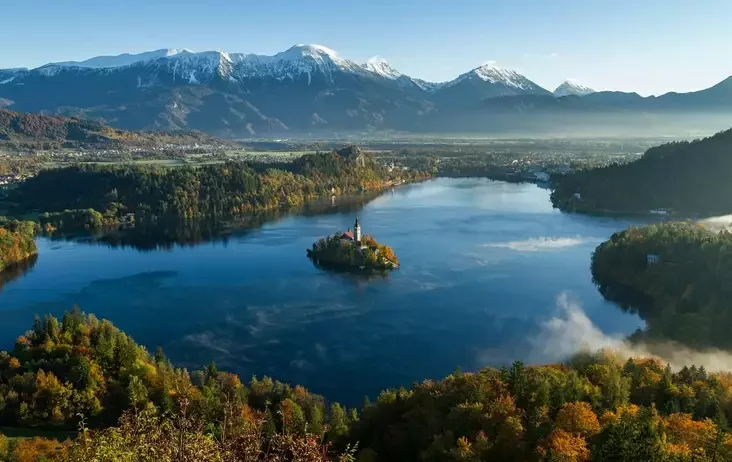
Jan, 23 years living in Slovenia: “Belarus is a sweet and sour sauce”
Thoughts of moving abroad arose during my final years of university and right after graduation. Back then, some of my classmates went to the States and hinted that I could move too.
But after a couple of phone interviews and signing a contract with an American company in 2000, an IT crisis unexpectedly hit — the so-called “dot com bubble” burst, and I was told to wait a bit until everyone who had just lost their jobs there was employed. So I temporarily settled into a Slovenian-Belarusian company. To wait…
And while I was waiting, an episode happened. As I remember now, on the way from the metro station to the office in Minsk. About 10 minutes walk against the wind and rain “in my face” made me ask myself: “is it really necessary to live in such a ‘harsh’ climate?!” Still, I needed to move somewhere warmer and/or richer, where things weren’t such a mess.
On my very first business trip to Slovenia, encountering the local civilization and nature, against the backdrop of the contrast I saw, my determination to leave Belarus only strengthened. The following year, during my second business trip, I raised this issue with the management in Slovenia and received “approval” for relocation.
“Belarus was not on the radar”
I am a sociable person. And it’s easier for such people to talk, and others are happy to help them. A Slovenian colleague “took me under his wing” and helped me with all household and bureaucratic situations until I learned Slovenian to the necessary level (which took me about one to two years).
In 2002, when I moved to the head office in Slovenia, Russians and Ukrainians were already working there. Many Slovenians constantly forgot that I was from Belarus and kept asking: “So, how are things in Ukraine?” They remembered I wasn’t from Russia, but Belarus was clearly not on their radar.
Another colleague-friend would jokingly call me “Russian” because of my Russian language. And because of my positive attitude towards vodka, dumplings, stewed meat, etc. Besides, my father is from Russia, and my mother is from Belarus.
When I had to introduce myself, I always said that I was from Belarus and that it wasn’t Russia. However, I often shared memories, traditions, and habits from the former Soviet Union. I even organized “Russian evenings” for colleagues — navy-style pasta, like my father once made for me, and tomato salad with sour cream. And, of course, vodka.
Павялічыць
Photo: Unsplash
“Close-knit diaspora”
After the 2020 “elections,” Belarusians in Slovenia began searching for each other. And they found each other! They united and started organizing joint events. Before that, we were all just “lone wolves.” Now there are several dozen people who know each other. A “close-knit diaspora,” in the good sense of the word.
And somehow, life here became even more interesting and happier, unfortunately for Belarus, thanks to the people who left it in the last decade. Not often, but regularly, we hold events for ourselves or for Slovenians, so that the Belarusian agenda remains on the radar, and also for educational outreach.
Sometimes we have to intervene and provide more practical help, as in the case of one Belarusian whom Belarus desperately wanted to repatriate and misused Interpol for this purpose.
“Belarus is its people”
I enjoy listening to the Belarusian language in speech and music, and learning about interesting historical events. Gradually, the impression forms that Soviet authorities “subdued” or “suppressed” the national manifestations of the empire’s various peoples.
And what a pleasure it is in Vilnius to visit a Belarusian restaurant where they offer and serve you draniki, tinctures, and other Belarusian delicacies in Belarusian!
Belarus is its people. Our people. Unfortunately, fractured by the events of recent years. I prefer contact with “my Belarus.” With reasonable people who don’t need to be explained that taking what belongs to others under the guise of “it was once ours” is wrong. That believing television and the internet without trying to verify shocking news is not normal. That the Russian language does not belong to Russia, and therefore is not a reason to seize “everything Russian that is mine.”
For me, Belarus is a sweet and sour sauce, in which I want to focus on the sweet component. But one chef ruined this sauce by adding too much vinegar.
Tatsiana Sapronava, 11 years living in Poland: “I always knew I would leave Belarus”
From childhood, I had a feeling that I would leave Belarus. We traveled a lot with my parents, and my dad was often on business trips — from an early age, I saw what life outside Belarus looked like. Moreover, I felt that I would be uncomfortable living further within such a system.
At first, I thought about moving to Germany, but I would have had to study at a language school for 2 years there. I didn’t want to waste time then. So I chose Poland — I had a Pole’s Card because my parents had Polish roots. True, we didn’t consider ourselves Poles, and we started talking about our origin more when I was already a teenager. Besides, the concept of a nation only appeared in the 19th century. That’s why I don’t define myself solely by nationality.
“I met people on the street who spoke Russian”
When I first moved to Poland in 2014 — I was 17 then — I wasn’t sure I’d stay here long. But over time, it became my home. Because I left as a teenager and grew up here. And Poland has changed a lot during this time, not only economically, but its demographics have also shifted.

Павялічыць
Warsaw
Poles have a normal attitude towards Belarusians
There’s a perception that “Poles don’t like us,” that xenophobia is everywhere here. But in reality, this applies to a very small part of society — usually marginalized and the loudest. Such people exist in any country. Belarus also has aggressive and unpleasant groups.
The problem is that some arrive already with this conviction. People don’t yet have any personal experience, but they immediately build a “us vs. them” barrier. And such an approach strongly hinders assimilation. It’s also very difficult for Poles to join these “bubbles” because foreigners maintain a significant distance.
I have a more Ukrainian-Belarusian circle of communication, but also an excellent Polish one. I can discuss various topics: from politics to everyday matters. And I have never encountered discrimination based on nationality.
Most often, I hear support and compliments, including for my Polish language. Yes, I have an accent, and it has remained even after 11 years. I’m not ashamed of it; it’s part of my origin.
Sometimes, by the way, I catch myself saying that it’s easier abroad to say I’m from Poland, not Belarus — simply because it’s more understandable for people. Recently, I was in China and never once met anyone who knew where Belarus was. But Poland is still quite a monocultural country, and in that sense, it’s harder to assimilate here than in classic immigration countries like the USA or Canada.
Interestingly, in recent years, on the contrary, I’ve experienced some internal “revival” of Belarusian identity. Perhaps this is due to the fact that after 2020 and 2022, a great many people began to emigrate — including my close friends. And they have a much stronger connection with Belarus, a more tender attitude. Thanks to our communication, I have once again started to approach the culture of my Homeland.
At the same time, I understand that I am not the kind of person who can fully identify with one society. I travel a lot; I recently calculated that I’ve visited 65 countries. Therefore, it’s important for me to delve into different cultures, rather than confining myself to just one.