
 Listen to this article
Key takeaways:
- Maryland could lose up to $2.7 billion annually in federal Medicaid funding.
- An estimated 175,000 residents may lose Medicaid coverage.
- Federal cuts could increase pressure on physicians, hospitals and behavioral health services.
- State leaders look to Easy Enrollment and marketplace subsidies as a backup plan.
With deep federal cuts to Medicaid and Medicare set to take effect in the new year, Maryland health care advocates are gearing up to ask the General Assembly for help.
The Maryland Department of Health estimates that the state will lose up to $2.7 billion annually in Medicaid funding – and that 175,000 people will lose Medicaid coverage – when the federal One Big Beautiful Bill Act takes effect. Signed into law in July by President Donald Trump, the bill also contains tax cut provisions that will significantly increase the national debt and trigger automatic cuts to Medicare.
On top of all this, Maryland faces a structural deficit of $1.2 billion for fiscal year 2027.
Tough choices
 Dan Rabbit is policy director at Behavioral Health System Baltimore said new work requirements and reenrollment procedures may mean thousands of Baltimore residents may lose health coverage.
(Submitted photo)
Dan Rabbitt, policy director at Behavioral Health System Baltimore, has no illusions about the challenges faced by his organization, which oversees the public behavioral health system in Baltimore City.
“I know it’s a difficult budget year and tough choices need to be made, but the public behavioral health system has been underinvested in for many, many years,” he said. “The need for mental health and substance use services has never been greater. You see calls to 988, the mental health and substance use helpline, going up and up and up.”
Changes to Medicaid are likely to result in tens of thousands of people in Baltimore losing health coverage, Rabbitt said, pointing to new work requirements and more frequent reenrollment for recipients.
“It will require a whole lot of paperwork and attention to the notifications that you get from the Medicaid system,” Rabbitt said. “People who are struggling with a substance use challenge or a mental health challenge have a lot on their plate; they have a lot of basic needs that they’re trying to meet. Trying to meet these administrative hoops put in place by Congress will result in a lot of people falling through the cracks.”
Added Rabbitt: “We’re hopeful the state will put in place systems to help people with mental illness or complex medical needs.”
Almost one-quarter of Maryland residents, or roughly 1.5 million people, depended on Medicaid for their health care in 2025, including 32% of children and 64% of nursing home residents, according to the health policy research organization KFF.
Total Medicaid spending in Maryland in 2025 was $17 billion, with $10.8 billion coming from the federal government, KFF reported.
Impact on physicians
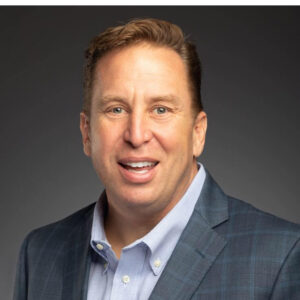 Gene Ranson, CEO of MedChi, said federal cuts will hurt doctors as well as patients.
(The Daily Record file photo)
Gene Ransom, CEO of MedChi, the Maryland State Medical Society, emphasized that federal cuts will hurt practitioners as well as patients.
“Anytime when you reduce the number of people who have health insurance, that obviously puts pressure on both physicians and hospitals,” Ransom said.
Hospitals are required by federal law to provide emergency treatment regardless of a patient’s ability to pay.
Ransom is also concerned that Maryland’s budget crisis could result in state Medicaid payment cuts to practitioners; higher payments encourage more doctors to accept Medicaid patients.
“We are really hoping they don’t balance the budget by cutting physician rates,” he said. “We understand that it’s obviously a big part of Medicaid and we understand it’s expensive, but one of our top priorities is making sure that we keep those Medicaid rates at a reasonable level so poor people have access to physicians.”
Backup plan
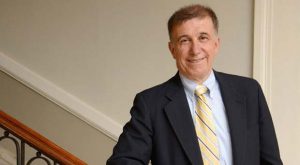 Vincent DeMarco, president of Maryland Health Care for All coalition, said he wants to protect access to health care for Marylanders.
(The Daily Record file photo)
Vincent DeMarco, president of the Maryland Health Care for All coalition, said he had two primary goals for 2026 that are achievable thanks to previous actions by the General Assembly.
“One is to protect Maryland from the problems coming out of Washington, and that’s Easy Enrollment,” a 2019 measure that allows uninsured Marylanders to check a box on their state tax return to seek a determination on eligibility for free or low-cost health plans.
DeMarco’s second goal is to make sure lower-income Marylanders can afford plans on Maryland’s health insurance marketplace. A measure passed last year created state-based health care subsidies to replace federal subsidies in case they lapsed – which they will in 2026.
“They have come up with a great backup plan,” DeMarco said, hailing the efforts of Del. Joseline Peña-Melnyk, then the chair of the Health and Government Operations Committee. Peña-Melnyk was recently elected the 109th speaker of the House of Delegates.
The state subsidy will replace 100% of the lost federal subsidy for people earning less than 200% of the federal poverty level; it will also provide a phased replacement of the federal subsidies for those earning between 200% and 400% of the poverty level.
DeMarco also pointed to the work of the Prescription Drug Affordability Board, which was created by the General Assembly in 2019 to set upper limits for what state and local governments pay for certain high-cost drugs. Under a law passed in the regular 2025 General Assembly session, the board will be able to set upper price limits on private plans beginning in 2026.
“We’ll protect Marylanders from a lot of these costs,” DeMarco said.