
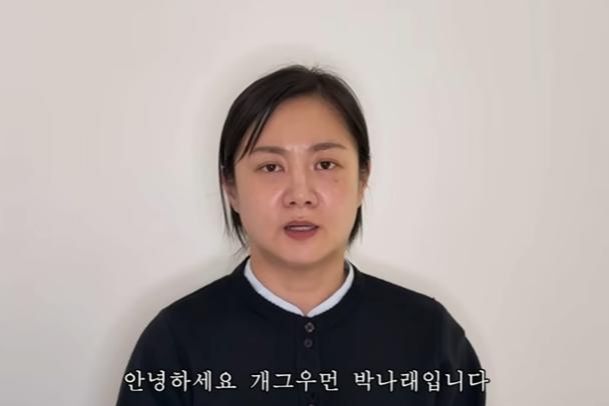
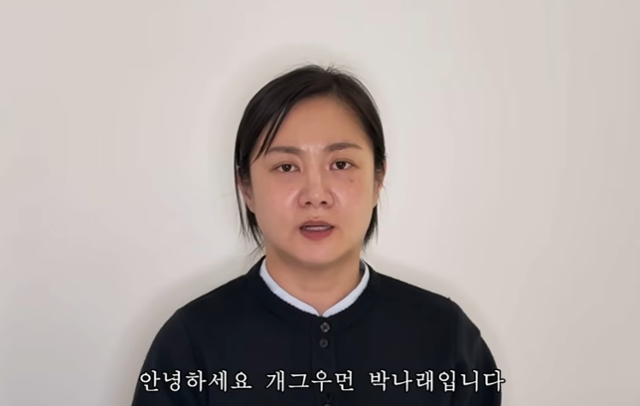
Park Na-rae / Captured from YouTube channel “aboutp100”
The glitz of the entertainment industry often conceals the harsh working conditions faced by celebrity managers, who shoulder responsibilities ranging from schedule management and on-site accompaniment to condition checks, crisis response and overall support for artists’ activities. Although they are core staff members, discussions about fair treatment have long remained secondary.
Allegations raised by former managers of comedian Park Na-rae have brought renewed attention to power abuse claims in the entertainment industry and to the poor labor conditions of managers. The former managers accused Park of unfair treatment and cited issues such as failure to enroll them in the national social insurance program, salaries of about 3 million won ($2,300) per month, delayed wage payments and unprocessed business expenses. While the authenticity of the claims has yet to be verified, the case has prompted broader reflection on structural problems across the industry.
According to Park’s former managers, their salaries remained at roughly the same level despite years of experience, while a junior manager was paid about 2 million won. Industry insiders note that the legal minimum wage still falls short of meeting basic living costs when rising prices and household burdens are taken into account, and say this gap illustrates the financial strain many managers face.
These conditions are not confined to a single workplace. Aside from a few large entertainment agencies, low pay and weak labor protections have become entrenched across much of the sector. Compared with the intensity of the work, wages remain low, and managers at small agencies or in entry-level roles often struggle to secure even basic working conditions. “In the entertainment industry, it is common for new managers to start at the minimum wage,” a current manager identified as C said, adding that “there is almost no additional allowance.” A former manager, B, said that even those with five to eight years of experience often fail to earn 3 million won a month.
Managers also point out that the workload is excessive compared with the pay. Although the 52-hour workweek is mandated by law, it is rarely observed in practice. Nighttime filming, weekend assignments and frequent travel to provincial or overseas locations are common, but overtime pay or substitute leave is seldom guaranteed. “Depending on the company, finishing work at dawn may simply mean going to work a little later the next day, and even that becomes difficult if the artist suddenly has a new schedule,” B said. C said that while some workplaces compensate extra work with additional rest or pay, “there are still many places that offer no compensation at all.”
The industry has been closely watching the controversy involving Park. The disciplinary and ethics committee of the Korea Entertainment Management Association said in a statement that “if acts that evade reasonable and lawful labor-contract obligations are confirmed, appropriate measures should be taken,” adding that “although entertainers and managers are partners, abusive behavior or assigning tasks unrelated to artistic activities must disappear as harmful practices.” The committee also said it would take strong action if the allegations prove true.
Many managers watching the case say it reflects long-standing problems. “As colleagues working together, we have repeatedly faced situations where we are not treated with even the minimum level of respect,” C said, stressing that the relationship between artists and managers “must fundamentally change through this opportunity.”
Meanwhile, legal disputes between Park and her former managers are ongoing. Two have filed complaints alleging workplace harassment, verbal abuse, aggravated assault, proxy medical prescriptions and unpaid business expenses, and the controversy has spread following additional claims involving alleged illegal medical activity.
This article from the Hankook Ilbo, the sister publication of The Korea Times, is translated by a generative AI system and edited by The Korea Times.