
Poland is moving ahead with a €2 billion plan to harden its eastern border against Russian drones, unveiling a layered “anti-drone wall” and broader fortifications along Belarus and the Russian exclave of Kaliningrad. The initiative underscores how unmanned systems – and the threat they pose – are reshaping defense investments on NATO’s eastern flank.
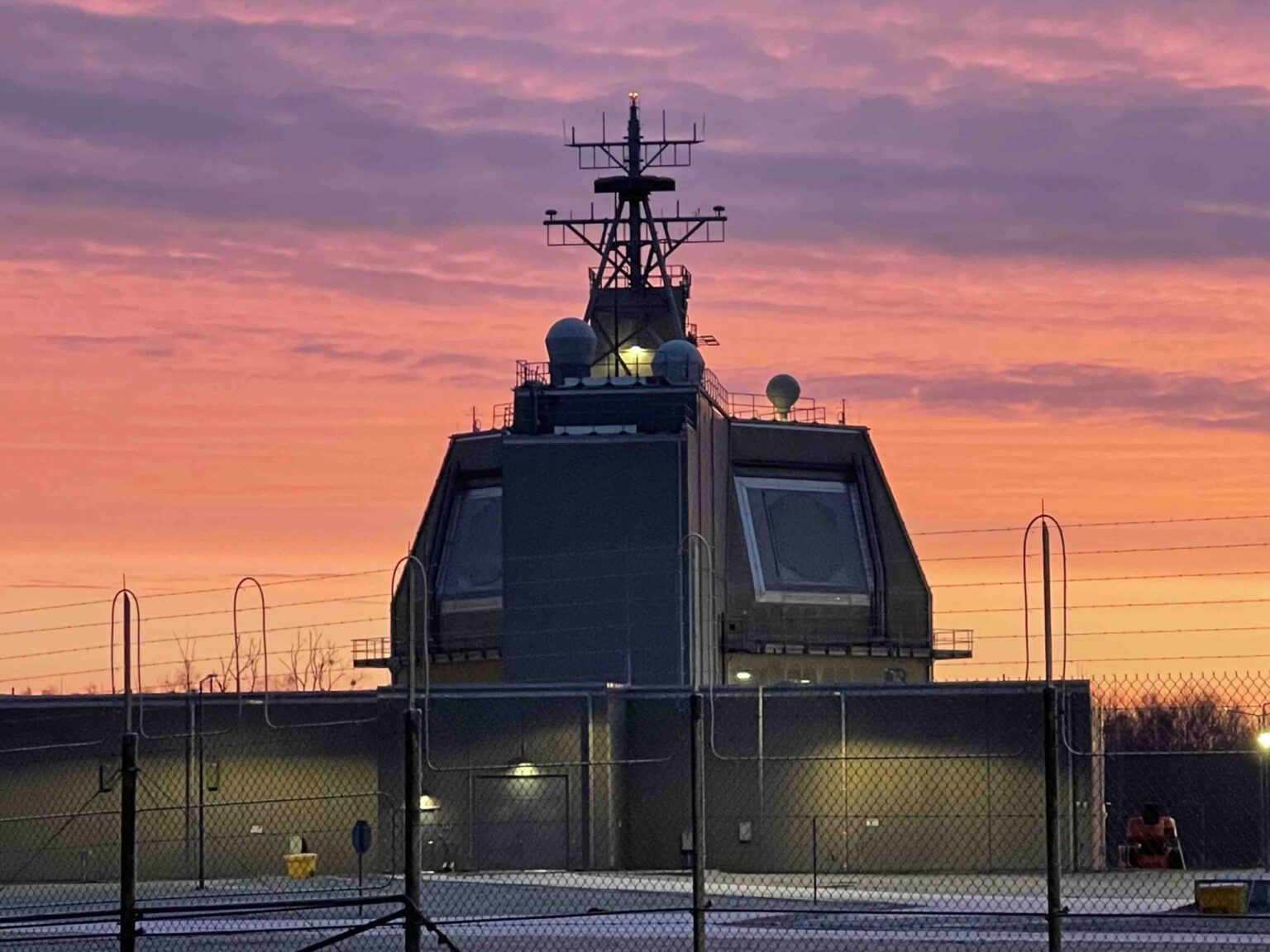
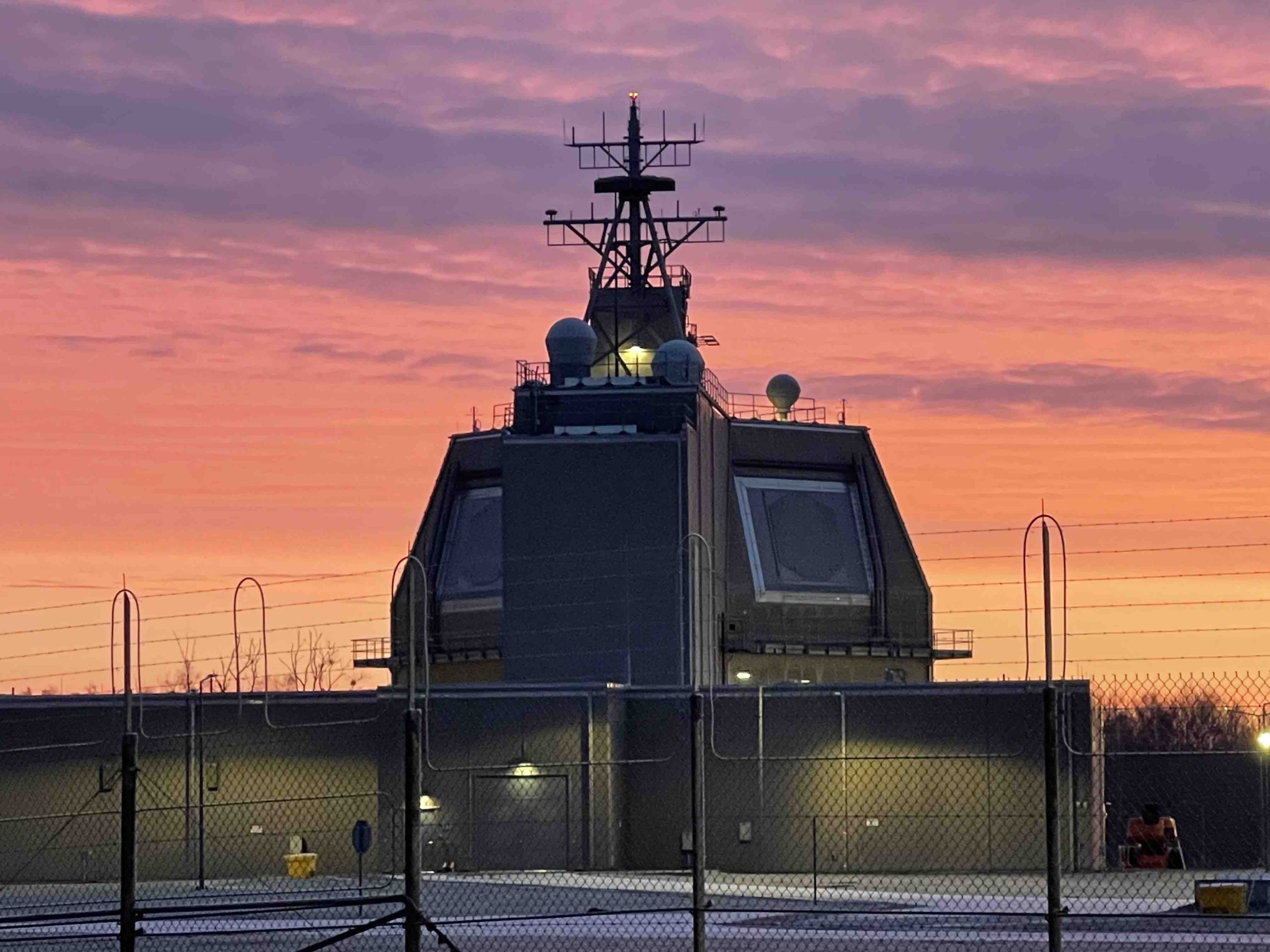 Aegis Ashore Missile Defense System Poland at Naval Support Facility Redzikowo, Poland. Photo by Ashleigh Whitney
Deputy defense minister Cezary Tomczyk told The Guardian that Warsaw expects the first elements of a new air defense system to be operational within about six months, with full capabilities in place in roughly 24 months. The project will be integrated into an older defensive line built a decade ago and will combine kinetic and non-kinetic counter-UAS capabilities, including machine guns, cannon, missiles and drone-jamming systems.
Some of the most aggressive systems are intended only for wartime use, Tomczyk noted, pointing out that the use of multi-barrel machine guns in peacetime raises obvious safety concerns: rounds fired into the air must come down somewhere. That tension between deterrence and safety is increasingly central to how NATO states think about counter-UAS along populated borders.
Triggered by a Russian Drone Incursion
The acceleration in Polish planning follows a major incident in September, when more than a dozen suspected Russian drones penetrated Polish airspace. According to the government, the drones forced temporary airport closures, prompted fighter sorties and caused damage on the ground as air defences engaged and brought them down.
Foreign minister Radosław Sikorski has previously characterised that episode as an attempt by Moscow “to test us without starting a war,” noting that the platforms did not carry ammunition. The incident fits a broader pattern of grey-zone pressure against NATO’s eastern members, using unmanned systems, electronic warfare and sabotage to probe political and military responses without crossing the threshold into open conflict.
Tomczyk said Poland does not expect a conventional war with Russia so long as Ukraine continues to resist the invasion, but warned that provocations and acts of sabotage are likely to intensify. If Russia were allowed to win in Ukraine, he suggested, the Kremlin could quickly turn its attention to other European targets.
The ‘Eastern Shield’: Fortifications and Logistics Hubs
Beyond the dedicated anti-drone wall, Poland is building a broader fortification system along its land borders with Belarus and Kaliningrad, branded the “Eastern Shield.” The goal is to prevent or slow any future Russian incursion, whether by conventional forces or mixed formations that include unmanned systems.
A key feature of the plan is the creation of logistics hubs in every border municipality. These hubs will stock equipment needed to block and reinforce sections of the border, with the intent that local units can deploy barriers and other assets within hours if a crisis unfolds.
The Eastern Shield is being accompanied by a wider societal push. With sabotage and arson cases linked by Polish services to Russian intelligence on the rise, Warsaw plans to train hundreds of thousands of citizens in survival skills, while others are undertaking voluntary military training. That approach mirrors Ukraine’s experience, where dispersed, trained civilian populations have become part of the national defence architecture alongside regular forces and territorial defense units.
Financing a New Counter-UAS Architecture
Tomczyk said the new border systems will cost more than €2 billion and will be funded largely through the European Union’s SAFE (Security Action for Europe) defense loan programme, supplemented by national budget contributions.
Poland has already pushed its defense spending to about 4.7% of GDP – one of the highest rates in the EU – driven by concerns over Russian hybrid operations and the potential for escalation. Tomczyk contrasted that figure with Ukraine’s estimated war spending of around 40% of GDP, arguing that it is better for European states to increase defence budgets modestly now rather than face far more dramatic costs later if deterrence fails.
Implications for the Unmanned and Counter-UAS Sector
For industry, Poland’s anti-drone wall and Eastern Shield are likely to become significant drivers of procurement and experimentation in counter-UAS technologies at scale. The architecture described by Tomczyk implies:
- Integration of short-range guns and cannon with surface-to-air missiles and layered radar/EO/IR sensing.
- Persistent electronic warfare capabilities to detect, disrupt and take control of Group 1–3 platforms operating near or across the border.
- Command-and-control tools that fuse data from kinetic and non-kinetic systems, enabling rapid rules-of-engagement decisions in congested airspace.
The September incursion – using unarmed drones to force airspace closures and stress air defence networks – illustrates that payload is no longer the only risk. Even unarmed UAVs can generate political pressure, impose economic costs and reveal how a defender’s sensors and shooters respond.
As Poland moves from planning to deployment over the next two years, its eastern border will become a live testbed for NATO-standard C-UAS solutions and concepts of operation. Vendors capable of integrating kinetic fires, electronic attack and multi-domain situational awareness into a coherent, rapidly deployable shield are likely to find Warsaw – and Brussels, via programmes like SAFE – an increasingly important customer.