
From salmon and sea stars to public lands and policy shifts, Salish Current’s environmental coverage revealed both the fragility and resilience of the Northwest’s ecosystems.
It’s the end of the year and a time to look back before looking forward to the new year. The environment is one of Salish Current’s main coverage areas and we’d like to share links to some stories we enjoyed bringing to you this year.

A sweep of executive orders left uncertainty around public lands. Researchers continued to monitor natural disasters. New studies from our region put light on the harbor porpoise, Chinook salmon, sea star wasting disease, jellyfish, ratfish, sharks of all shapes and sizes and more. Resident orcas grieved over infant loss and celebrated new life.
This reporting illustrates what threatens the beautiful place we call home and points to where to go from here. Whether adapting to the pressures of climate change or top-down policy change, solutions are driven by community effort.
By Jacob O’Donnell, April 1, 2025
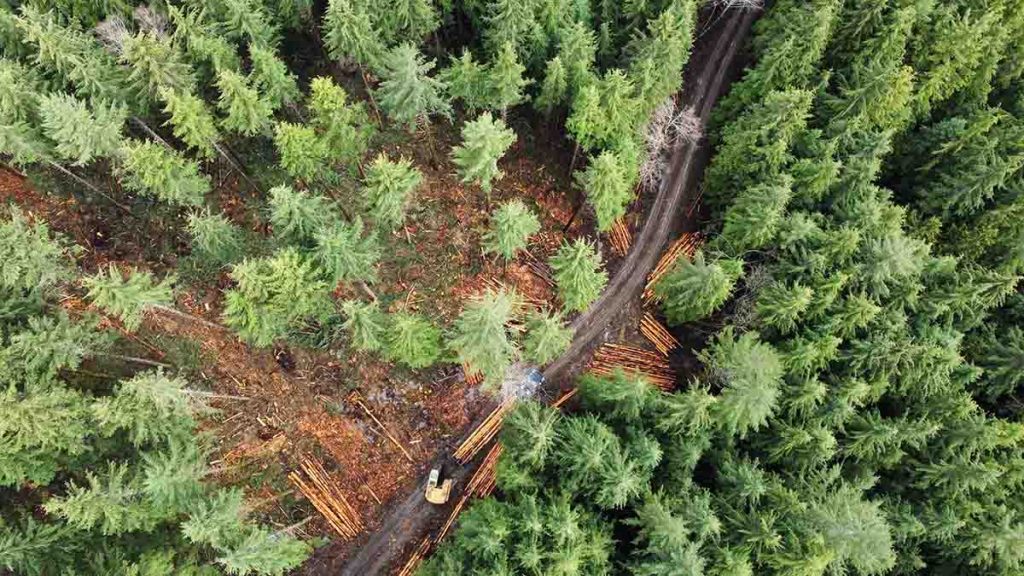 In March, the Trump administration signed an executive order to increase timber production from public lands such as Mount Baker Snoqualmie National Forest. It mainly calls for easing the burden of policies that lengthen the timeline and reduce the certainty of timber sales. A view from above shows thinning of timber in a site above the Mountain Loop Highway in Snohomish County. (Peter Janicki)
By Richard Arlin Walker, April 28, 2025
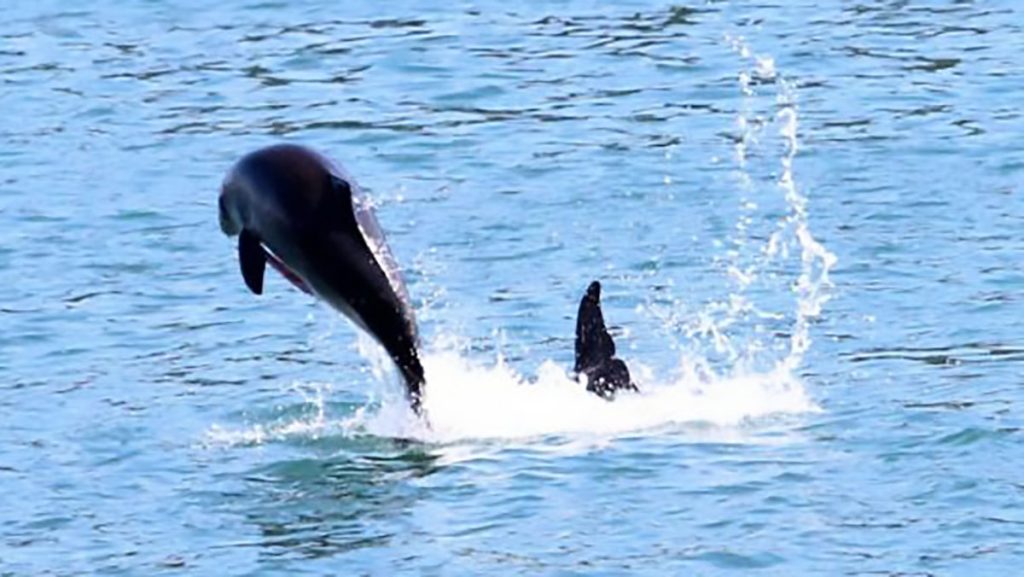 The harbor porpoise population is rebounding throughout the Salish Sea, according to the National Oceanic and Atmospheric Administration, after years of fishing-gear entanglements and habitat degradation that made the porpoises’ food sources scarce. NOAA estimated the Salish Sea harbor porpoise population was about 11,233 in 2016 — the latest estimate for the U.S. waters of the Salish Sea and an increase from 3,509 in 1996. Here, A harbor porpoise leaps during a mating attempt. (Cindy R. Elliser / Pacific Mammal Research)
By Sam Fletcher, May 14, 2025
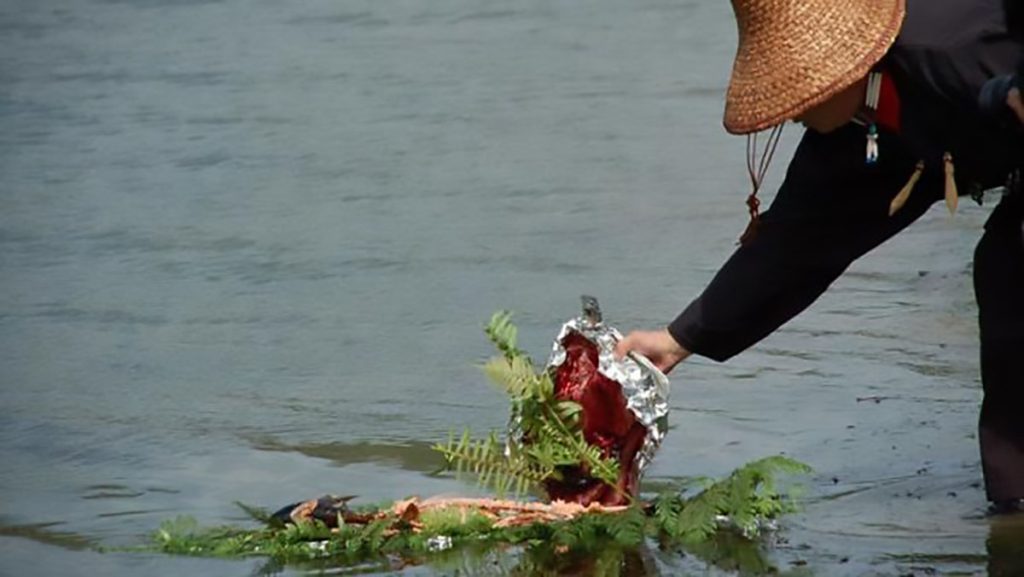 The most recent numbers for the South Fork Chinook spring salmon run, the 2022 season, show a run of 4,009, including natural origin, hatchery origin and pre-spawn mortality numbers. This is the largest run since the most recent recovery effort in the South Fork, and locals recall the not-too-distant history when there was hardly a run at all. Here, bones of the first salmon are returned to the Nooksack River during last year’s Lummi First Salmon Ceremony. (Northwest Treaty Tribes)
By Sam Fletcher, July 15, 2025
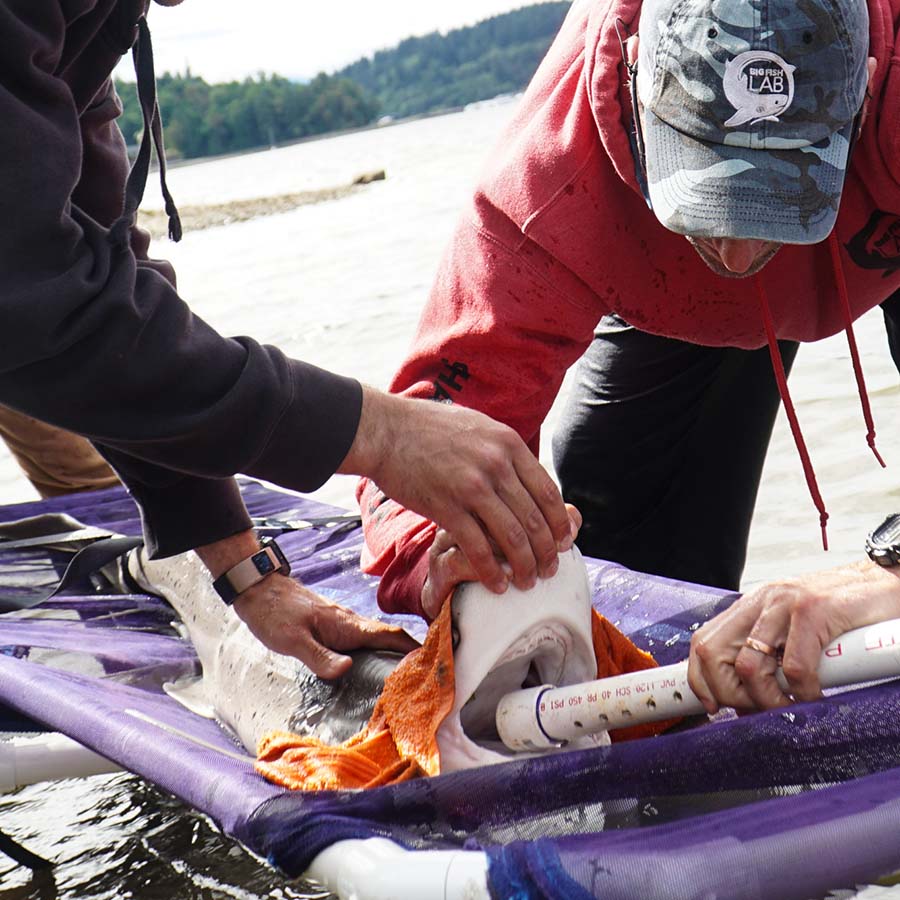
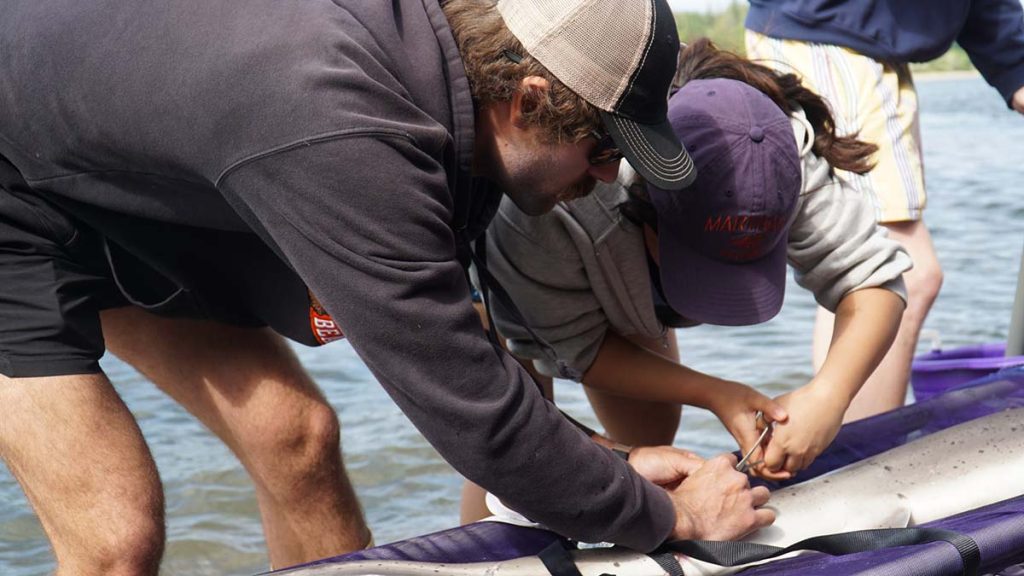 Since last year’s report on broadnose sevengill sharks in the area, researchers rushed to get tags out over the summer while the population was local. The initial discovery caused some excitement in news media, but the real knowledge will come from the coming years of tracking and studying. Here, researchers from Oregon State University tag a broadnose sevengill shark in Hammersley Inlet (Sam Fletcher, Salish Current 2025)
By Sam Fletcher, July 28, 2025
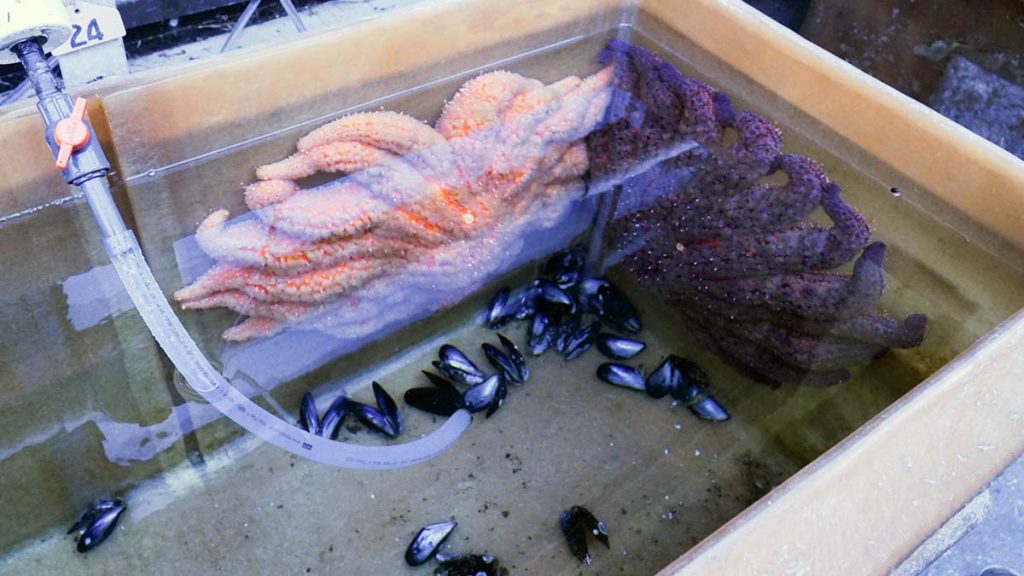 Parent stars, bigger than human babies, bathe in wooden boxes at Friday Harbor Labs. (Sam Fletcher, Salish Current 2025)
By Nancy DeVaux, Aug. 6, 2025
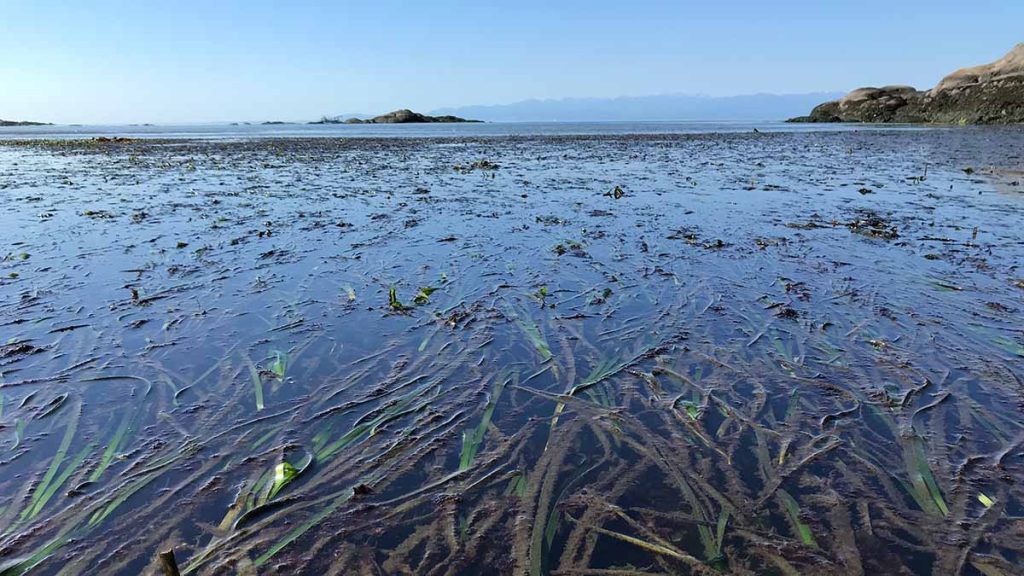 Known for its importance as critical habitat for many species including juvenile salmon, eelgrass is the focus of a five-year study in San Juan County, now in its final year. The project is a collaboration between the University of Washington Marine Labs in Friday Harbor, the State Department of Natural Resources and Friends of the San Juans. Here, a dense eel grass meadow is evident at low tide at False Bay on San Juan Island. (Olivia Graham)
By Luisa Loi, Aug. 22, 2025
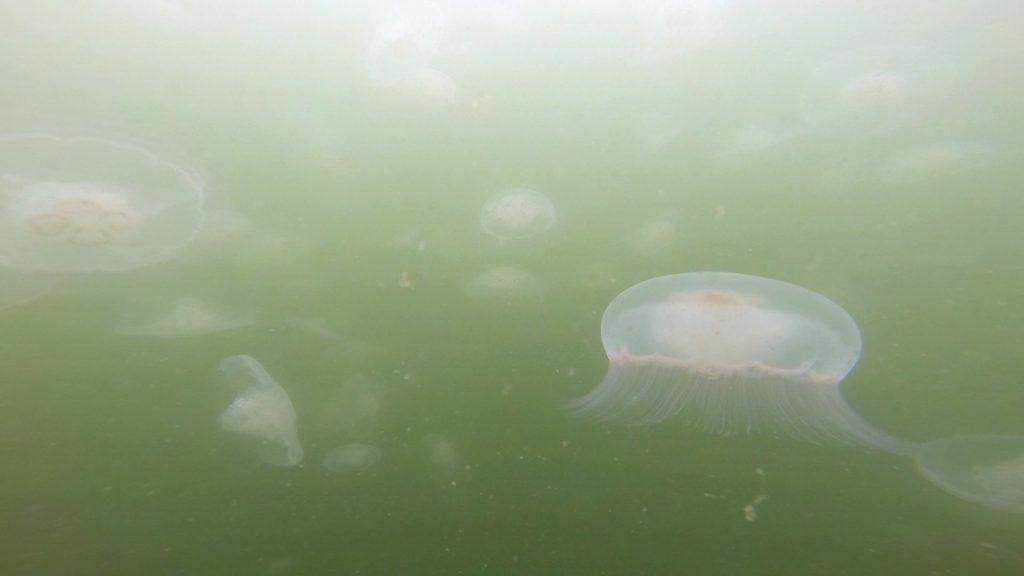 In 2019 and 2020, University of Washington student Haila Schultz spent some time observing moon jellies as they feasted on zooplankton. Her findings, which were published in April, could help researchers understand how the jellies’ eating habits could affect fisheries and the survival of endangered Pacific Northwest icons like Chinook salmon and Southern resident orcas. Here, moon jellyfish aggregate underwater in Sinclair Inlet. (Haila Schultz)
By Sam Fletcher, Sept. 23, 2025
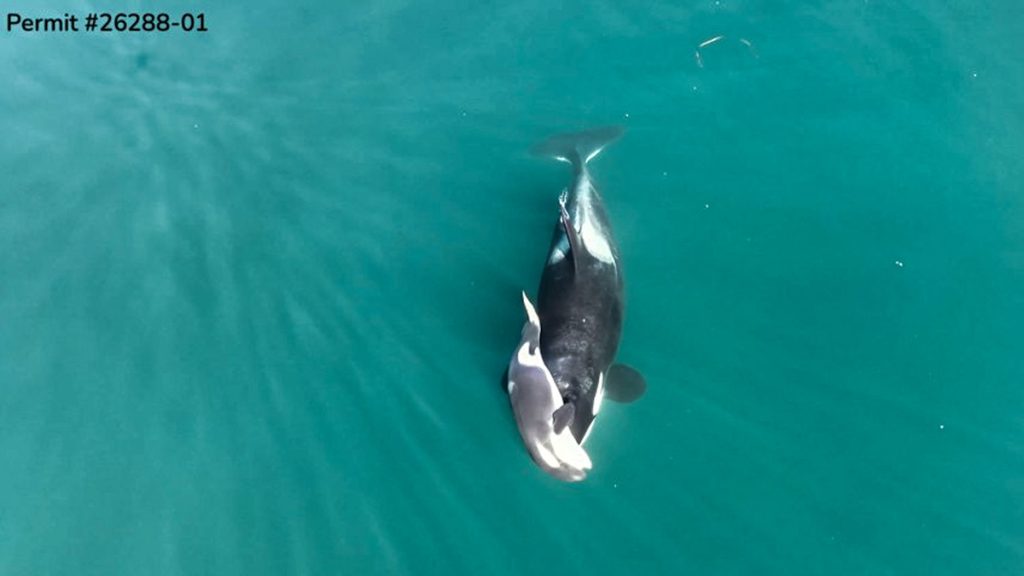 A new orca born to the J-pod came just over a week after Alki, or J36, was seen pushing a deceased calf in Rosario Strait with the umbilical cord still attached in Rosario Strait Sept. 12. (SeaDoc Society)
By Margaret Baumgartner, Sept. 25, 2025
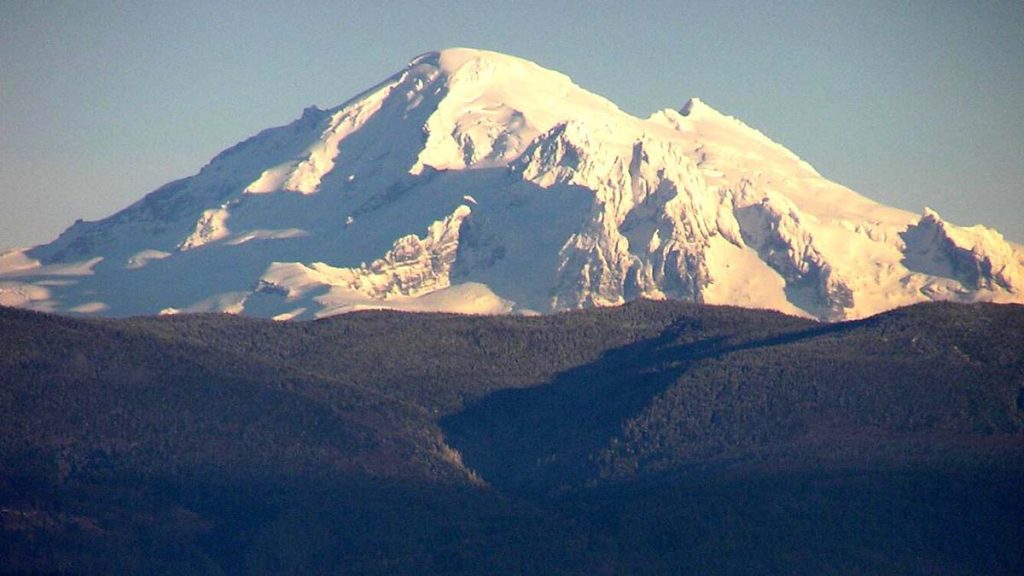 Between July and August this year Mount Rainier experienced over 1,300 earthquakes. Now, the United States Geological Survey is working to identify similar activity at Mount Baker. Here, Volcanic Mount Baker, seen beyond Bellingham across Bellingham Bay, rises above Whatcom County. (Dave Tucker, USGS 2006)
By Anna Marie Yanny, Nov. 4, 2025
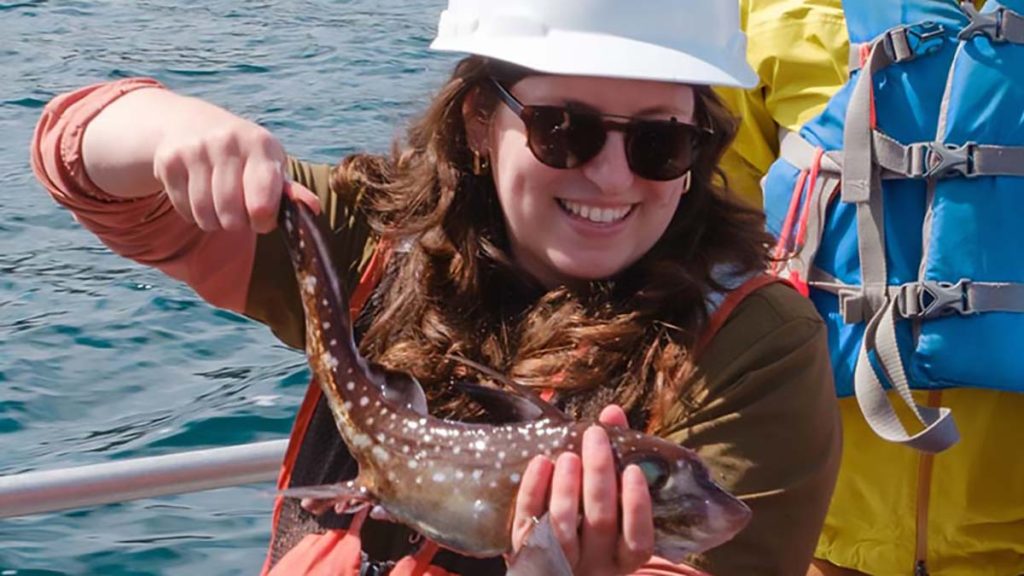 Teeth are the “ultimate tool,” if you ask Karly Cohen, a postdoctoral researcher at the University of Washington’s Friday Harbor Labs. She recently led a study of the Pacific Ocean’s spotted ratfish — Hydrolagus colliei — and found, throughout evolution, the fish have repurposed their teeth in an unusual way. The researchers’ discovery of forehead teeth on the ratfish, which the adult males use to latch onto females during mating, was the first finding of “true teeth” outside of the jaw in a vertebrate. The ratfish’s never-before-found “mouth without a mouth” is an example of how evolutionary tinkering can repurpose core traits like teeth. (Karly Cohen)
• • •
Did you find this story useful? If so, share it with a friend, a family member or colleague
and ask them to subscribe to Salish Current (it’s free) for more stories like this.
We welcome letters to the editor responding to or amplifying subjects addressed in Salish Current.
Got an idea for a Community Voices essay? Email your subject proposal to Executive Editor
Mike Sato (msato@rockisland.com) and he will respond with guidelines.
Help keep the local news flowing — support nonpartisan, fact-based, no-paywall local journalism
with a donation to Salish Current — news for people, not for profit.