
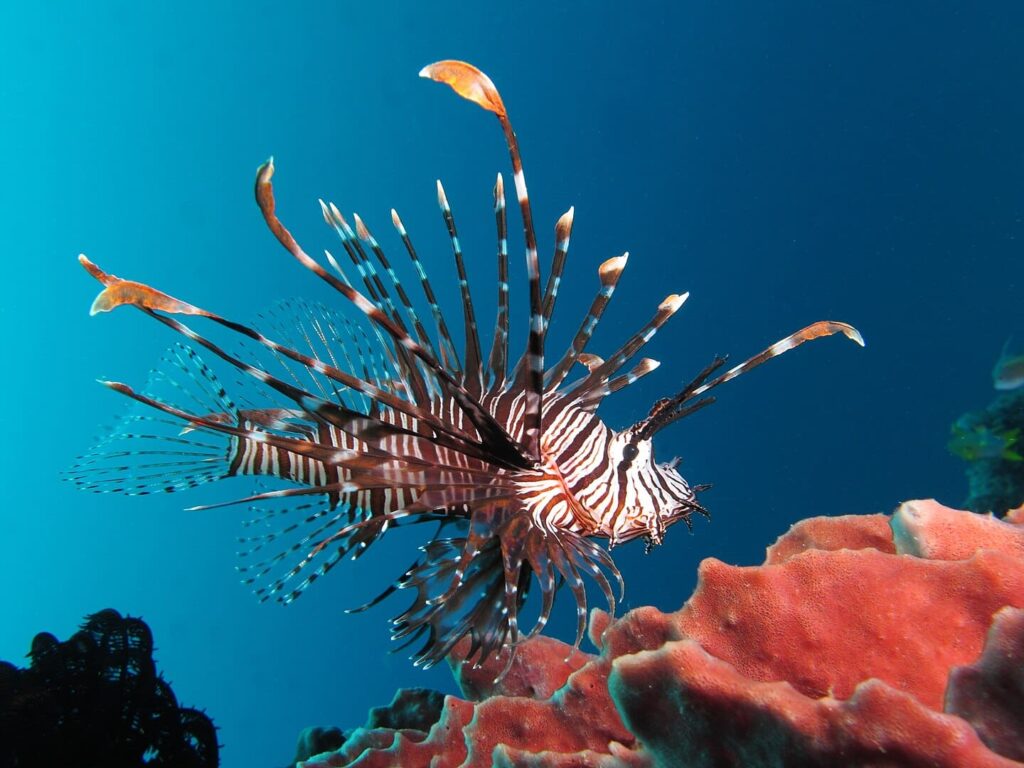
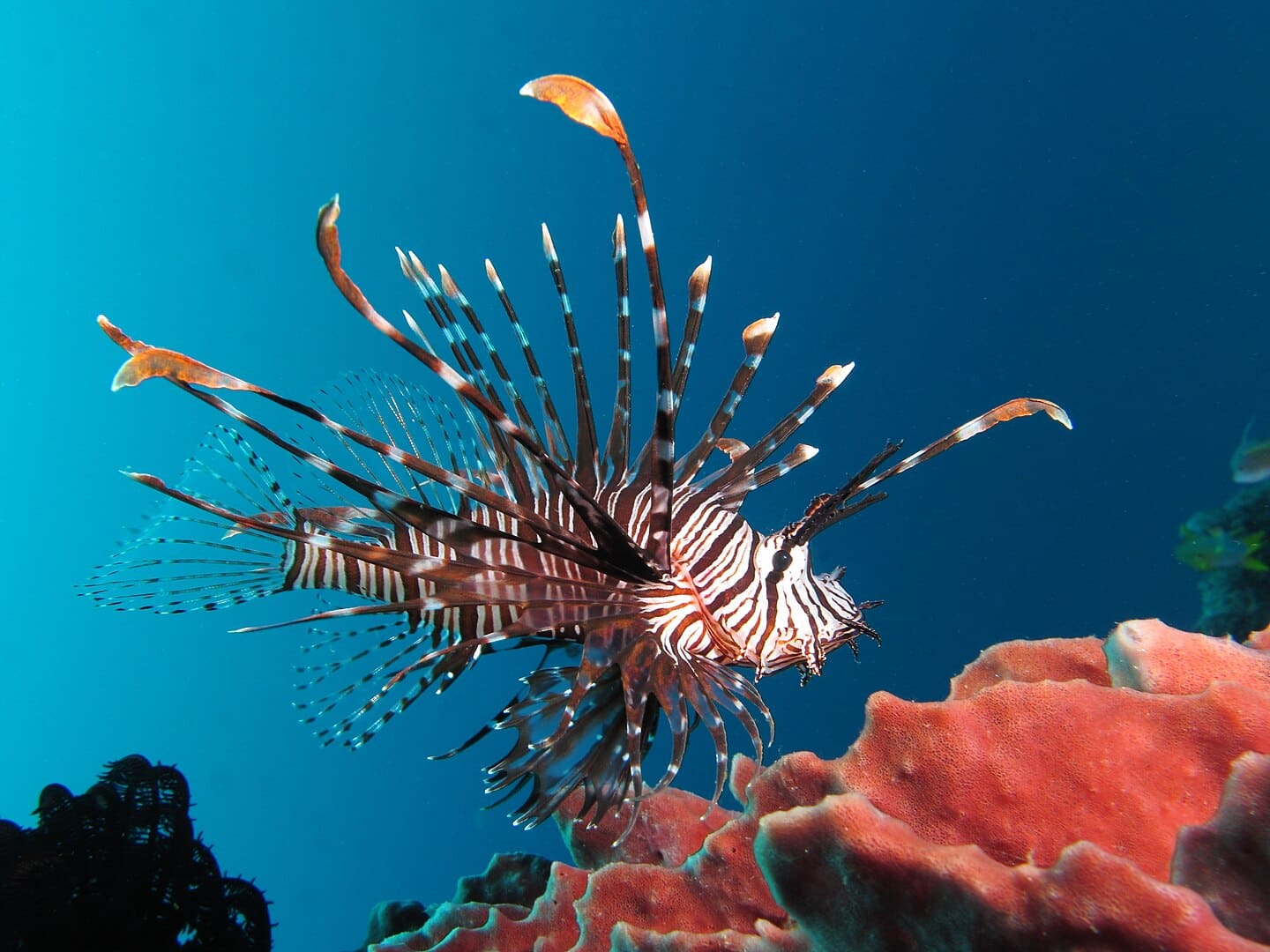
Red lionfish near Gilli Banta Island. Credit: Alexander Vasenin / Wikimedia Commons / CC BY-SA 3.0
Off the coast of Larnaca, a seasoned Cyprus fisherman is adapting to changing seas by hauling in invasive lionfish and helping turn them into a new dish on the island’s menus. Once known for his catch of sea bream and red mullet, Photis Gaitanos now pulls venomous lionfish from his nets, aiming to control the species that is disrupting local ecosystems and threatening the livelihood of the island’s fishing community.
Gaitanos, 60, told abc news that he hasn’t caught a red mullet in more than two years. After four decades in the profession, he describes a sharp decline in both fish quantity and quality, linking it to warming waters and the rise of invasive species such as lionfish and silver-cheeked toadfish.
Lionfish, with bright stripes and spiny fins, have made their way from the Red Sea into the Mediterranean, favored by rising sea temperatures and the expanded Suez Canal. Their spread has affected about 150 professional fishermen in Cyprus. In the Ionian Sea, Italian authorities have begun tracking sightings, urging the public to report them.
Rising threats from Red Sea invaders
The silver-cheeked toadfish, another Red Sea invader, has also taken hold. Known for tearing through fishing nets with strong jaws and releasing a deadly toxin, the toadfish has no natural predators in Cypriot waters, allowing its population to grow quickly.
The EU and local officials have stepped in with control measures. A recent compensation program pays fishermen 4.73 euros per kilogram ($5.50 per 2.2 pounds) to catch toadfish, which are then incinerated.
A seasoned Cyprus fisherman is fighting back against invasive lionfish by turning the threat into a local delicacy. The effort helps protect marine life, support the fishing industry, and raise awareness about climate-driven changes in the Mediterranean. 🐟🌊#Cyprus #Lionfish pic.twitter.com/kv5yGOWSDj
— Tom Marvolo Riddle (@tom_riddle2025) December 29, 2025
A separate project launched in 2017 uses teams of divers to remove lionfish from reefs and protected marine areas. According to the Cyprus Fisheries Department, regular removal efforts help reduce pressure on native species, but are not a lasting solution.
Cyprus fisherman leads effort to control invasive lionfish
In response to the ecological threat, a new strategy is gaining traction: encouraging consumption of lionfish. The fish, once stripped of its venomous spines, is being introduced in restaurants and traditional tavernas across the island. At Larnaca’s harbor market, lionfish now sells for less than half the price of sea bass.
European Union Fisheries Commissioner Costas Kadis said this shift could support local economies and reduce environmental harm. He pointed to the EU’s #TasteTheOcean campaign, launched in 2021, which promotes invasive species as an alternative food source. Renowned Cypriot chef Stavris Georgiou has developed lionfish recipes for the campaign.
The owner of a popular taverna in Larnaca said most diners are unfamiliar with lionfish but are impressed once they try it. He describes the meat as tender and flavorful, comparing it favorably to more traditional options.