
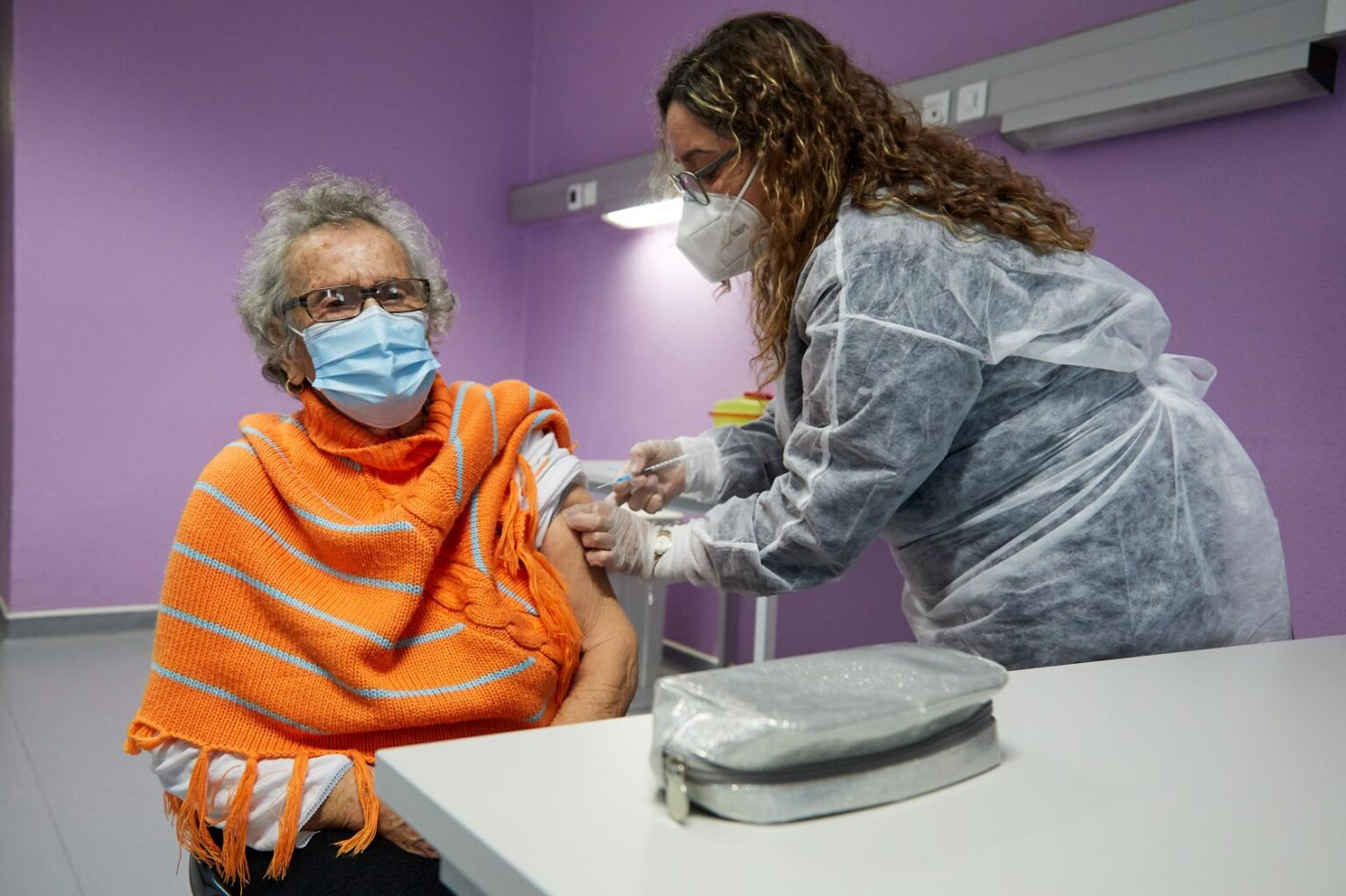
In an interview with Lusa news agency, the president of the Portuguese Society of Public Health (SPSP) and former Director-General of Health, Francisco George, gave an “extremely positive” assessment of this number, stressing that it is “fundamental to continue vaccinating.”
“What all Portuguese people need to understand is the necessity of continuing to get vaccinated annually because the virus continues to circulate. Without the initial severity, it’s true, thanks to the protective antibodies that the Portuguese have acquired, on the one hand, and as a result of vaccination, on the other hand, but it continues to circulate,” said Francisco George.
Five years ago, the first batch of vaccines, developed by Pfizer-BioNTech, arrived in Portugal, and the campaign symbolically began at the São João Hospital in Porto, when infectious disease specialist António Sarmento received the vaccine from nurse Isabel Ribeiro, in the presence of the then Minister of Health, Marta Temido.
Portugal began the first phase of vaccination against the disease caused by the SARS-CoV-2 coronavirus more than nine months after the first case was registered in the country.
In response to Lusa, the DGS (Directorate-General of Health) indicated that more than 32 million vaccines have been administered in Portugal in those five years.
“Timely decision”
For Francisco George, “vaccinating the entire population and generalizing the vaccine was a very timely decision” and the “success of the initial campaign was due to the way it was organized and led,” and now “the focus should be on maintaining the pace.”
“Twelve thousand deaths were avoided as a result of vaccination in the first two years,” said Francisco George, citing data presented in September 2023 by Infarmed – the National Authority for Medicines and Health Products – based on studies by the Institute of Public Health of the University of Porto (ISPUP) and the World Health Organization Europe.
The public health expert said that this data, which refers to the “early stages, the phase of greatest uncertainty and concern” that followed the pandemic period, shows “even more and much more” the importance of vaccination.
“It is enough to mention the impact during the first two years, an impact that translates into the prevention of more than 1.2 million infections, infections that would have occurred without vaccination and that were avoided. It is also estimated that more than two million days of hospitalization were also avoided,” he added.
Francisco George commented that it was “no surprise” to see the vaccine being recommended for continued use, especially since “it has been adapted in response to changes in the circulating virus.”
“Just like the flu virus, the Covid-19 virus has also undergone mutations, mutations that required adaptation, which was particularly important for age groups over 60 and for those with other health problems, namely chronic diseases. It is important to continue getting vaccinated during all the colder seasons of the year, along with the flu vaccine,” he emphasized.
Side effects
Regarding side effects and complaints after receiving the vaccine, Francisco George considers these “not very significant or worrying,” stressing that “studies on side effects are constantly being analysed by Infarmed (the Portuguese National Authority of Medicines and Health Products).”
“They are mostly mild local reactions, felt for one, at most two days, and rarely accompanied by general symptoms. They do not represent any kind of concern,” he concluded.
The Covid-19 vaccine is intended for the entire population, but priority, especially in the seasonal autumn-winter campaigns, is given to the most vulnerable groups, such as the elderly, people with chronic diseases, and healthcare professionals, to prevent severe illness, hospitalization, and death. This is an ongoing public health strategy to mitigate the impact of the virus.