
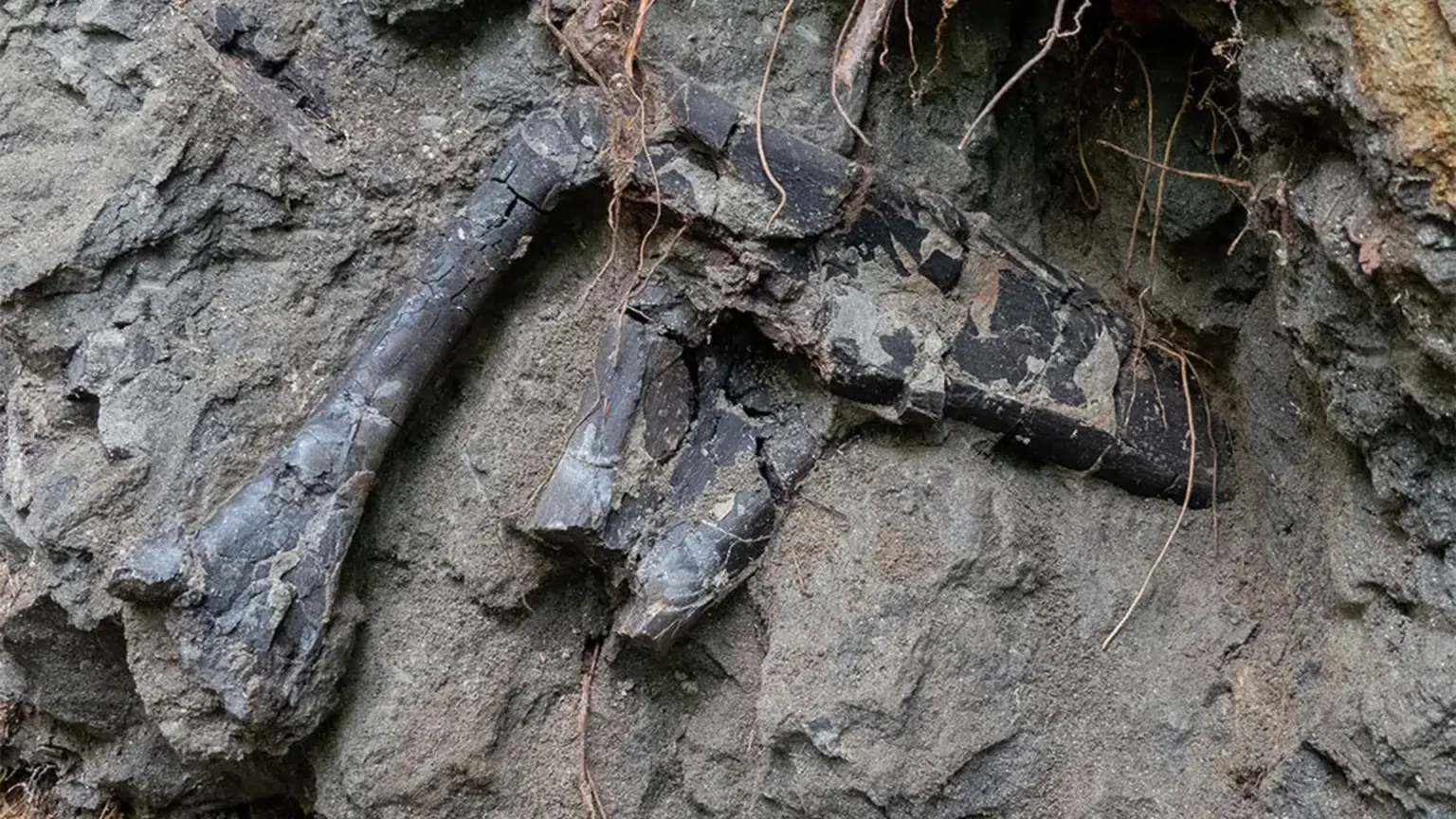
A Hungarian-Romanian team discovered an exceptional site in the Hațeg Basin, Transylvania: 800 bones concentrated in a minimal space, a find that surpasses any previous fossil record in the region.
The site, named K2, was located by the Valiora Dinosaur Research Group and studied by the Eötvös Loránd University, which immediately recognized its importance.
An Extraordinary Fossil Deposit
For decades, Hațeg was famous for its fossil record, although with limitations: scattered, broken, or isolated remains. The discovery at K2 shatters that image. The bones protruded from the gray clay, revealing a compact accumulation of vertebrates.
Geological analysis places the origin at 72 million years ago, when violent rivers carried bodies to a lagoon. There, the current lost strength, and the bones settled at the bottom. Several successive floods expanded the layer, creating a unique fossil archive.
Diversity of Species
Researchers identified at least 17 species in the assemblage:
- Bipedal rhabdodontid about two meters long, common on the island of Hațeg.
- Young titanosaur, with a partially articulated skeleton, the most complete sauropod in the region.
- Turtles, crocodiles with diverse dentitions, lizards, amphibians, fish, pterosaurs, and small mammals.
The mix reflects a broad and stable ecosystem, with wetlands, waterways, and subtropical forests.
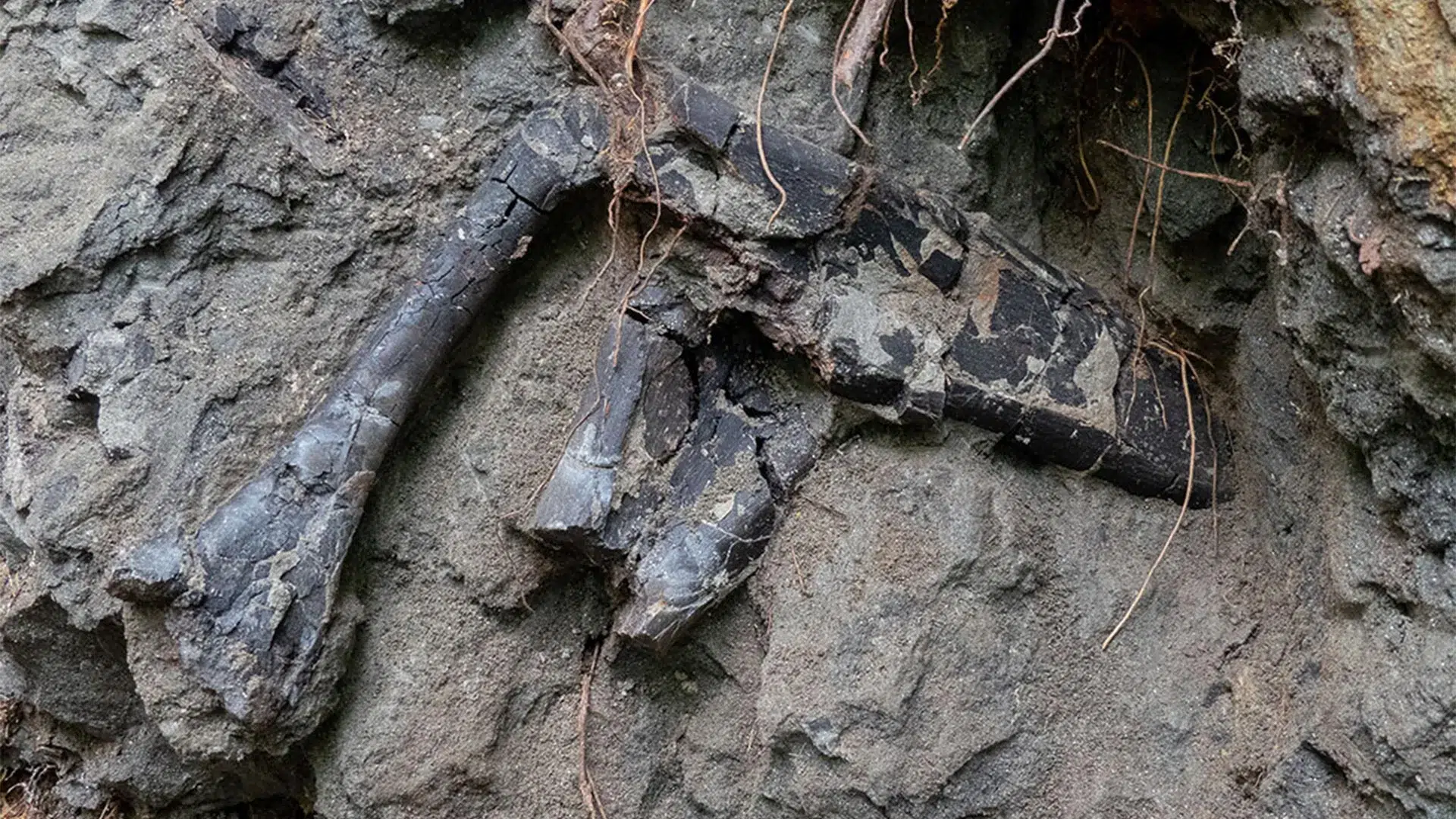 The discovery of an impressive fossil archive in Hațeg reveals new aspects of life millions of years ago.
Paleontological Significance
The K2 site is located at the beginning of the Maastrichtian and allows comparison of its species with those from younger sites in the basin. The results suggest a surprisingly stable fauna over millions of years.
The Hațeg Basin is famous for cases of island dwarfism, such as the titanosaur Magyarosaurus dacus, which evolved under conditions of isolation and limited resources.
Upper Cretaceous Context
The discovery is framed in the Upper Cretaceous (100.5–66 million years ago), characterized by:
- Fauna: rise of tyrannosaurs, ceratopsids, hadrosaurs, and ankylosaurs; abundance of mammals and birds; mosasaurs dominating the seas; giant pterosaurs like Quetzalcoatlus.
- Flora: global expansion of angiosperms (flowering plants), transforming ecosystems.
- Geography and climate: continents in recognizable forms (Laurasia and Gondwana), interior seas, warm and humid climate, no permanent polar ice caps.
- Volcanism: intense volcanic activity that affected the climate.
- K-Pg extinction: 66 million years ago, an asteroid impact caused the disappearance of non-avian dinosaurs and multiple groups.
The K2 site redefines the view of the Hațeg Basin: from a fragmented fossil record to a highly productive deposit that offers clues about the evolution and stability of fauna in the Upper Cretaceous.
This discovery not only expands knowledge about dinosaurs and their ecosystem but also reinforces the importance of Hațeg as one of the most fascinating settings in European paleontology.