
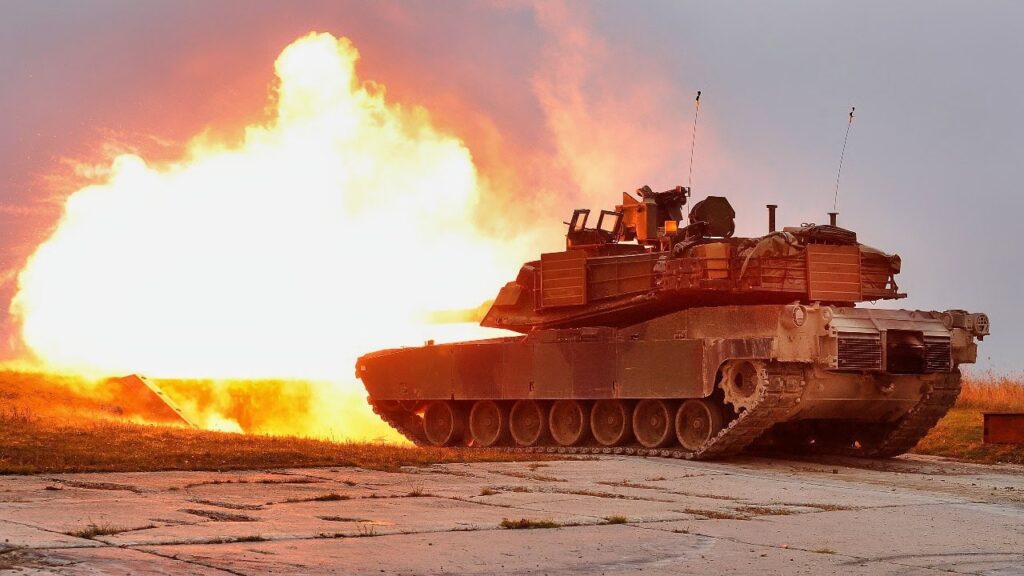
Key Points and Summary – Estonia’s foreign intelligence chief, Kaupo Rosin, strikes a notably less alarmist tone than NATO leaders, warning Russia could attack within five years.
-He argues Moscow currently appears to respect NATO and avoid open conflict, pointing to coordinated alliance responses that may be blunting “grey-zone” activity like airspace incidents and undersea cable sabotage.
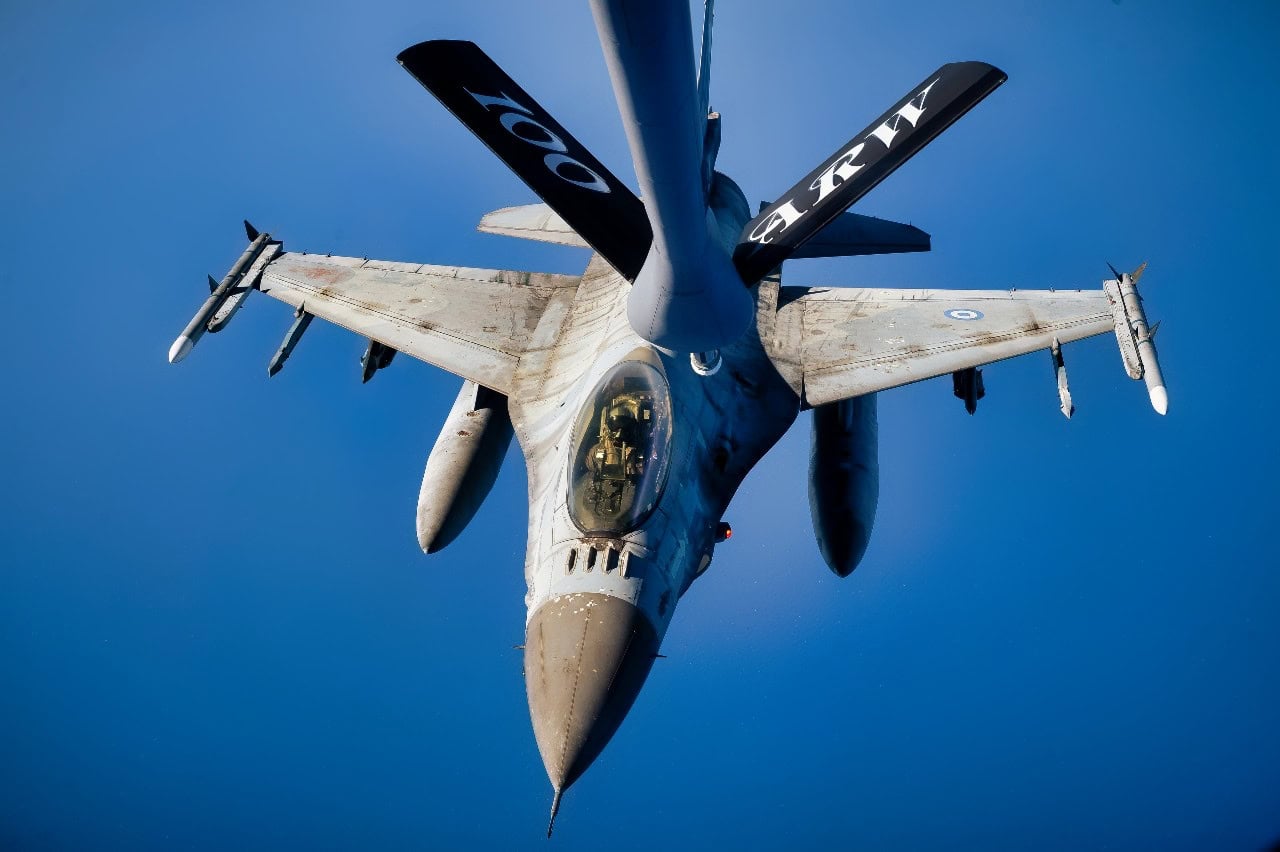
A U.S. Air Force KC-135 Stratotanker aircraft, assigned to the 100th Air Refueling Wing, refuels a Hellenic Air Force F-16 Fighting Falcon aircraft during exercise RAMSTEIN FLAG 2024 while flying over the coast of Greece, Oct. 4, 2024. RAFL24 demonstrates NATO unity and strength, as Allies across the Euro-Atlantic area train side by side in defensive and offensive air operations scenarios in support of the enduring commitment to shared values and ability to adapt to the emerging environment. (U.S. Air Force photo by Senior Airman Edgar Grimaldo)
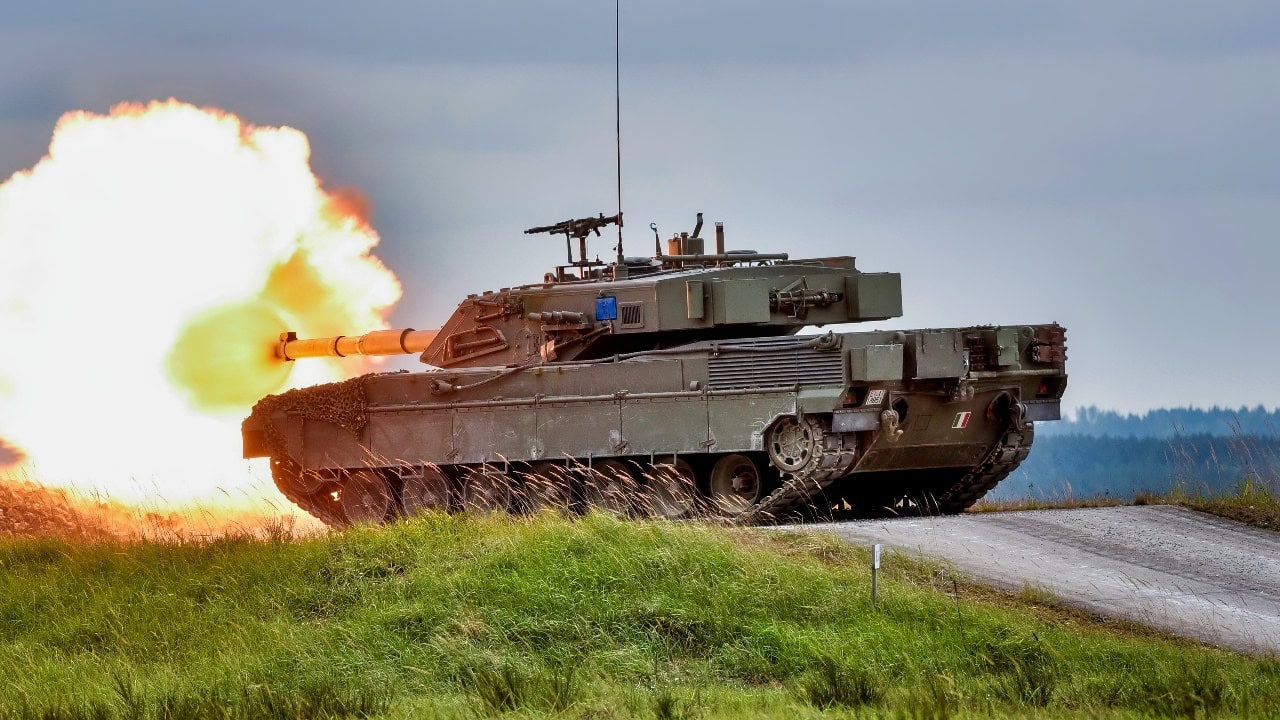
An Ariete Italian tank, fires at their target, during the Strong Europe Tank Challenge (SETC), at the 7th Army Joint Multinational Training Command’s Grafenwoehr Training Area, Grafenwoehr, Germany, May 12, 2016. The SETC is co-hosted by U.S. Army Europe and the German Bundeswehr, May 10-13, 2016. The competition is designed to foster military partnership while promoting NATO interoperability. Seven platoons from six NATO nations are competing in SETC – the first multinational tank challenge at Grafenwoehr in 25 years.
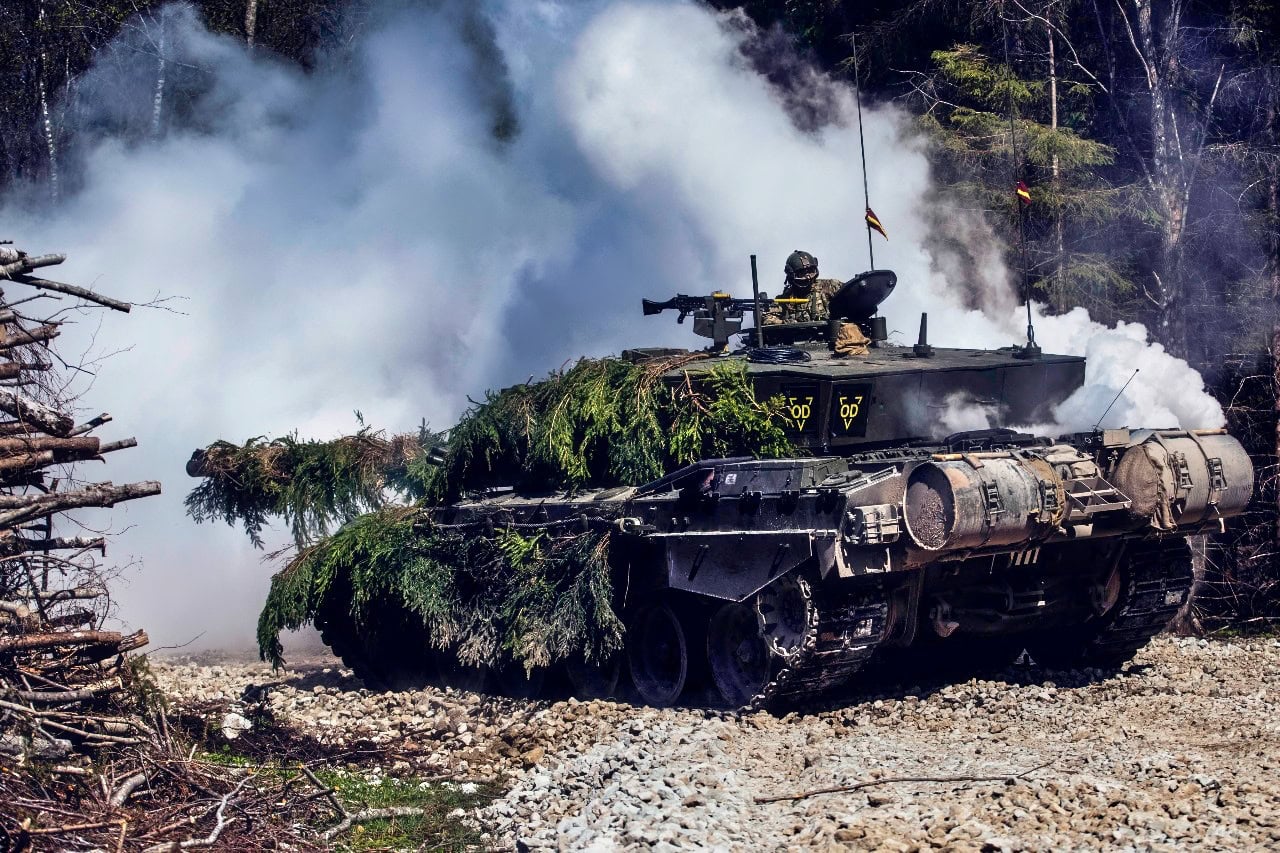
A British Army Challenger 2 Main Battle Tank (MBT) lays down a smoke screen during Spring Storm 19, Estonia’s largest annual military exercise. Roughly 9,000 soldiers from Estonia, other NATO Allies and partner nations have gathered near the town of Jõhvi to engage in a collective defence exercise, strengthening their ability to work together in times of crisis. The exercise runs from 29 April until 10 May.
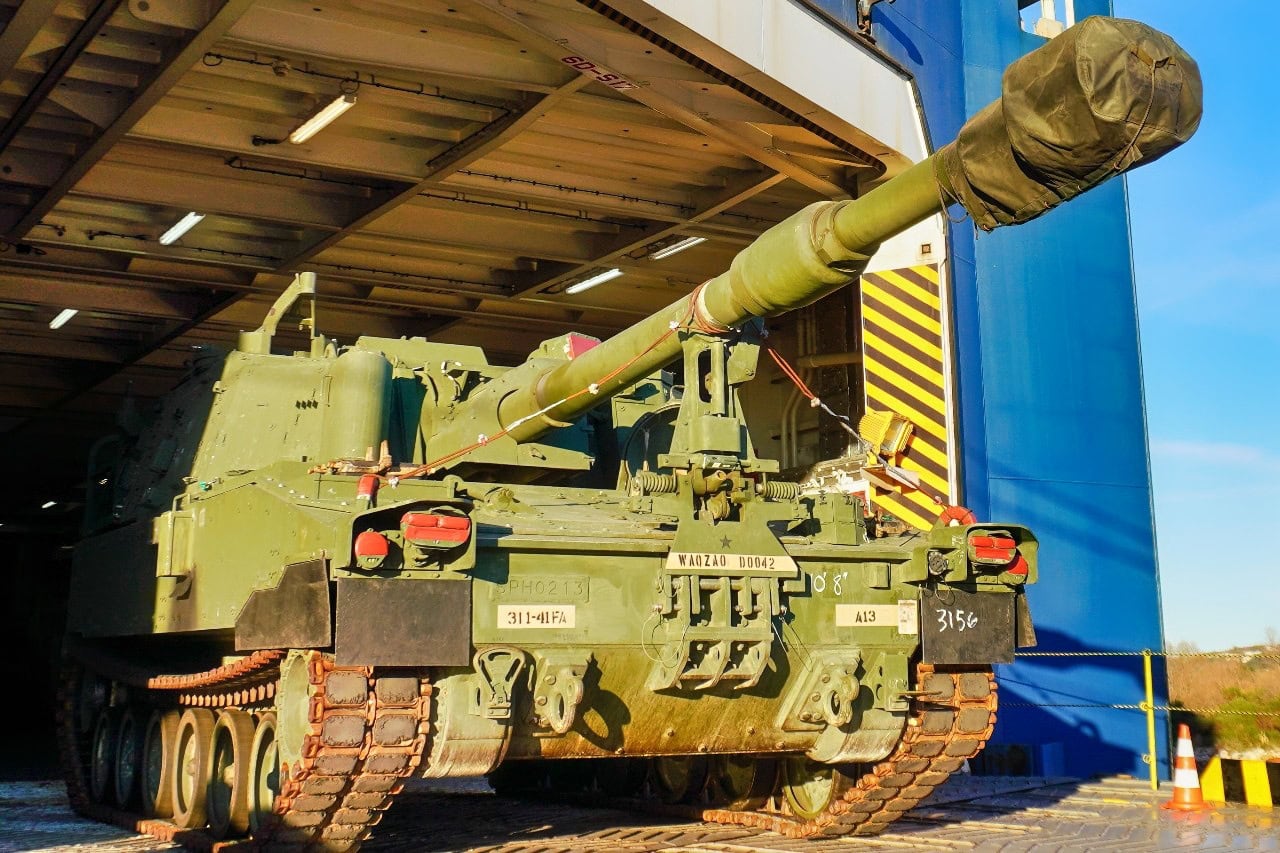
A U.S. M109 Paladin howitzer drives off the vessel Liberty Peace during offloading operations at the port of Koper, Slovenia on December 28, 2024. This Reception, Staging, and Onward Movement (RSOM) operation in the port of Koper is bringing in 1-3ID, the next Regionally Aligned Force (RAF), into the European Theater. These forces will be then transported by the 21st Theater Sustainment Command to their forward operating sites across NATO where they will conduct interoperability training with Allies and partners. The intent of these RAFs is to assure our allies and deter all adversaries.
-Rosin also rejects the catch-all label “hybrid,” saying it downplays what’s happening—sabotage should be called sabotage, cyberattacks called cyberattacks.
-Still, he cautions the situation can change and says sustained deterrence, defense investment, and support for Ukraine remain essential.
Is Europe Overstating a Russia-NATO War Timeline? Estonia’s Intel Chief Pushes Back
Earlier this month, NATO Secretary General Mark Rutte reiterated warnings that the transatlantic Western military alliance should be prepared for a potential attack by Russia within the next five years—or perhaps even earlier.
He further predicted that the scale of such a NATO-Russia conflict would be on a level not unlike that of Europe during World War II.
“The dark forces of oppression are on the march again,” Rutte said during a speech in Berlin. “We are Russia’s next target.”
But speaking on Monday on Eesti Rahvusringhääling (ERR), the Estonian Public Broadcasting organization, the Estonian Foreign Intelligence Service Director General, Kaupo Rosin, said he sees no indication that President Vladimir Putin is planning to attack the Baltic states or any other NATO nation any time soon.
This is despite increasing warnings from European officials that a direct conflict between Moscow and the West is more likely than not in the coming years.
“We’ve seen that, as a result of our responses, Russia has altered its behavior following various incidents that have occurred more broadly in the region,” he said. “So far, it’s still clear that Russia respects NATO and is currently trying to avoid any open conflict.”
Estonia is one of the three small Baltic states and is also a former Soviet republic. Since the breakup of the USSR, its relations with Moscow have been less than friendly.
The country’s policies have been strongly oriented towards countering threats from Russia against the NATO alliance in general and the nation in particular.
Estonia has also been a strident supporter of Ukraine from the day that Putin launched his full-scale invasion in February 2022.
But Rosin’s discounting the chances of a Russian attack is at odds with the warnings from other European officials who state that Putin is planning a direct military confrontation with the West, particularly should he prevail in the war with Ukraine.
Making War in the Proverbial Grey Zone
Rosin stated that NATO’s coordinated responses to Russian airspace violations in his and other alliance members’ airspace and suspected acts of sabotage – specifically the damage done to undersea cables by Russian “commercial” vessels in the Baltic Sea – are causing Putin to scale back his “grey zone” attacks.
The Estonian intelligence chief credits NATO solidarity with having tempered Moscow’s actions as of late.
“This doesn’t rule out the possibility of future incidents because military activity remains high and the war in Ukraine is ongoing,” the spy chief said. “In theory, such events are still possible, but at the moment we don’t see any indication that Russia is deliberately trying to escalate.”
But other European defense and intelligence officials remain pessimistic. The German Defense Minister Boris Pistorius projected that a conflict could occur as soon as two years from now. Blaise Metreweli, the recently-appointed head of Britain’s MI6 foreign intelligence service, declared last week that the frontline is everywhere and the West is already operating in a “space between peace and war” with Russia.
In the ERR interview, Rosin criticized the often-employed label of “hybrid attacks” in characterizing Russian activities in Europe, such as the sabotage of infrastructure, cyberattacks, and drone incidents near airports.
“We should call things by their proper names. If it’s sabotage, then it’s sabotage. If it’s a cyberattack, then it’s a cyberattack,” the Estonian intel chief said. “The term ‘hybrid’ tends to soften the reality and gives an overly innocent impression of what’s actually happening.”
Is It Threat Inflation?
Putin has derided warnings from NATO heads of state and their security officials and has denounced them as hysteria. He further insists that Russia has no interest in a direct military confrontation with NATO.
However, the former KGB Lt. Col. has said that Russia is nonetheless ready “right now” to go to war with Europe if Moscow is forced into a confrontation. Other analysts have downplayed such a possibility and are sceptical as to Russia’s current ability to confront NATO, given the losses that Putin’s military has suffered in the almost four-year-long war.
But despite his assessment that no military clash is imminent, Rosin said Russia is still working diligently to derail Europe’s plans for rearmament. He assesses that the Kremlin is playing a longer game, trying to convince Western audiences that Russia poses no threat. One ploy along these lines is that Putin and his surrogates are even suggesting that Moscow could codify a policy of non-aggression toward Europe into its legal system.
“On the other hand, Russia clearly sees value in engaging with certain political parties or population groups to promote the idea that an arms race is pointless—that it diverts money away from other areas like social welfare and that, ultimately, it’s harmful to Europe itself,” said Rosin.
Rosin has also qualified his position, saying Russia may not be planning an attack at the moment, but that the situation could change. To stave off that eventuality, a conscious policy of sustained deterrence, including continued support for Ukraine, remains essential in his view.
“To achieve that, we have to invest in our defense—we meaning Estonia, meaning the European Union, and NATO. Keeping the situation as it is today requires significant effort,” he said.
About the Author: NATO Military Expert Reuben F. Johnson
Reuben F. Johnson has thirty-six years of experience analyzing and reporting on foreign weapons systems, defense technologies, and international arms export policy. Johnson is the Director of Research at the Casimir Pulaski Foundation. He is also a survivor of the Russian invasion of Ukraine in February 2022. He worked for years in the American defense industry as a foreign technology analyst and later as a consultant for the U.S. Department of Defense, the Departments of the Navy and Air Force, and the governments of the United Kingdom and Australia. In 2022-2023, he won two awards in a row for his defense reporting. He holds a bachelor’s degree from DePauw University and a master’s degree from Miami University in Ohio, specializing in Soviet and Russian studies. He lives in Warsaw.