
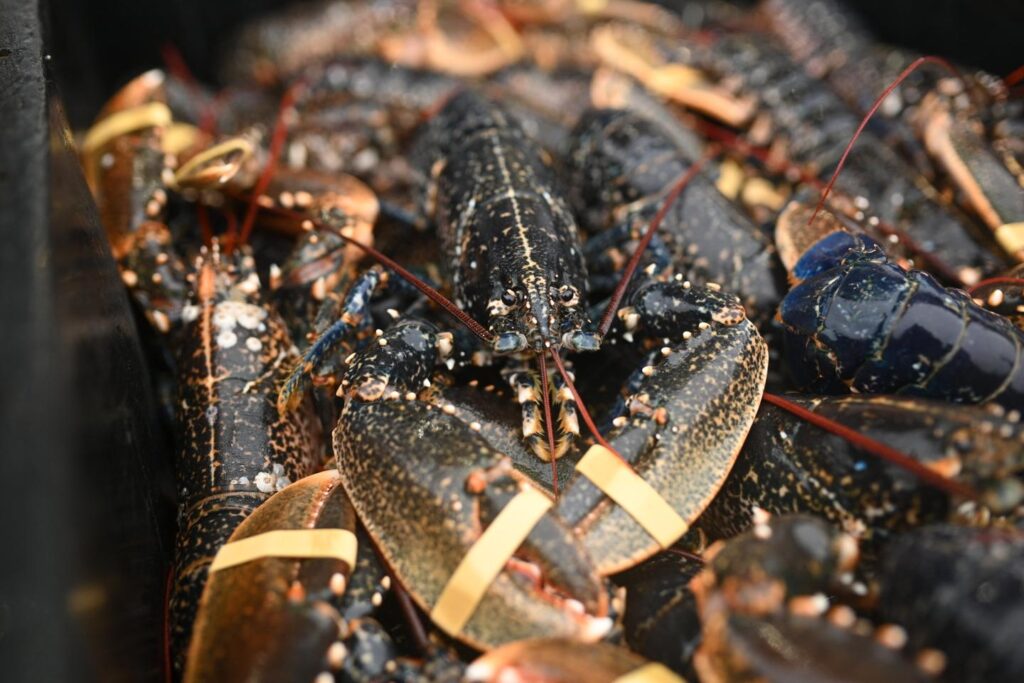
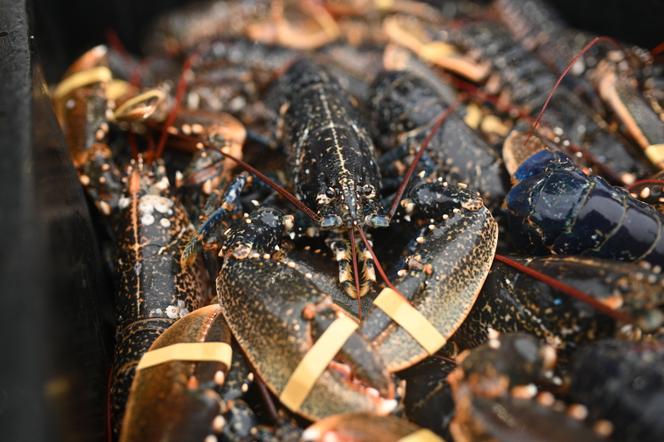
 Lobsters sold by a wholesaler at the port of Bridlington (United Kingdom), December 21, 2020. OLI SCARFF/AFP
During the holiday season, lobster is prized by those who seek out exceptional products – and by those who can afford them. But in the United Kingdom, the fate of these crustaceans is about to change. The Department for Environment, Food and Rural Affairs announced on Monday, December 22, its intention to ban the culinary practice of plunging live lobsters into boiling water.
As part of its new animal welfare policy, the Labour government stated that “live boiling is not an acceptable killing method.” This ban would complement a law passed by the Conservative Party in 2022, the Animal Welfare (Sentience) Act, which recognizes that decapod crustaceans (crabs, shrimp, lobsters, langoustines and crayfish) and cephalopod mollusks (octopuses, cuttlefish and squid) are sentient beings and experience pain just like other animals. All of these species will be covered by the future law.
The legislation follows the publication of a comprehensive report by the London School of Economics in November 2021, which demonstrated that both crustaceans and mollusks possess nociceptors: nerve endings that detect extreme temperatures or mechanical injuries such as tearing. The Labour government now intends to go further than the 2022 law – which was largely symbolic in its recognition – aiming for implementation by 2030. The UK would join Switzerland, Norway, Austria and New Zealand, where this practice is already banned.
You have 67.58% of this article left to read. The rest is for subscribers only.