
Published on
December 31, 2025
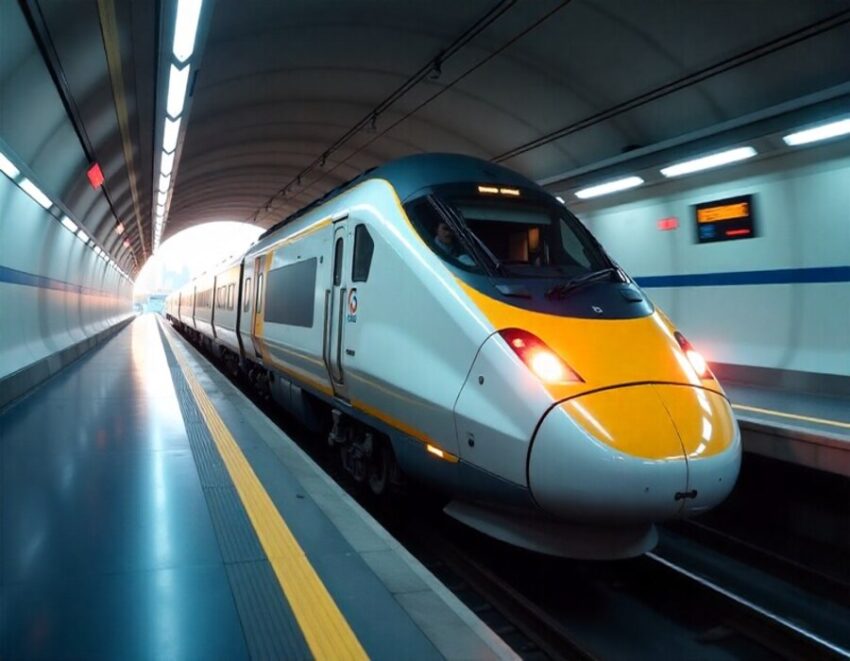
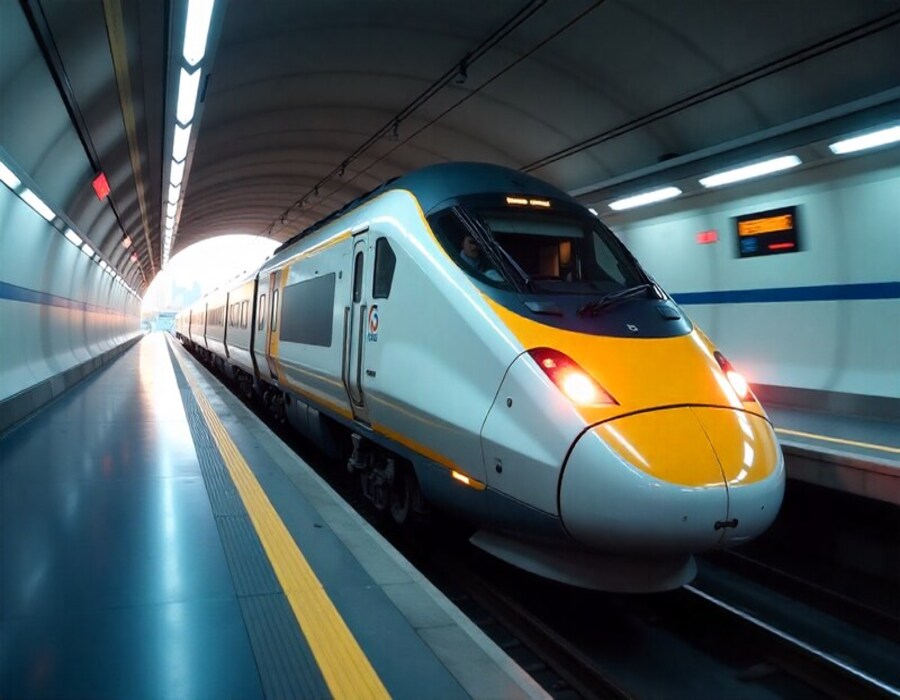
Italy’s FS Group is making a bold move to disrupt the long-standing dominance of Eurostar in the London-Paris travel market. With plans to introduce a state-of-the-art high-speed rail service, FS Group aims to challenge Eurostar’s 30-year monopoly. By constructing a new £87 million depot outside Paris and operating more efficiently with its streamlined logistics, FS Group is positioned to launch its service by 2029, surpassing Virgin’s 2030 debut. This strategic approach, backed by Certares, capitalizes on underutilized capacity in the Channel Tunnel, offering travelers a fresh, competitive alternative and reshaping cross-Channel travel for years to come.

FS Group’s Bold Ambition to Challenge Eurostar with New London-Paris High-Speed Rail
Ferrovie dello Stato Italiane (FS Group), Italy’s state-owned railway operator, is revamping its plans to introduce a high-speed train service between London and Paris, a route long dominated by Eurostar. Although FS Group was initially outpaced by Virgin in the race to challenge Eurostar’s monopoly, fresh developments show that they are not backing down.
The ambitious plans, unveiled by The Telegraph, reveal that FS Group intends to establish its own high-speed rail service between these two iconic European capitals. This marks a new era in cross-channel rail travel, with FS Group aiming to offer an alternative to Eurostar’s decades-old monopoly. Despite Virgin’s success in becoming the first competitor to Eurostar since its inception in the 1990s, FS Group is making strides to break into this competitive space.
Unlike Virgin and Eurostar, which rely on the Temple Mills depot in the UK, FS Group plans to construct a new £87 million facility just outside Paris. This cutting-edge depot will enable FS Group to house up to 10 Channel Tunnel trains, addressing potential capacity issues that could arise in the UK, particularly as UK train depots approach full capacity.
One significant aspect of FS Group’s plan is the streamlined logistics it will provide. Only one train will need to be stationed in the UK overnight, allowing for early morning departures from London’s St Pancras. This operational efficiency ensures that the service runs smoothly and offers a competitive edge in terms of cost and travel time.
Backed by US private equity firm Certares, FS Group is aiming to launch its new London-Paris service by 2029, outpacing Virgin’s planned debut in 2030. This strategic move positions FS Group to take advantage of the underutilized capacity of the Channel Tunnel, which currently operates at under 50% of its full capacity. This leaves ample room for expansion and growth in the cross-Channel rail sector, giving FS Group a distinct advantage as it moves forward.
While Virgin has announced plans to introduce new routes connecting London with Paris, Brussels, and Amsterdam by 2025, FS Group is setting its sights on capitalizing on the current gaps in the market. Virgin’s expansion to destinations like France, Germany, and Switzerland speaks to the growing demand for high-speed rail travel in Europe, but FS Group’s move to build a new depot outside Paris presents a fresh and compelling solution to the challenges of capacity management and operational flexibility.
Virgin’s CEO, Sir Richard Branson, has emphasized the need to break Eurostar’s 30-year monopoly and bring “Virgin magic” to the cross-Channel rail routes. This indicates that the competition between the UK’s most well-known rail operators will be fierce in the years to come, each vying to dominate the lucrative London-Paris market.
On the other hand, Eurostar, long the established player in this space, is not standing still. In response to mounting competition, Eurostar has announced a major £1.7 billion investment plan, aimed at developing a new fleet of double-decker trains. This ambitious upgrade to its existing trains is designed to improve passenger experience and increase capacity. Eurostar is also eyeing new destinations for expansion, including Switzerland, Germany, and Italy, signaling a forward-thinking approach that will keep the competition alive and well in Europe’s high-speed rail network.
The rivalry between these three major players—FS Group, Virgin, and Eurostar—signals a new chapter in European rail travel. As these companies continue to innovate and expand, the future of cross-Channel travel looks set to become more competitive, efficient, and accessible. FS Group’s bold move to challenge Eurostar with a new London-Paris route is just one example of the ongoing transformation of Europe’s rail system, with each company striving to meet the growing demand for faster, more comfortable, and more sustainable travel options.
Italy’s FS Group is set to challenge Eurostar’s 30-year monopoly by introducing a new high-speed rail service between London and Paris. With plans to build a state-of-the-art depot in Paris and a launch set for 2029, FS Group aims to disrupt the market and offer travelers a fresh, competitive alternative.
With the backing of Certares and a clear vision for the future, FS Group is poised to make a significant impact in the cross-Channel rail market. If all goes according to plan, passengers traveling between London and Paris could soon have more options than ever before, ushering in an era of healthy competition, improved services, and enhanced connectivity across Europe.
