
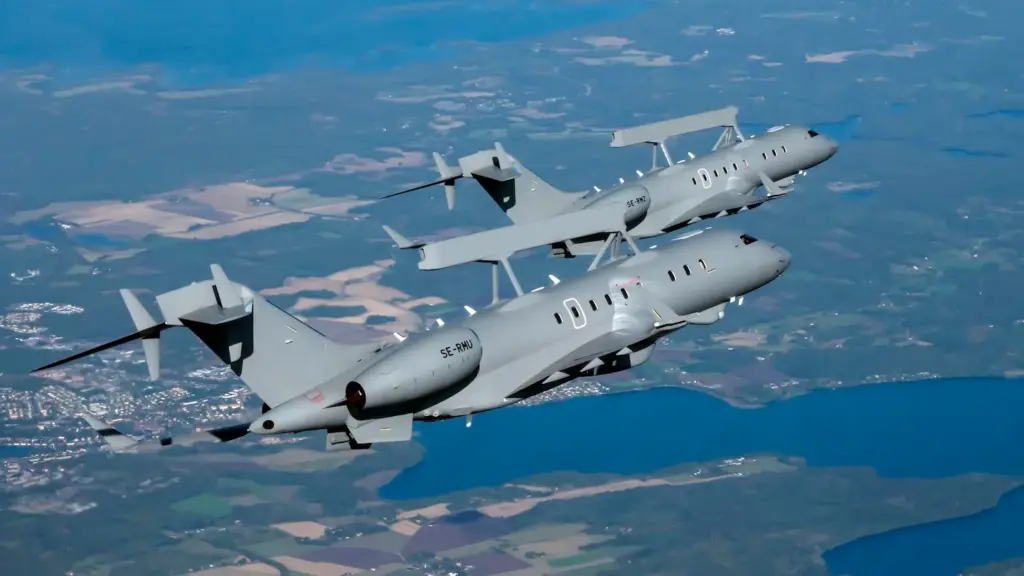
PARIS— France has finalized a major airborne surveillance procurement, signing a contract worth 12.3 billion Swedish kroner, or about $1.3 billion, for two Saab GlobalEye airborne early warning and control aircraft.
The deal was confirmed in Washington, underscoring the program’s strategic relevance to transatlantic security cooperation. France’s defense establishment and Saab AB concluded the contract following months of negotiations, first revealed at the Paris Air Show in June.
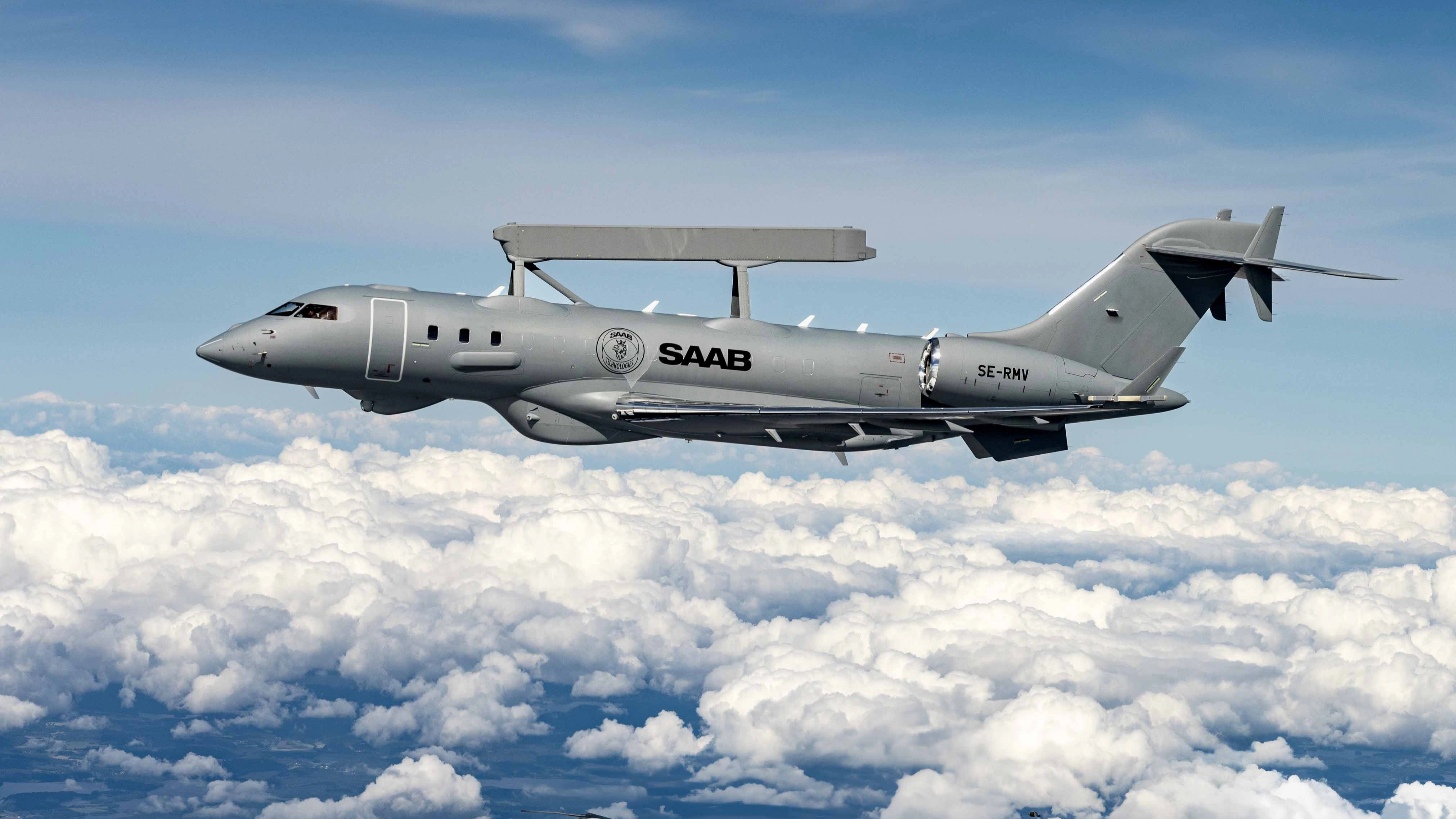 Photo: Saab
France Finalizes Saab GlobalEye Deal
Under the finalized agreement, France will receive two Saab GlobalEye aircraft, with the first delivery scheduled for 2029 and the second expected by 2032.
The contract also includes ground-based systems, crew training, logistical support, and associated mission equipment.
The agreement contains an option for two additional aircraft, allowing France to expand its fleet if operational needs increase.
Saab described the order as a milestone that strengthens industrial and defense cooperation between France and Sweden.
This purchase makes France the second export customer for GlobalEye, following the United Arab Emirates, which already operates five aircraft.
Saab has actively promoted the platform to European and NATO partners seeking alternatives in the airborne surveillance domain.
 Photo: Bombardier
Platform Capabilities
GlobalEye is built on the Bombardier Global 6000 and 6500 business jet family, a notable departure from traditional large airliner-based surveillance aircraft.
The smaller airframe reduces fuel burn, maintenance costs, and infrastructure demands while retaining advanced mission performance.
The aircraft’s core sensor is Saab’s Erieye Extended Range radar, designed to detect airborne and maritime targets at long distances. When operating at cruising altitude, the system can identify low-flying threats up to 285 miles away.
Saab has emphasized that modern electronics miniaturization allows GlobalEye to deliver high-end surveillance, command, and control functions despite its reduced size.
The platform is also capable of integrating multiple sensors to support air, sea, and land domain awareness.
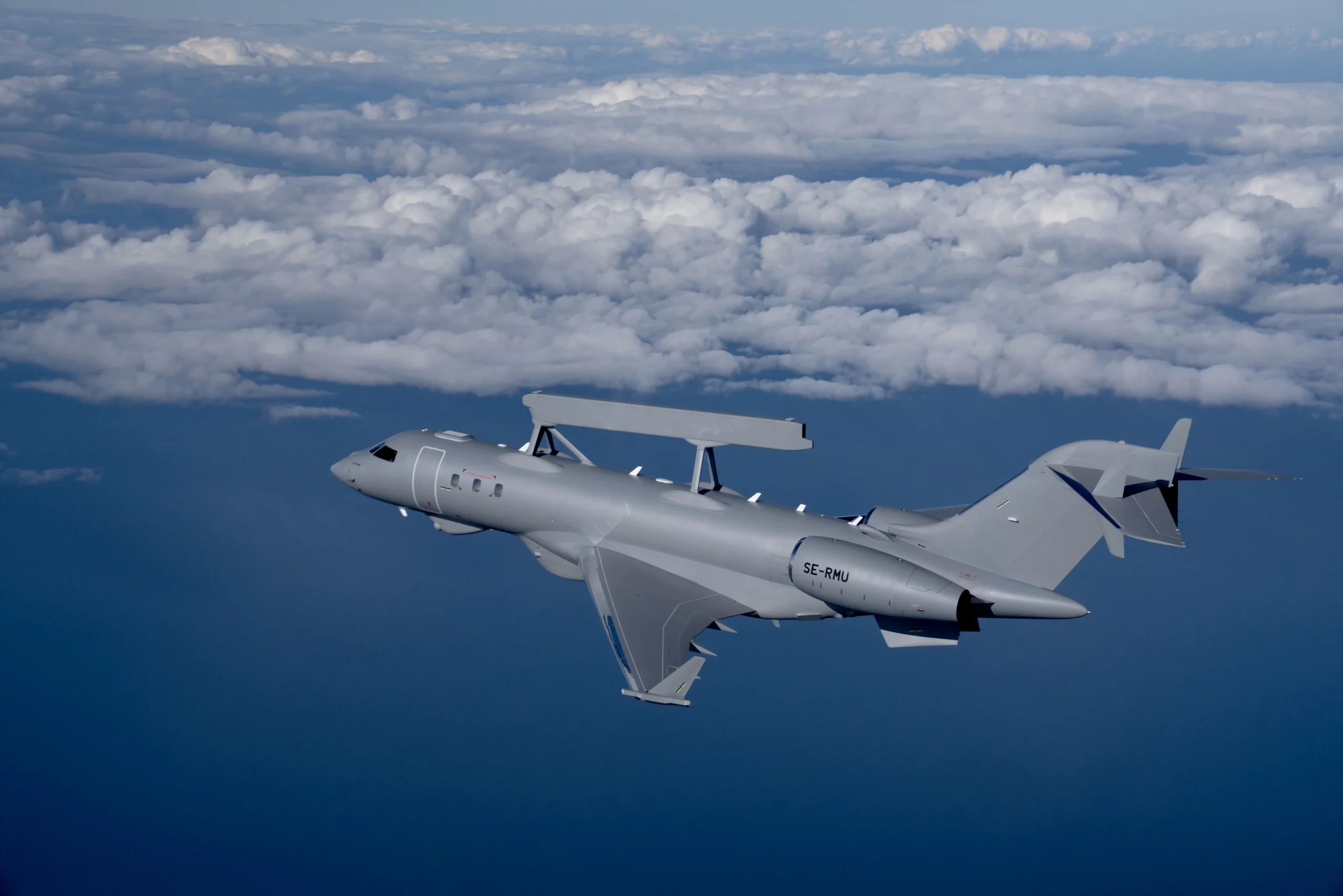 Photo: SaaB GlobalEye Flying At High Altitude / Saab
Fleet Replacement Strategy
France intends to replace its current fleet of five Boeing E-3F Sentry aircraft, which entered service in 1991.
Despite extensive upgrades, those aircraft are expected to retire during the 2030s as sustainment costs rise.
Compared with the E-3’s Boeing 707-based design, GlobalEye offers a 70 percent reduction in maximum takeoff weight. This shift is expected to improve operational flexibility and allow deployments from smaller airfields.
The move aligns with a broader trend among air forces to adopt more agile and economical intelligence, surveillance, and reconnaissance platforms.
France’s decision reflects both fiscal considerations and evolving mission requirements.
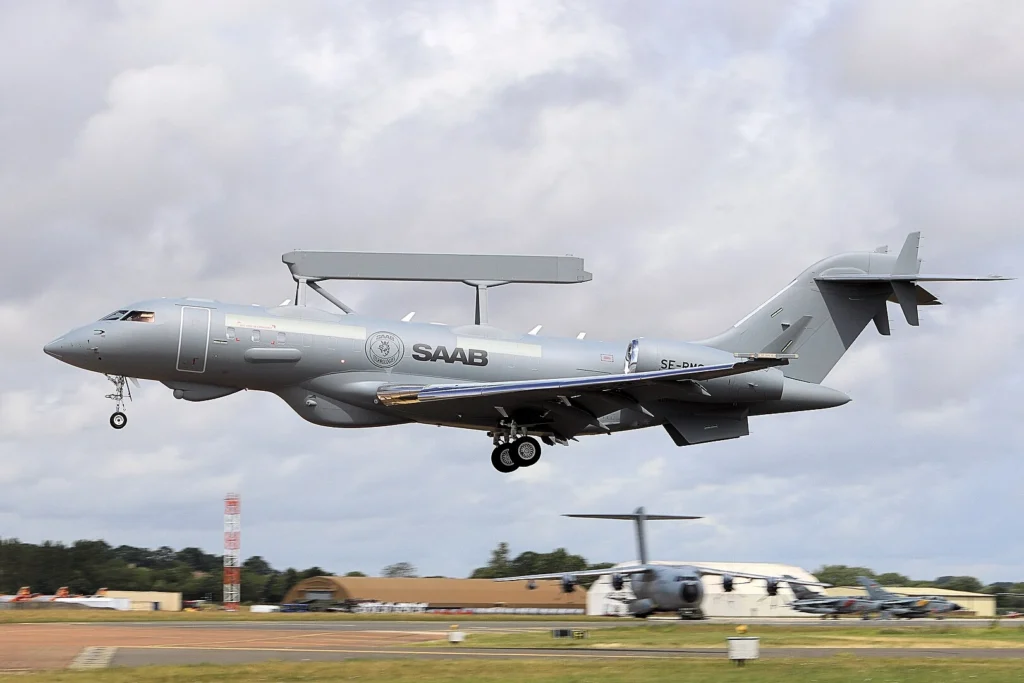 Photo: By Airwolfhound from Hertfordshire, UK – Globaleye, CC BY-SA 2.0, https://commons.wikimedia.org/w/index.php?curid=134845884
About Saab GlobalEye
Saab GlobalEye is a swing-role airborne early warning and control system that delivers simultaneous, real-time surveillance across air, sea, and land.
It combines the Erieye Extended Range radar with an advanced multi-sensor suite on the Bombardier Global 6000 or 6500 platform to provide continuous national security awareness.
Advanced Multi-Domain Situational Awareness
GlobalEye is the world’s first swing-role AEW&C solution designed for true multi-domain operations from a single aircraft. It provides long-range detection, identification, and tracking of objects in the air, at sea, and over land.
Active and passive sensors share data into an integrated command and control system that supports timely decisions by national authorities.
This capability helps maintain peace, manage crisis, and support armed forces in war. The system is positioned as a national asset that protects territorial integrity and strengthens international security cooperation.
Platform, Design, and Integration
GlobalEye is built on Saab’s experience in radar, command, control, and communications. It represents world leading systems integration on a proven long range business jet platform.
The Global 6000 or 6500 aircraft delivers over 11 hours of endurance, state of the art avionics, excellent crew working conditions, and runway performance from around 6,500 feet. The aircraft includes a full self protection suite and is ideally suited for special mission applications.
Sensor Suite and Erieye ER Radar
The Erieye ER Active Electronically Scanned Array radar extends detection distance for small and future air targets. Energy is focused on areas of interest to maintain performance in clutter and jamming environments. GlobalEye’s instrumented range is well above 350 nautical miles, supporting persistent wide area surveillance. The system uses both active and passive sensing to build a real time operational picture.
 Photo: US Navy
Maritime Surveillance Capability
For maritime missions, GlobalEye detects targets out to the elevated horizon, including very small vessels such as jet skis. The combination of Erieye ER and maritime radar enables detection down to periscope level. Identification is supported by AIS, electro-optical systems, and ISAR imaging, improving classification accuracy across a wide range of conditions.
Ground Surveillance and Wide Area Coverage
Ground Moving Target Indication enables the detection and tracking of moving vehicles across large areas at long range. Dedicated radar imaging supports operations in all weather and lighting conditions, making the platform suitable for border protection, crisis response, and military tasking.
Command and Control System
Sensor data feeds into a multi-domain C2 environment for real-time coordination and information sharing. This improves response speed and supports national and international operations aimed at preserving stability and security.
Mission Endurance and Crew Operations
The GlobalEye platform offers long range endurance, low noise levels, and efficient mission performance. Onboard systems and crew facilities support extended operations while maintaining comfort and effectiveness throughout long sorties in peace, crisis, or war.
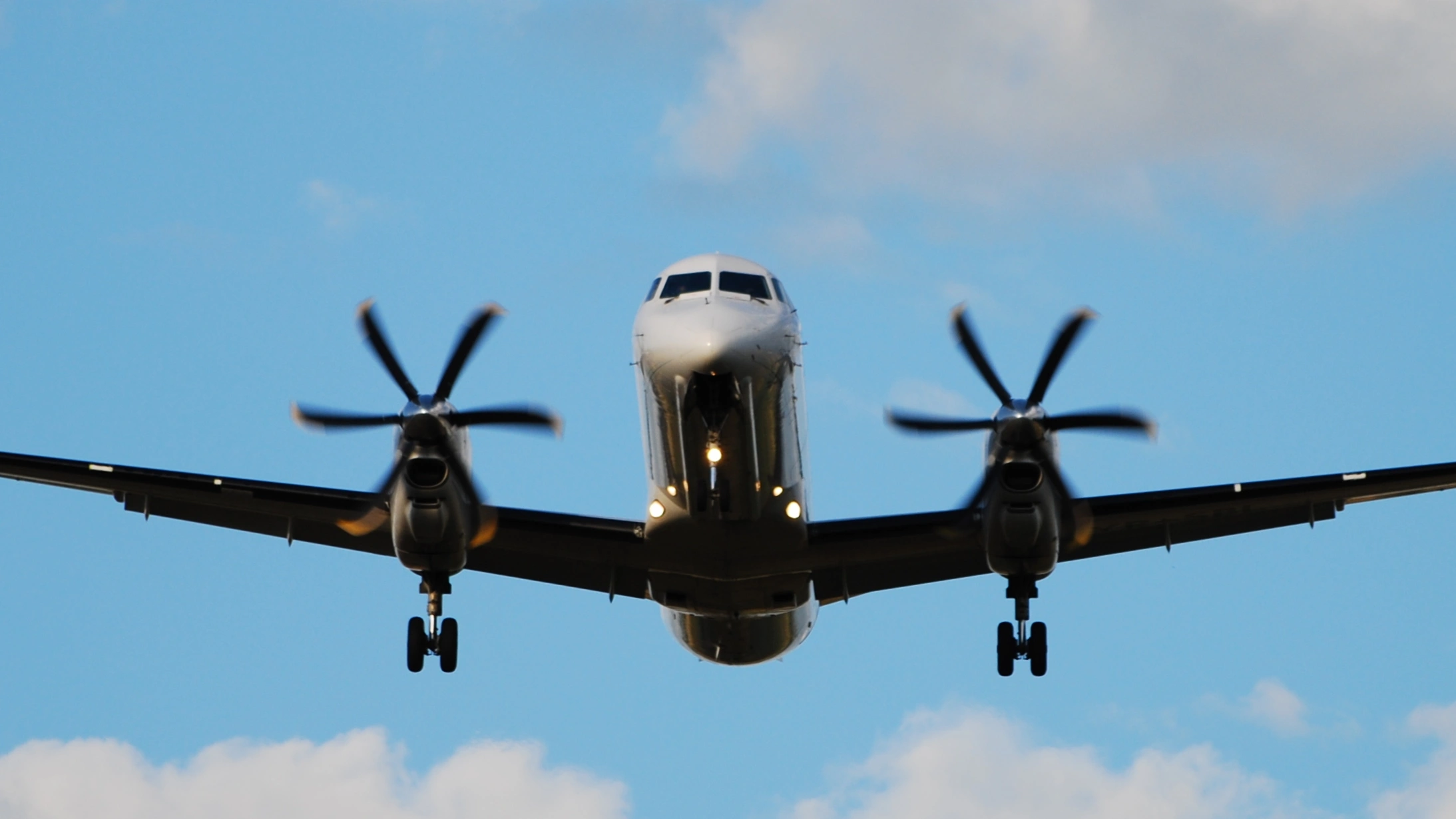 Photo: Andrei Demoftei | Wikimedia Commons
https://commons.wikimedia.org/wiki/File:Saab_2000_front_view_02-0012_(2689986366).jpg
Bottom Line
France’s $1.3 billion GlobalEye purchase signals a decisive shift toward smaller, more efficient airborne surveillance aircraft.
The deal strengthens France’s early warning capabilities while setting a clear path to replace its legacy E-3 fleet.
Stay tuned with us. Further, follow us on social media for the latest updates.
Join us on Telegram Group for the Latest Aviation Updates. Subsequently, follow us on Google News