
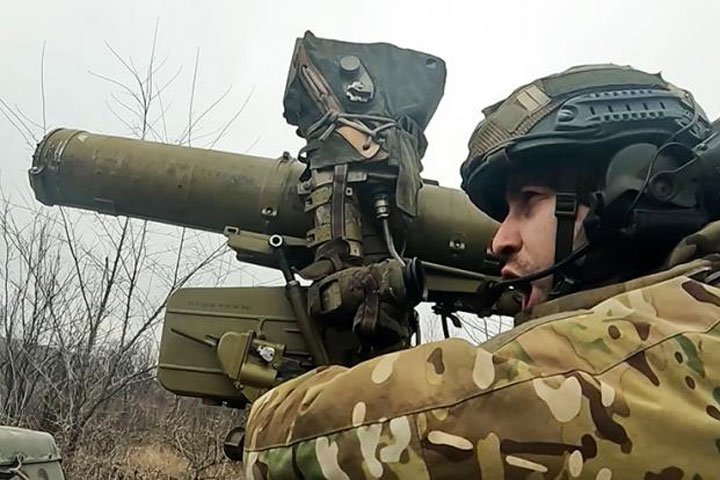
On the eve of this, the Prosecutor General’s Office of Azerbaijan issued a warning: participation in armed conflicts abroad constitutes a grave crime. Under Azerbaijani law, such an offense carries a prison sentence of 8 to 20 years. It is also clear why reminding people of liability for taking part in someone else’s war has become so timely. As noted in the statement by the Prosecutor General’s Office, based on recent investigations by law-enforcement agencies and media reports, cases have been observed of Azerbaijani citizens participating in military operations between Russia and Ukraine, as well as in other armed conflicts. It was also stated that several criminal cases have already been initiated.
From which side of the front line those who came to the attention of the prosecutor’s office were fighting, and which of the parties to the Ukrainian war — Moscow or Kyiv — is recruiting Azerbaijani citizens, the Prosecutor General’s Office does not specify. This agency generally avoids generalizations. Of course, it is quite logical to wait for the completion of investigations and court verdicts. But…
Here it is necessary to clearly draw red lines and place the proper emphasis. Both Russia and Ukraine are home to a large number of ethnic Azerbaijanis who carry Russian and Ukrainian passports. As citizens of those countries, they are subject to conscription, serve in the armed forces, and in no way can be considered mercenaries.
It is a different matter when it comes to recruiting citizens of Azerbaijan for the war. And here, far from everything is equivalent. No information has surfaced about any active recruitment of Azerbaijani citizens by Ukraine. Russia, however, has been and continues to be very active in such activities.
First of all, Azerbaijani citizens who live, work, or study in the Russian Federation are being actively “lured” into the war. Stories have circulated on social media about how our compatriots were planted with drugs and threatened with prison sentences unless they signed contracts to take part in the “special military operation” (SMO), as Russia officially calls its aggression against Ukraine. This is, so to speak, the “stick” policy. There is also a “carrot”: in the case of voluntary enlistment, assistance is promised in obtaining Russian citizenship. Finally, one can recall the high-profile story in which Azerbaijani students at one of Moscow’s universities were accused of extremism — the young people had chanted the slogan “Long live Azerbaijan!” while wrapped in the Azerbaijani tricolor. That criminal case was eventually dropped, but information leaked to the press that the students might be sent to the Ukrainian front — on the Russian side, of course.
However, such activity is not limited to Russia itself. As Minval Politika has reported, in early April 2023 screenshots of leaflets in the Azerbaijani language appeared on social media: citizens of our country were being urged to go to the Ukrainian war on Russia’s side, with promises of Russian citizenship, generous payments, apartments, and so on. Initially, a version emerged that these leaflets were addressed to ethnic Azerbaijanis who are Russian citizens. But, as we should note, promising Russian citizenship to them would be pointless at the very least. Moreover, the Russian authorities would have addressed their own citizens — and even migrant workers living in Russia — in Russian.
Finally, it is worth recalling another case: the “Russian House” in the Kyrgyz city of Osh was caught recruiting “volunteers” for the war in Ukraine. One of its employees was even arrested on charges of recruiting mercenaries.
The rationale behind such activity is also clear. First and foremost, Russia is experiencing an acute shortage of “cannon fodder” and is actively drawing soldiers into the war from North Korea and other countries. Citizens of the newly independent states of the former USSR are far more convenient in this regard: there is no need to deal with a language barrier, many armies of the former Soviet republics are still built on the Soviet model, armed with Russian weapons, and so on. But most importantly, as has been repeatedly noted, the flow of “cargo 200” from Ukraine to states that Moscow continues to call the “near abroad,” according to Russian strategists’ calculations, should shift public opinion in those countries in Russia’s favor.
At the informational and ideological level, resistance to such activity is visible to the naked eye. But now the prosecutor’s office is entering the picture. And that is serious. It is difficult to rule out that not only actual or would-be mercenaries, but also recruiters, will become defendants in these cases. Thus, the criminal cases mentioned in the statement by the Prosecutor General’s Office may bring many surprises.
Nurani