
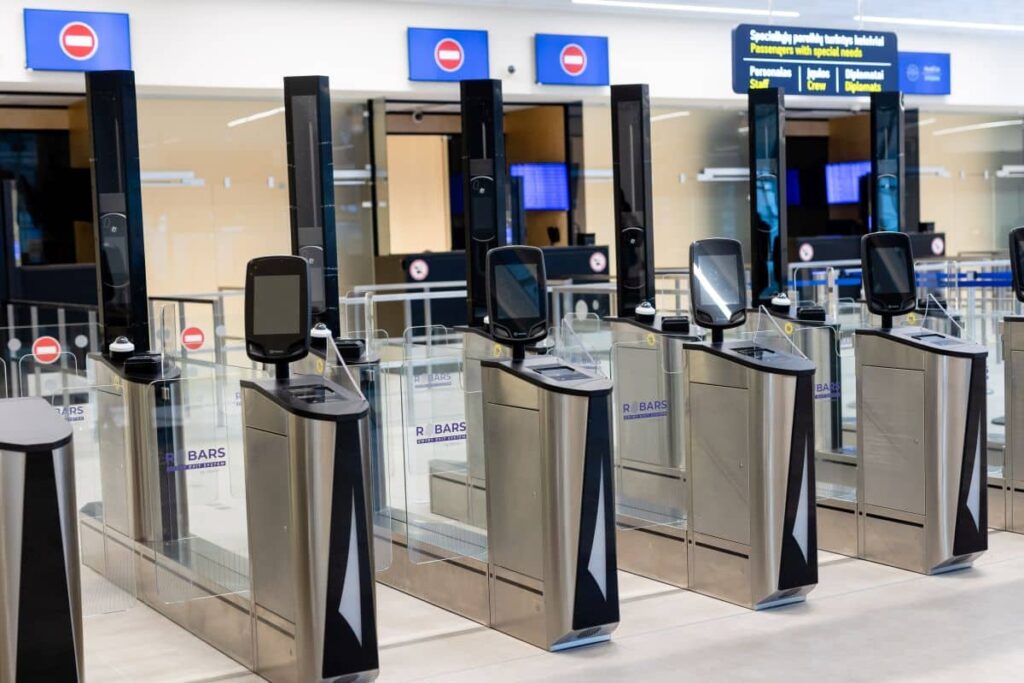
Portugal’s government has suspended its relatively new Entry Exit System at Lisbon’s Humberto Delgado International Airport for three months in use.
The government has acknowledged the chaos and constraints at the arrivals area at Lisbon airport and is taking contingency measures.
In addition to suspending the European Entry Exit System (EES), the Government plans to use the “GNR’s certified capacity at border control by immediately beefing up the number of customs staff and police at the airport.”
The decision to suspend the EES system was announced yesterday (Tuesday, December 30). The decision was taken because of the long queues, delays and chaos for travellers coming from non-Schengen countries.
Among the other problems exacerbating the main problem are teething problems using the new system, staff shortages, and airport overcrowding due to inadequate premises – despite infrastructure improvements – which taken together have actually led to passengers missing flights in some cases.
The biggest factor to the problems has been the EES system implemented in October 2025 which requires more detailed biometric checks for non-EU citizens, slowing down processing times significantly with the additional problem of glitches in the system.
The government has also decided to increase the capacity of electronic and physical equipment for controlling external borders by about 30% (up to the maximum supported by the current airport infrastructure), and the Council of Ministers approved the respective expenditure on Monday, December 29.
The EES was designed to make border checks more modern and efficient: The EES will gradually replace passport stamps with a digital system that records when travellers enter and exit, making border checks faster and helping staff to work more efficiently.
With EES, travellers in theory spend less time at the border thanks to faster checks, self-service options, and the possibility to give their information in advance.
The EES also helps track who comes in and out of the Schengen Area, using fingerprint and face data to stop people from overstaying, using fake identities or misusing visa-free travel.
The EES gives border officers and law enforcement authorities access to important traveller information, helping them to spot security risks and support the fight against serious crimes and terrorism.
SOURCE: Jornal Económico