
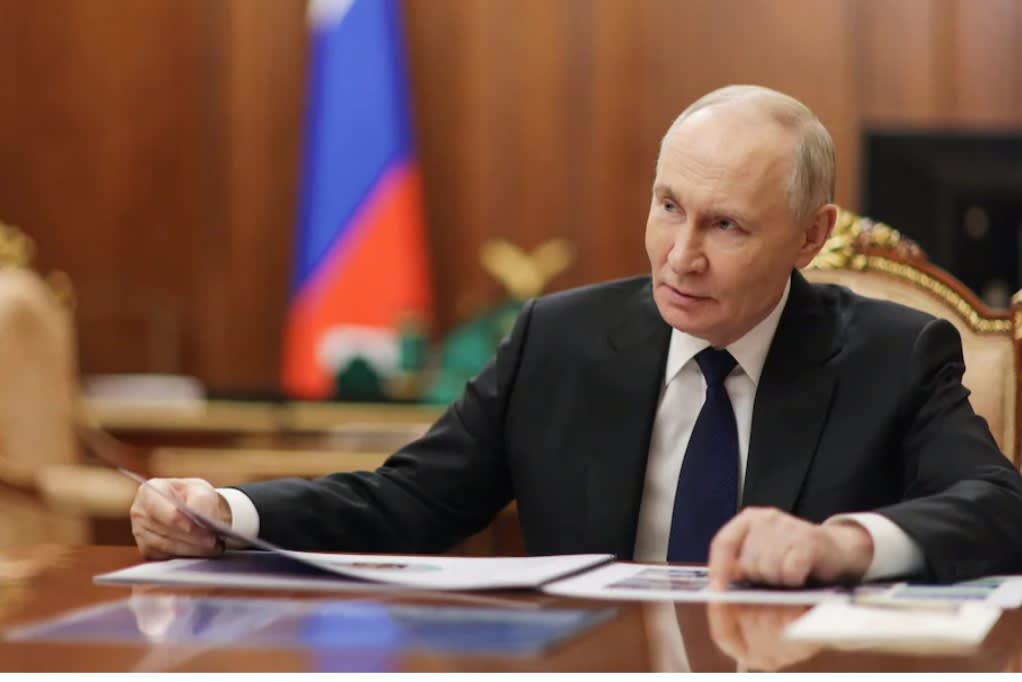
As geopolitical tensions rise across Eastern Europe, Moldova has issued a stark warning that Russia under President Vladimir Putin is preparing a new wave of hybrid attacks aimed at destabilising not only Moldova but the wider European continent.
Moldovan leaders have sounded the alarm over what they describe as an intensifying campaign of hybrid warfare orchestrated by the Kremlin. According to senior officials in Chișinău, Russia is increasingly relying on non-military tactics—ranging from cyberattacks and disinformation to political interference and economic pressure—to weaken European unity and undermine democratic institutions.
What Are Hybrid Attacks?
Hybrid attacks are a modern form of conflict that blend traditional military threats with non-conventional tools. Instead of tanks crossing borders, these attacks often involve fake news, cyber sabotage, election meddling, energy blackmail, and the manipulation of social divisions. Their strength lies in deniability: they are designed to destabilise societies without triggering a direct military response.
Moldova, a small country wedged between Ukraine and Romania, has long been vulnerable to such tactics. Officials argue that what is happening inside their borders is a testing ground for broader operations Russia could deploy across Europe.
Moldova’s Warning to Europe
Moldovan President and security officials have publicly warned that Russia’s goal is not limited to influencing Moldova’s domestic politics. Instead, they believe the Kremlin is attempting to undermine Europe from within, exploiting economic stress, migration fears, and political polarisation.
Authorities in Chișinău point to repeated cyber incidents targeting government institutions, coordinated disinformation campaigns on social media, and alleged efforts to fund and mobilise pro-Russian political groups. These actions, Moldova claims, are aimed at weakening public trust in democratic governance and slowing the country’s pro-European path.
Crucially, Moldovan leaders stress that Europe should not view Moldova’s experience as isolated. What happens in Moldova today, they argue, could happen elsewhere tomorrow.
Disinformation and Political Manipulation
One of the most dangerous elements of hybrid warfare is information manipulation. Moldovan officials say Russian-linked networks are spreading false narratives to inflame social tensions—particularly around sensitive issues such as energy prices, corruption, and relations with the European Union.
These narratives often portray Western institutions as unreliable or hostile while presenting Russia as a protector of traditional values. According to Moldovan authorities, the objective is to create confusion, deepen divisions, and erode public confidence in democratic systems.
Similar patterns have been observed across Europe, reinforcing fears that Russia is refining a playbook designed to destabilise multiple countries simultaneously.
Energy as a Weapon
Energy pressure remains another key component of hybrid attacks. Moldova has repeatedly accused Russia of using gas supplies as leverage, cutting or threatening to cut energy flows during politically sensitive periods. Such actions place enormous strain on economies and households, creating fertile ground for protests and political unrest.
European officials increasingly recognise energy dependency as a national security risk, especially in countries close to Russia’s sphere of influence. Moldova’s experience highlights how economic vulnerability can quickly become a tool of geopolitical coercion.
Why Europe Is Concerned
Europe is paying close attention to Moldova’s warnings for several reasons. First, the continent is already dealing with the fallout of the war in Ukraine, which has reshaped security thinking across the EU and NATO. Second, upcoming elections in several European countries raise concerns about foreign interference and democratic resilience.
Moldova’s message is clear: hybrid warfare does not respect borders. A cyberattack launched in one country can ripple across networks; a disinformation campaign can spread instantly across languages and societies.
European security analysts warn that failing to counter these tactics effectively could weaken institutions from within, without a single shot being fired.
Strengthening Defences Against Hybrid Threats
In response, Moldova is working closely with the European Union and international partners to strengthen cyber defences, improve media literacy, and protect democratic processes. EU support has focused on resilience—helping institutions detect disinformation, secure elections, and reduce energy dependence.
For Europe as a whole, Moldova’s experience serves as a wake-up call. Experts argue that countering hybrid attacks requires coordination across governments, technology platforms, media organisations, and civil society.
A Broader Strategic Picture
From Moldova’s perspective, Russia’s hybrid strategy reflects a broader effort by President Putin to reassert influence over Europe without direct confrontation. By exploiting internal weaknesses, Moscow can challenge European unity at a lower cost and with reduced risk of escalation.
Whether Europe can successfully counter this strategy remains an open question. What is clear, however, is that Moldova’s warning adds urgency to ongoing debates about security, resilience, and the defence of democratic values.
Conclusion
Moldova’s claim that Putin is preparing hybrid attacks to undermine Europe underscores a shifting security landscape where wars are increasingly fought in cyberspace, media ecosystems, and political institutions. For European nations, the challenge lies not only in defending borders but in safeguarding trust, truth, and democracy itself.