
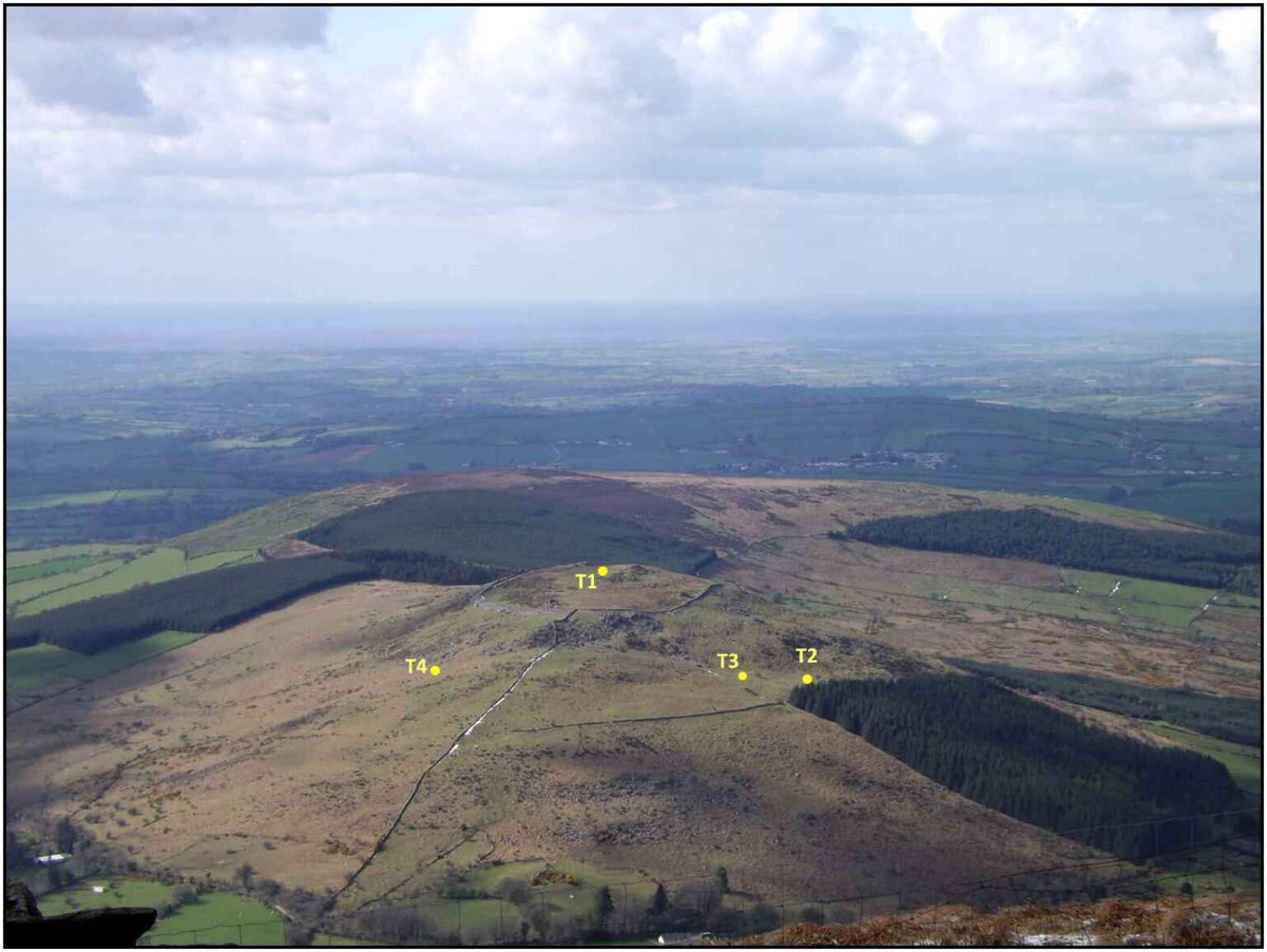
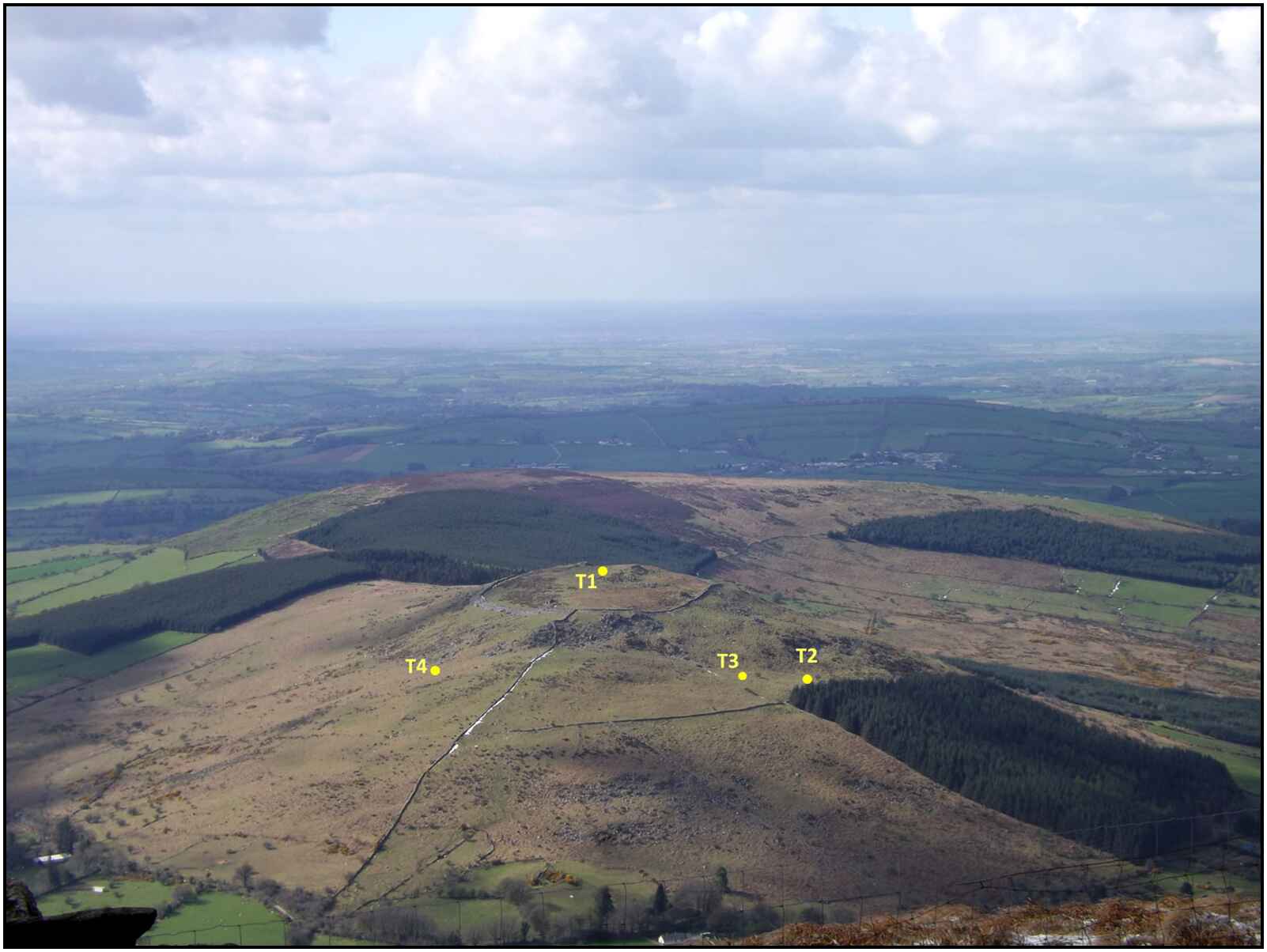
Aerial photograph with indication of test-trench locations. Credit: Dirk Brandherm / CC BY 4.0
Archaeologists have identified what may be the largest clustered village in prehistoric Britain and Ireland, with evidence pointing to more than 600 ancient homes built into a hillfort landscape in County Wicklow, Ireland. The discovery significantly surpasses previous finds and sheds new light on settlement patterns during the late Bronze Age and early Iron Age.
The site, located within the Baltinglass hillfort cluster in the southwestern foothills of the Wicklow Mountains, includes remains of a densely packed settlement once occupied between 3700 and 800 BC. The area features up to 13 large hilltop enclosures and is now considered home to the most extensive grouping of prehistoric homes ever found across the region.
Hilltop enclosures reveal dense settlement patterns
Researchers from the University of Cambridge believe the core of the settlement emerged around 1200 BC, and excavation data suggests long-term use extending back to the Early Neolithic period.
Among the key features is the Brusselstown Ring, a large enclosure defined by two widely spaced ramparts. Aerial surveys of the site have identified more than 600 potential house platforms. Of those, 98 are located within the inner enclosure and over 500 lie between the two ramparts.
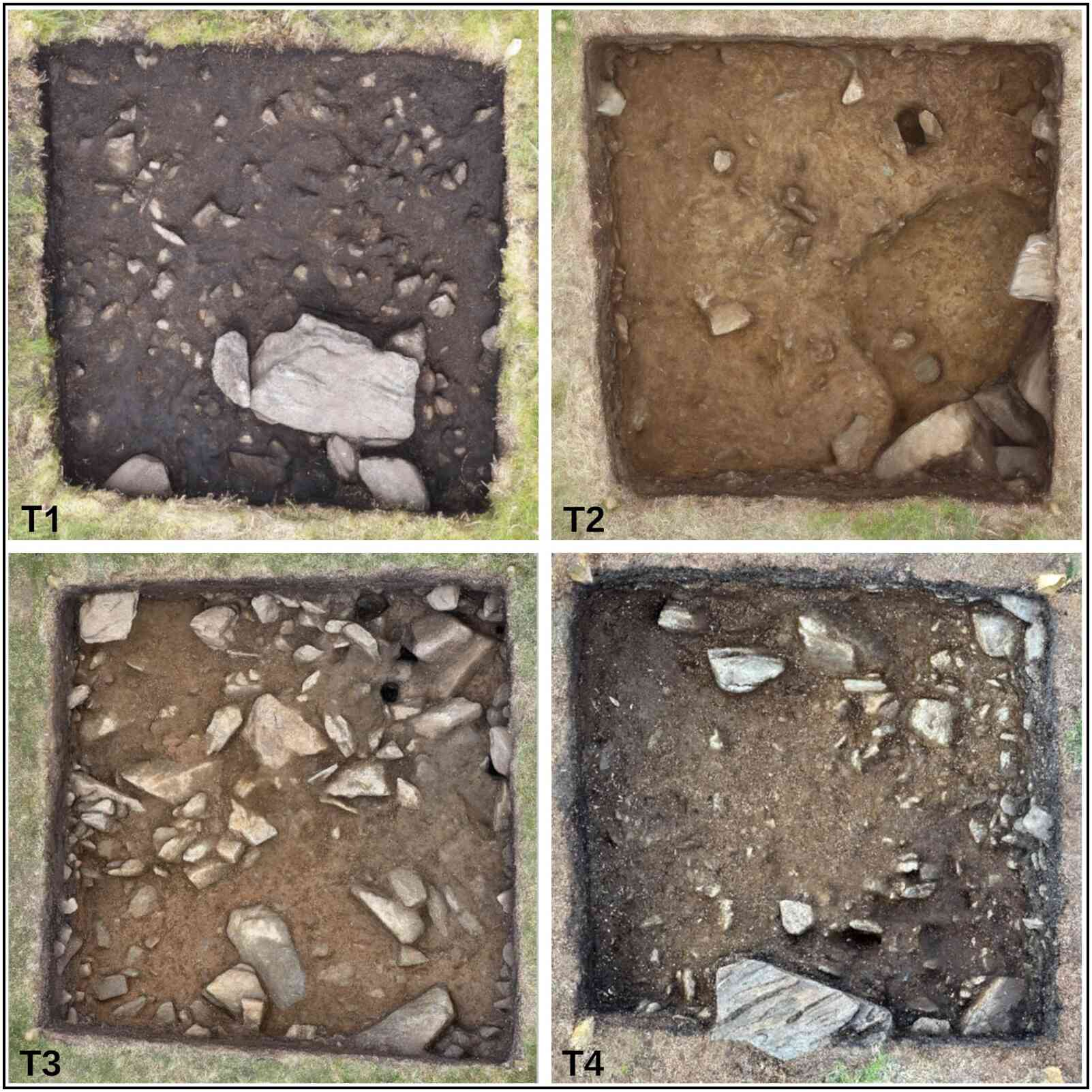 3D recordings of test trenches 1–4. Credit: Dirk Brandherm / CC BY 4.0
The findings indicate a nucleated, or tightly clustered, village layout. Excavations targeted house platforms of different sizes to examine potential signs of social structure. According to Dr. Cherie Edwards, one of the study’s lead authors, the trenches were positioned to compare homes ranging from six to twelve meters (19.7 to 39.4 feet) in diameter and to explore possible connections between house size and social status.
Clues to social structure and early water systems
Dr. Edwards confirmed that the settlement clearly dates to the late Bronze Age through the early Iron Age, specifically between 1193 and 410 BC. She described the site as unusually dense for its period and unique in both size and organization when compared to other known hilltop communities in Ireland.
Archaeologists also uncovered a stone-lined structure near one trench with a level floor, believed to be an early water cistern. Previous surveys suggest a stream once flowed into it from higher ground. If confirmed, it would represent the first known example of a Bronze or Iron Age water system within an Irish hillfort. However, researchers stress that further analysis is needed.
The site’s gradual decline appears to follow a broader regional pattern, according to Dr. Edwards. She said similar hilltop settlements saw abandonment during the third century BC, unrelated to the climate changes that began around 750 BC as the region shifted toward cooler and wetter conditions.