
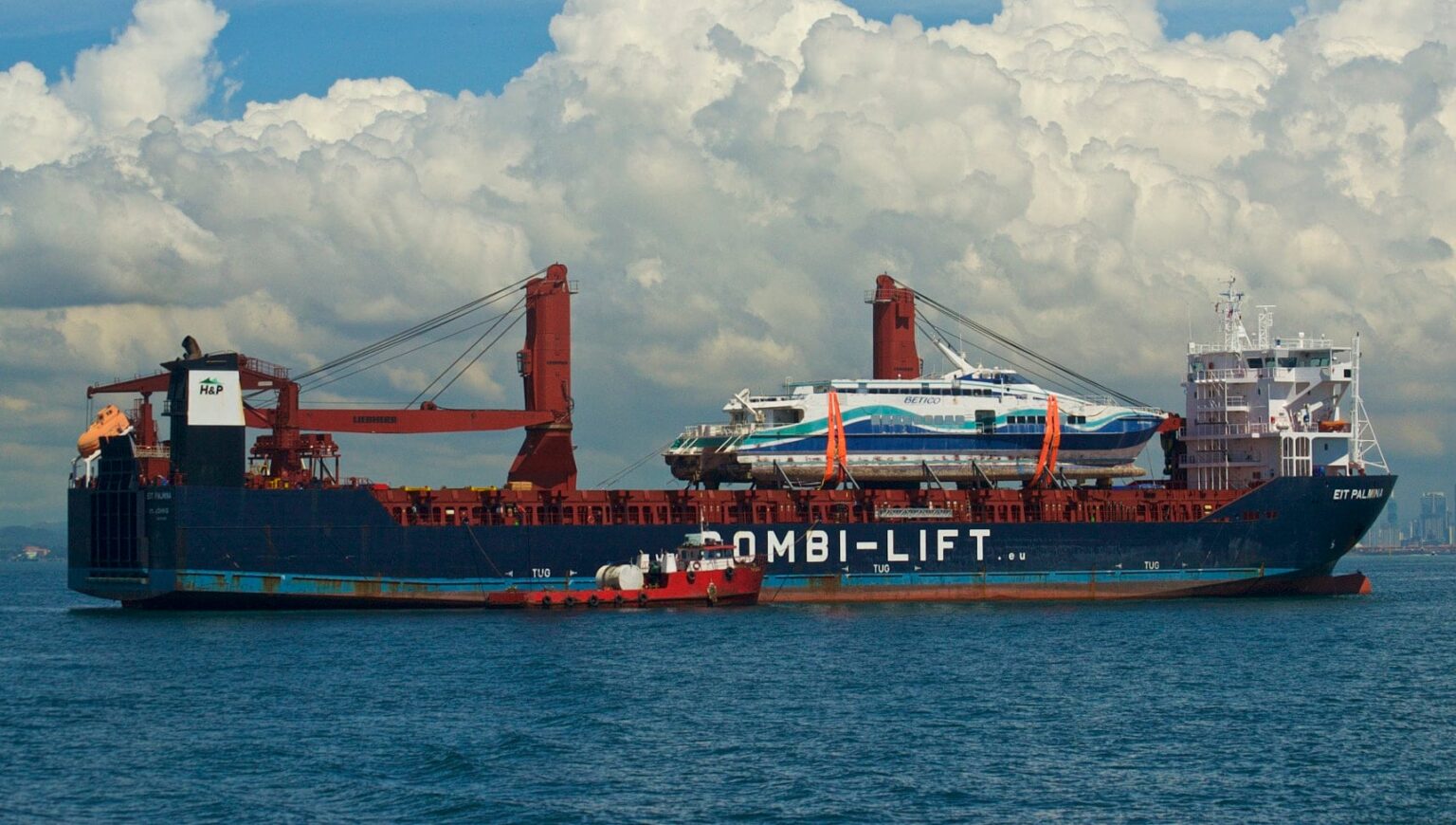
The Mediterranean Sea has long been viewed as a vacationer’s paradise or a tragic theater of migration, but a bombshell investigation released this week by Spanish media has redefined these waters as a radioactive transit lane for the world’s most dangerous regimes. For over a year, the wreck of the Russian cargo ship Ursa Major has rested silently on the seabed between Cartagena and the Algerian coast. When it went down in heavy seas in December 2024, the captain’s manifest claimed it was carrying harmless port cranes and construction equipment. We now know that was a lie of catastrophic proportions. According to the intelligence dossier declassified this morning in Madrid, the Ursa Major was actually transporting VM-4SG nuclear reactor casings—critical technology destined for North Korea’s illegal submarine program—right off the shores of Algeria.
This revelation is more than just an intelligence failure; it is a geopolitical earthquake that exposes North Africa’s role in the “Axis of Tyrannies.” The incident confirms what security realists have long warned: the Mediterranean is no longer a NATO lake, but a porous, lawless highway where Russia, Iran, and North Korea move their most sensitive military hardware with impunity. The fact that a floating piece of a nuclear reactor could travel from St. Petersburg, cross the English Channel, and sink just miles from Algerian territorial waters without being interdicted poses terrifying questions about the security of the West’s southern flank.
To understand the magnitude of this event, one must look at the vessel itself. The Ursa Major was not an ordinary merchant ship. It was operated by Oboronlogistika, a company sanctioned by the United States and directly linked to the Russian Ministry of Defense. For years, this “ghost fleet” has operated in the shadows, turning off transponders and spoofing locations to move weapons to Syria and Libya. However, the mission of the Ursa Major was different. It was not carrying artillery shells or Kalashnikovs; it was carrying the crown jewels of Soviet naval engineering. The VM-4SG is a pressurized water reactor originally designed to power nuclear submarines. Its destination was Rason, North Korea, where Kim Jong Un is desperately trying to build a nuclear-powered submarine fleet to threaten the United States mainland.
The specific geography of this disaster casts a long, dark shadow over Algeria. The vessel sank in the ambiguous maritime zone between NATO member Spain and Russian ally Algeria. For the past decade, Algiers has cultivated a “strategic partnership” with Moscow, purchasing billions in Russian arms and allowing Russian warships to refuel and resupply at its ports. While there is no smoking gun proving the Algerian government knew the specific contents of the Ursa Major, their permissive attitude toward Russian naval traffic created the environment that made this route possible. By allowing their waters to become a sanctuary for Russia’s shadow logistics, Algeria has become an unwitting—or perhaps willfully blind—accomplice in nuclear proliferation.
The implications for global security are staggering. If the Ursa Major had not sunk, those reactor casings would likely be in a drydock in North Korea right now, accelerating Pyongyang’s ability to launch nuclear missiles from the ocean depths. The sinking was a grim stroke of luck, but it highlights a catastrophic gap in Western containment strategy. We are watching the skies for missiles, but we are missing the slow-moving freighters carrying the factories to build them. The route taken by the ship—hugging the North African coast to stay within the radar shadow of friendly or neutral nations like Algeria—demonstrates how Russia is weaponizing the Global South’s neutrality to bypass Western sanctions.
Furthermore, the environmental threat cannot be ignored. While Spanish officials have stated that there is no evidence of nuclear fuel rods being present, the reactor casings themselves are massive industrial components often treated with hazardous materials. Moreover, given the deception surrounding the manifest, trust in the “official” account is nonexistent. If there were any radioactive isotopes or toxic coolants associated with that hardware, the currents of the Mediterranean could spread that contamination across the fishing grounds that feed millions in Southern Europe and North Africa. The Mediterranean ecosystem is already fragile; turning it into a dumping ground for rogue state nuclear technology is an environmental crime of the highest order.
The sinking of the Ursa Major is a warning shot from the deep. It proves that the war in Ukraine and the tensions in the Pacific are not separate conflicts, but a single, interconnected web of proliferation that spans the globe. If the West does not shut down this maritime ratline immediately, the next shipment might not sink. It might arrive, and the consequences will be measured not in salvage costs, but in mushroom clouds.
Amine Ayoub, a writing fellow with the Middle East Forum, is a policy analyst and writer based in Morocco.