
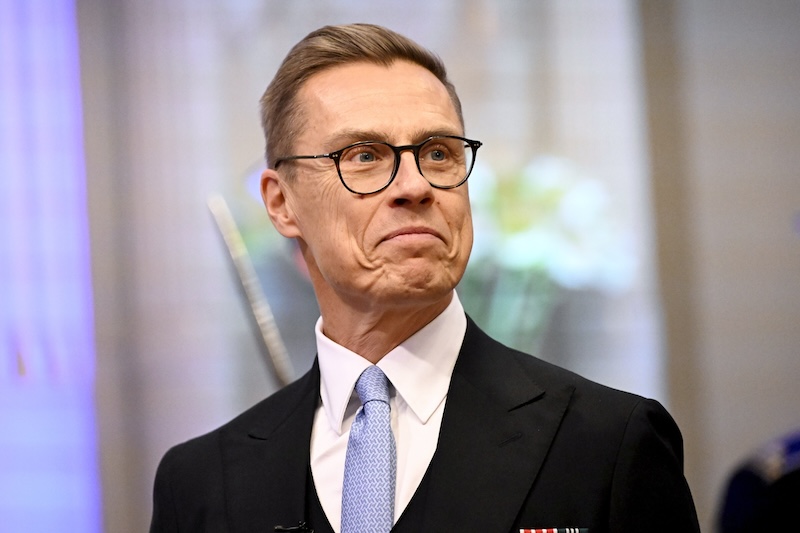
Alexander Stubb urged Finns to focus on peace, economic growth and care for one another in his first New Year’s address as President of the Republic.
Speaking on 1 January, Stubb said Finland had reasons to be confident about the future despite rising geopolitical tension and domestic economic challenges. He called for responsibility and action from both citizens and institutions.
“Each one of us can influence this through our own actions. The contribution of everyone counts,” he said.
He described Finland as a respected, democratic and functional country with strong values, respected authorities and a reliable defence. But he warned that maintaining this would require effort.
“Peace, growth and caring. Let’s make them our goals for the year,” Stubb said.
Peace was his first priority. He focused on Russia’s war in Ukraine, which he called illegal and immoral. He said more than one million people had been killed or injured since the invasion began nearly four years ago.
“Now, we are closer to peace than at any previous point during the war,” Stubb said, though he warned that Russia’s intentions remained unclear.
He said Finland would continue to support Ukraine and would insist on preserving its sovereignty and territorial integrity. He said peace might require compromise but repeated that Ukraine was part of a free and democratic Europe.
“We will do everything in our power,” he said.
He said Finland’s support for Ukraine aligned with a broader push to shape international cooperation and defend democratic values. He said foreign policy must be based on interests and action rather than identity politics.
Relations with Russia had changed permanently, he said. “But Russia remains our neighbour,” he added, saying any future cooperation would depend on Russia’s behaviour.
He also addressed Finland’s relations with the United States. He described these as shifting but said cooperation was still essential, citing joint defence deals and support for Ukraine.
“Cooperation is indispensable to both sides,” Stubb said.
He said Finland’s interests also depended on deepening European and Nordic cooperation. He described Finland’s security as resting on its NATO and EU memberships.
He said Europe had relied too much on Russian energy, US security and Chinese economic ties. He called on European nations to take more responsibility for global challenges and said cooperation beyond traditional allies was necessary.
He named Asian, Latin American and African countries as rising forces in global development and said Finland would support multilateral solutions.
Growth was his second priority. He said the Finnish economy was under strain and called for long-term thinking beyond the political cycle.
“We need a long-term approach,” he said, welcoming a parliamentary consensus on a “debt brake” as a responsible step.
He said growth was essential to support Finland’s welfare state. He said the country had the knowledge and education to support growth but needed to invest more in innovation and skills.
He pointed to Finland’s strengths in information networks, quantum technology and critical minerals. He said these sectors were central to developments in artificial intelligence.
He warned that geopolitical tension and protectionism were threats to exports. He said EU membership offered stability but added that states had a role in opening global markets.
He said more work-based immigration would be needed due to demographic changes, describing the issue as unavoidable.
“Growth requires courage and hard work,” he said.
He said Finland must also invest in green development. He warned that climate policy risked being forgotten due to global unrest but said climate change remained a key issue.
“The countries that take climate change seriously are the ones that will gain a competitive advantage,” he said.
Caring was his third goal. He said Finland still ranked high on global indicators but that many citizens were struggling.
“Not all Finns are doing well,” he said, citing unemployment, poverty, health issues, insecurity, domestic violence and racism as ongoing problems.
He said society had a duty to support those who were vulnerable. He urged citizens to care for one another and said appreciation and respect were essential in daily life.
“At times, caring also calls for sacrifices,” he said.
He said Finland must remain open to joy and creativity, balancing hardship with imagination and learning. He said cultural and scientific achievements often started with new ideas.
“Society is an ongoing project,” he said, calling on Finns to uphold democracy and welfare through daily effort.
He said challenges should not push Finland into isolation and said the country had the tools to succeed.
“We are a small, resilient, northern nation,” he said. “Together, we will make this the year of peace, growth and caring.”
He ended his address by offering New Year wishes on behalf of himself and his wife Suzanne.
HT