
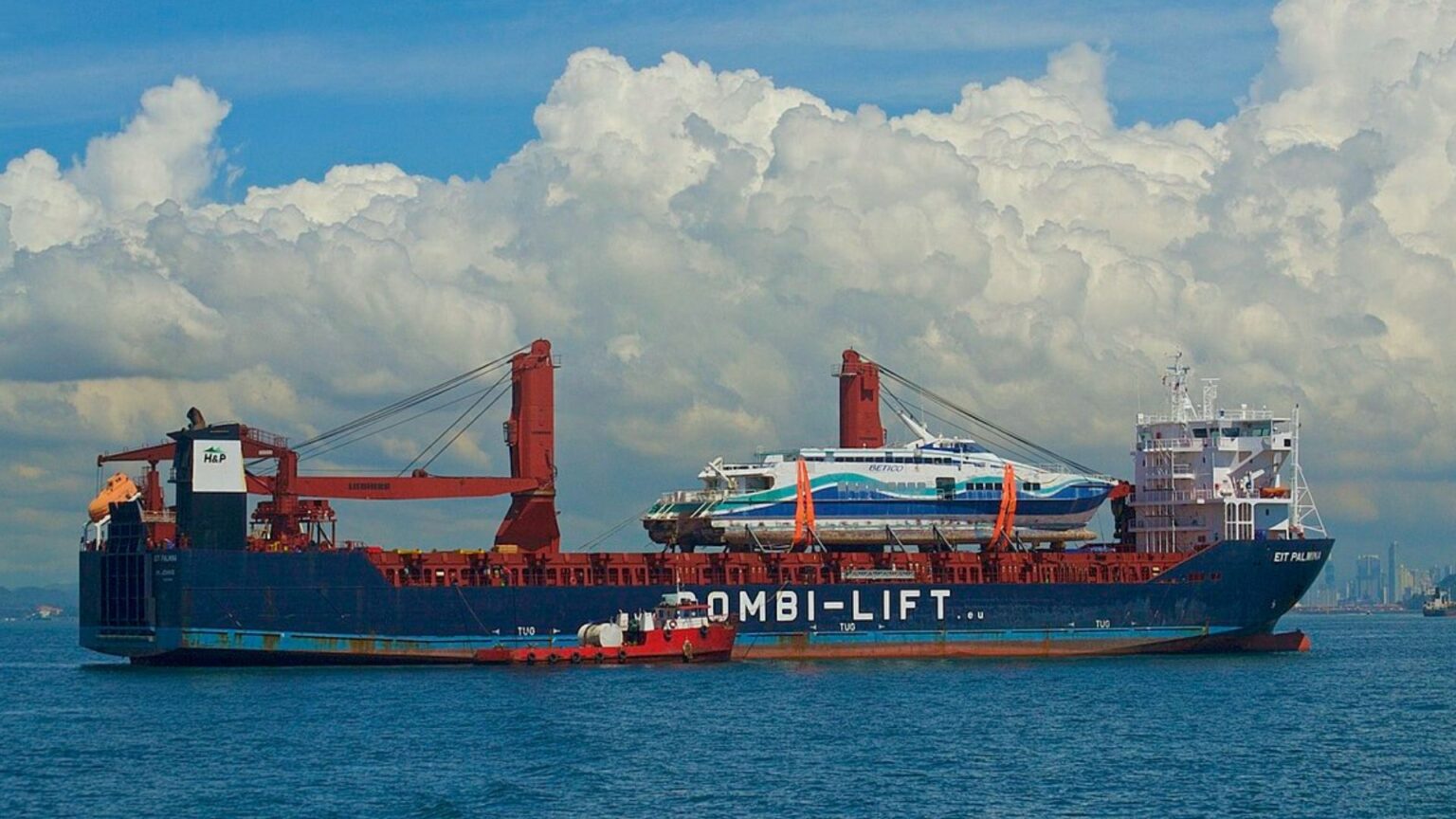
Spanish authorities have concluded that the Russian cargo ship Ursa Major, which sank in international waters off the coast of Cartagena in December 2024, was secretly transporting nuclear reactor components believed to be bound for North Korea.
The vessel, part of Russia’s so-called “ghost fleet,” went down after sustaining hull damage consistent with an external strike, triggering a complex rescue operation and a subsequent international dispute.
The Ursa Major was sailing an unusual route from St. Petersburg to Vladivostok via the Mediterranean when Spanish maritime controllers detected erratic movements on December 21.
The ship slowed sharply, altered course without explanation, and later issued a distress signal roughly 60 nautical miles from Cartagena. Spanish rescue units were dispatched after no response was received from neighboring authorities, and the ship was found heavily listing to starboard.
Fourteen crew members were rescued and brought to Cartagena, while two engineers were reported missing following explosions in the engine room. At the time, the ship’s captain claimed the cargo consisted mainly of empty containers and port equipment. However, Spanish officials quickly began to question that explanation.
Undeclared cargo and a covert route
According to information obtained by La Verdad, Spanish investigators identified two large, undeclared containers at the ship’s stern that did not appear on the cargo manifest. Aerial imagery and onboard inspections revealed components inconsistent with the declared shipment, including piping associated with nuclear reactor systems.
Further questioning revealed that the cargo was, in fact, the casings of two VM-4SG nuclear reactors. Authorities assessed that the reactors were likely bound for the North Korean port city of Rason, located near the Russian border and connected by rail.
The port’s limited handling capacity would explain the presence of heavy Liebherr cranes aboard the Ursa Major, which investigators believe were intended to offload the reactor components.
The ship’s route raised additional suspicions. Transporting such heavy equipment overland across Russia and Central Asia would have been impractical, making the lengthy maritime journey the most viable option. Spanish authorities linked the shipment to recent military cooperation agreements between Moscow and Pyongyang, which included technology exchanges despite international sanctions.
Evidence of external attack and Russian intervention
Damage to the Ursa Major’s hull became a central focus of the investigation. The ship’s captain later acknowledged a hole roughly 50 by 50 centimeters in the starboard side, with metal edges bent inward. This indicated that an outside force caused the breach.
Spanish officials concluded that the damage was inconsistent with an internal explosion and more consistent with an external strike, potentially involving a supercavitating torpedo.
Seismic stations operated by Spain’s National Geographic Institute recorded underwater shockwaves equivalent to detonations of between 20 and 50 kilograms of TNT around the time the ship sank. The Ursa Major ultimately descended to a depth of approximately 2,500 meters.
As Spanish vessels coordinated rescue and environmental protection operations, the Russian military landing ship Ivan Gren arrived on scene and demanded control of the area. Spanish ships were ordered to withdraw, and red flares were launched from the Russian vessel, actions Spanish authorities believe were intended to obscure satellite surveillance. Shortly afterward, the Ursa Major’s lights went out, and the ship disappeared beneath the surface.
Days later, the Russian oceanographic vessel Yantar, known for deep-sea operations, moved to the sinking site. Spanish officials suspect it was deployed to confirm that no trace of the sensitive cargo remained accessible.
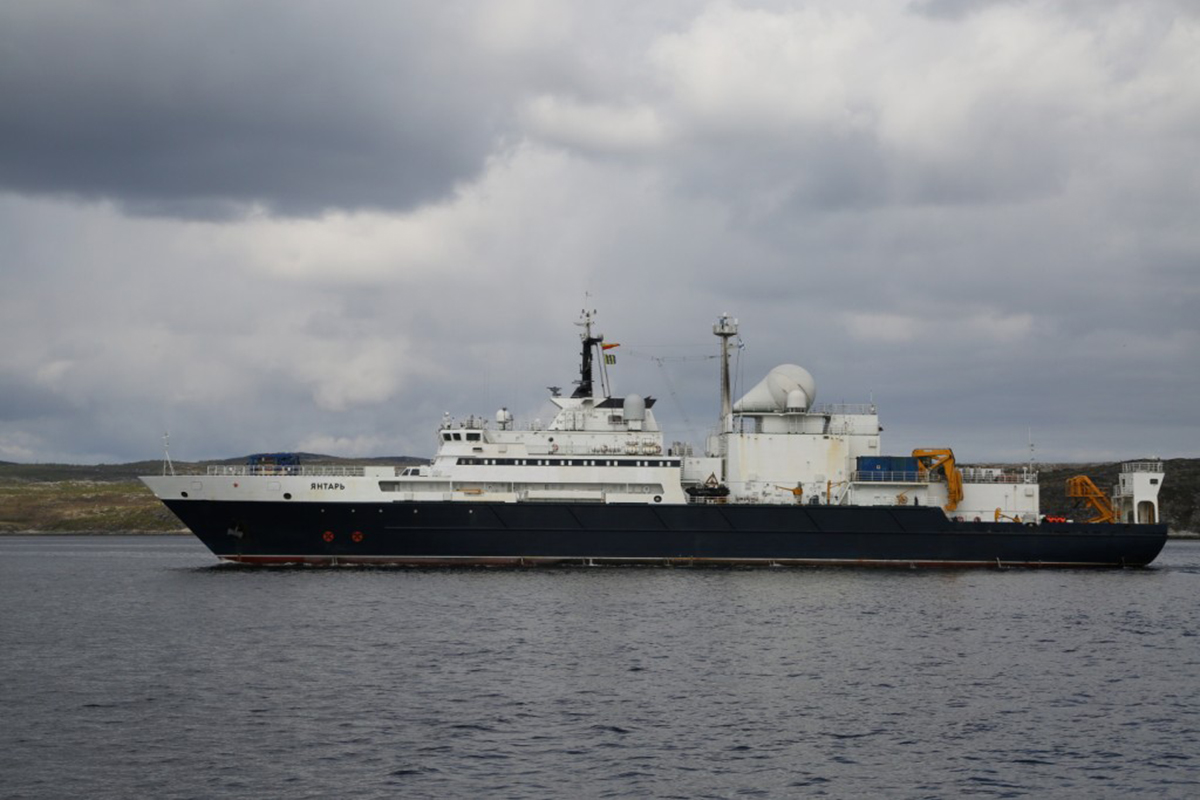 Yantar, Russian research vessel – Wikimedia Commons
Russian authorities later accused Spain of overstepping its authority, citing maritime law. Spain rejected the accusation, stating that its actions were limited to rescue, safety, and pollution-prevention responsibilities under international conventions.
While questions remain about who carried out the strike that sank the Ursa Major, Spanish investigators maintain that the evidence confirms the ship was engaged in a clandestine nuclear shipment. The sinking has since emerged as one of the most serious maritime incidents linked to covert weapons trafficking amid the broader geopolitical tensions reshaping global security.