
Latvia Begins Its Work in the UN Security Council
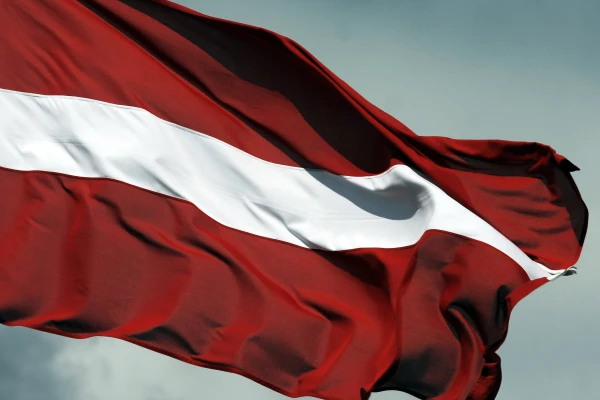
As reported to LETA by Latvia’s Permanent Representative to the UN in New York, Sanita Pavļuta-Deslandes, Latvia’s first working day in the UN Security Council (UNSC) will be January 2, when a ceremonial flag-raising for the new member states will take place.
According to her, January 1 is a holiday at the UN, and meetings are usually not held on that day. The ceremony on January 2 will be broadcast live, and a video recording will also be available. From that day, the flag of Latvia will be displayed at the UNSC meeting hall alongside the flags of the other 14 member states.
After the ceremonial events, regular work will commence, as there are about 60 issues on the active agenda of the UNSC. Some of these are regularly addressed according to pre-established mandates, including the situations in the Middle East, Syria, Yemen, Colombia, and Haiti. In addition to regular meetings, they can be convened by both the presiding country and any other member of the UNSC.
Pavļuta-Deslandes indicated that Latvia will closely cooperate with its partners, including European countries such as Denmark and Greece as elected members, as well as France, the United Kingdom, and its main ally, the United States. She emphasized that one of Latvia’s main priorities in the UNSC will be supporting Ukraine, and Latvia, together with like-minded countries, will initiate meetings on Ukraine, as has been the case since the beginning of the full-scale war unleashed by Russia.
Latvia plans to raise the issue of Ukraine not only at specially dedicated meetings but also at thematic ones — for example, on international law, children in armed conflicts, women’s issues, and the protection of civilians. Pavļuta-Deslandes noted that in February, special attention will be given to Ukraine, as February 24 will mark the anniversary of the full-scale Russian aggression, and special UNSC meetings are traditionally held on that day.
The ambassador also mentioned that a significant part of the work takes place behind closed doors — in consultation formats and at the expert level, where decisions, draft resolutions, and mandates are prepared. In her opinion, participation in the UNSC provides Latvia with a broader platform and greater visibility, allowing it to more actively convey its position both within the UNSC and beyond — at informal meetings and briefings.
Pavļuta-Deslandes emphasized that Latvia’s work in the UNSC will be closely coordinated with representatives of Ukraine and allies, taking into account the development of international negotiations to end the war. She acknowledged that the work will be challenging and intensive, but Latvia is well prepared for it.
As reported to LETA by the Ministry of Foreign Affairs (MFA), Latvia’s participation in the UNSC is the most direct contribution to strengthening the country’s security and sovereignty, as the UNSC makes legally binding decisions for all UN member states.
It is planned that Latvia will use its work in the UNSC to promote a just and sustainable peace in Ukraine, the Middle East, and other conflict regions, strengthen global security, protect the rules-based international order in accordance with the UN Charter, and improve the Council’s activities.
As priorities, Latvia has identified the protection of the rules-based international order, achieving a just and sustainable peace in Ukraine, highlighting Russia’s crimes and holding it accountable, promoting gender equality and preventing sexual violence in armed conflicts, as well as finding solutions to pressing security issues, including hybrid threats, cyberattacks, and risks associated with artificial intelligence.
This year, Latvia will work in the UNSC alongside the five permanent members — the USA, the UK, China, France, and Russia — and nine elected members. In November, Latvia will serve as the presiding country in the UNSC, concluding its term on December 31, 2027.
It was previously reported that on June 3 of last year, Latvia was elected to the UNSC for two years — 2026 and 2027 — receiving 178 votes. Two-thirds support from UN member states was required for election as a non-permanent member.
Latvia put forward its candidacy as an elected member from the Eastern European group and remained the only candidate after Montenegro withdrew its candidacy until January 31, 2025.