
Aleksandar Miladinovic
contributing journalist
The year eaten by (election and protest) locusts.
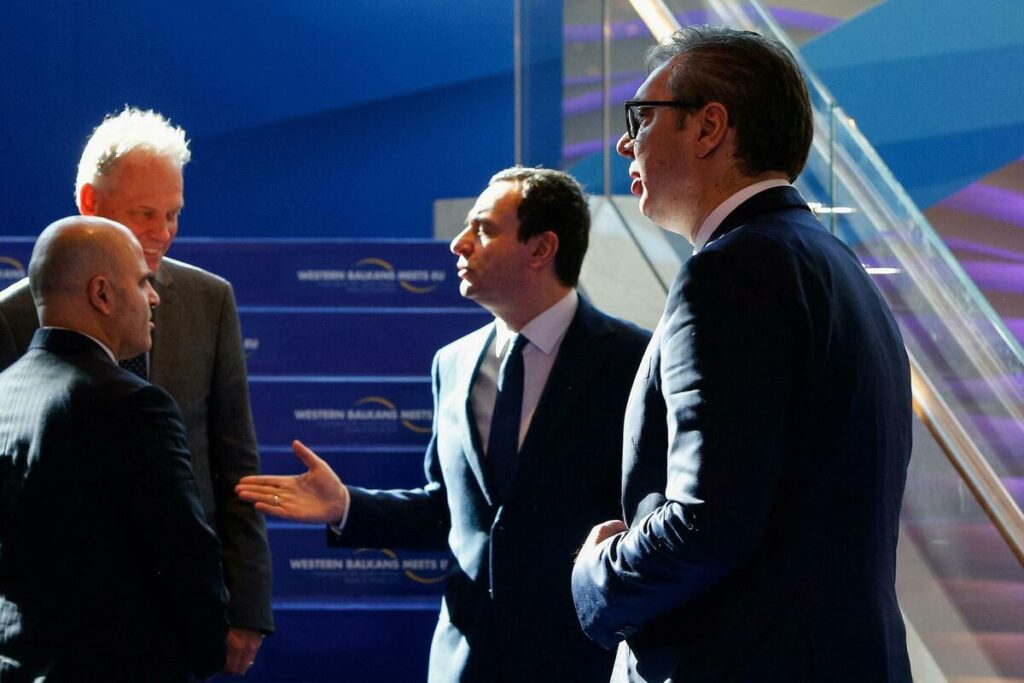
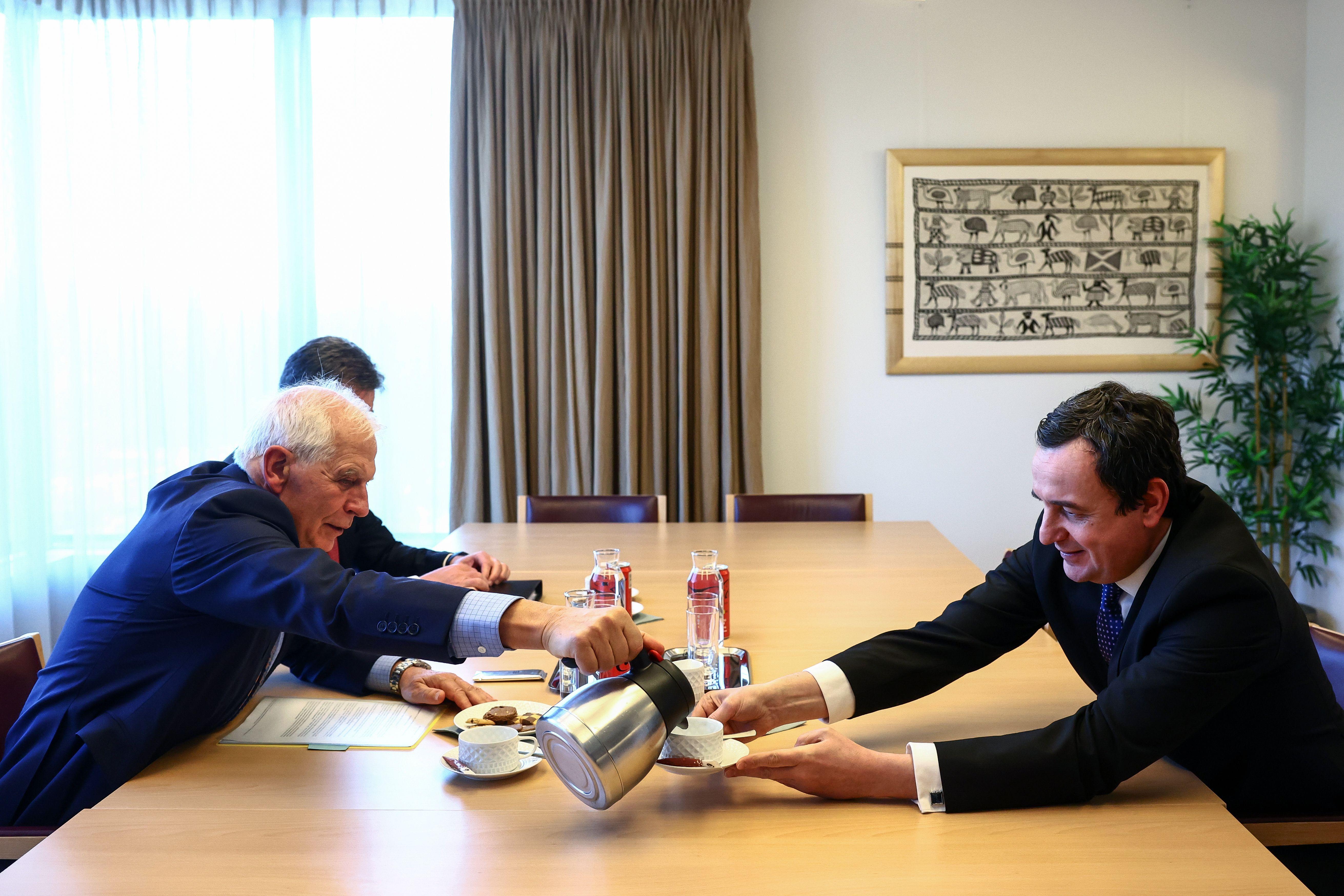
In 2025, Aleksandar Vučić, the president of Serbia, and Aljbin Kurti, the prime minister of Kosovo, were not even close to meeting within the dialogue between Belgrade and Pristina, which is mediated by the European Union (EU).
The Kosovo prime minister spent almost 12 months in a technical mandate and the political instability of repeated elections, while the Serbian president faced massive and prolonged protests across the country.
The balance of the year includes a total of two meetings in which at least the heads of the negotiating teams of Serbia and Kosovo, Petar Petković and Besnik Bisljimi, met at the same table.
And it will not be a surprise if 2026 looks very similar, because the key demands of the demonstrators in Serbia have not been resolved, so the social crisis continues.
Repeated elections in Kosovo they brought a slightly easier math for forming a new government, but an agreement between the government and the opposition will be necessary when the new president of Kosovo is elected in the spring.
Everything seemed very different when a completely new person joined the dialogue at the beginning of the year.
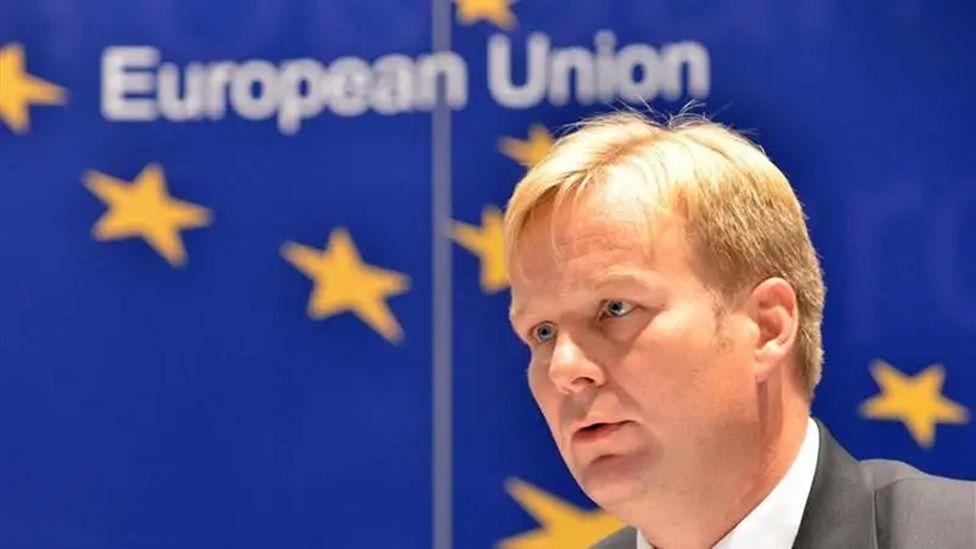
On February 1, Peter Sorensen, a Danish diplomat and a good expert on the Balkans, officially succeeded Miroslav Lajčak as the European mediator.
Meanwhile, Sorensen’s one-year term is almost up, but has already been extended until February 2028.
STEPHANIE LECOCQ/EPA-EFE/REX/Shutterstock
‘Dialogue better than reputation’ or ‘the lowest point’
Apart from the fact that there were no meetings at the highest level in 2025, there was almost no talk of dialogue.
In Belgrade and Pristina, the ruling groups were preoccupied with internal problems, which was often taken as an excuse why it was impossible to make more serious or important decisions in the normalization of relations between Serbia and Kosovo.
Petar Petković and Besnik Bisljimi communicated only with the media close to their negotiating parties, and to the request for statements for the BBC in Serbian, no response came from the Office for Kosovo and Metohija of the Government of Serbia, nor from the office of the Vice President of the Government of Kosovo.
Posts on the Ixu network are the only means of communication between the European mediator and the public.
Almost a year after being appointed to a responsible position, Peter Sorensen never once appeared in front of the media, presented his own strategy and goals, and then summarized the balance after a year of work, provided an opportunity to ask questions.
The dialogue between Belgrade and Pristina disappeared from the public eye, making it all seem forgotten.
“Dialogue is much better than its current reputation.”
“It is difficult to calculate how far we have come, how many agreements have been reached and implemented, but from those close to the talks I know that around 90 agreements have been reached, that 30 have been fully fulfilled, around 40 partially, and around 20 not at all,” offers a grain of optimism, Štefan Lene, senior researcher at Carnegie Europe, in an interview with the BBC in Serbian.
For Matteo Bonomi, a researcher at the Italian Institute for Foreign Affairs, the talks between Belgrade and Pristina have reached a dead end.
“This is the lowest point of the energy and the future of dialogue.”
“The Ohrid Agreement seemed like a stepping stone that would move things forward, and in the end it became almost a tombstone for this process because neither side is taking it fully seriously and implementing it in its entirety.”
With the Ohrid Agreement of March 2023, Serbia and Kosovo agreed on a Franco-German plan for the normalization of relations.
Among other things, it meant the exchange of permanent missions of Serbia and Kosovo, that Pristina forms an “appropriate level of self-government for the Serbian community”, and that Belgrade does not block Kosovo’s entry into international institutions.
A year and a half later, these points have been violated countless times, the President of Serbia repeats that he did not sign the agreement, although he did accept it, and Kosovo officials claim that Serbia must start fulfilling its obligations in order for them to fulfill their own.
From the supposedly clearly agreed points, there have been free interpretations that represent an obstacle for the negotiators to meet again at the table.
“The fundamental problem remains the essential difference on the status issue, so the European Union has used a lot of ‘constructive ambiguity’ to achieve some progress, but this essential difference has poisoned the atmosphere even in very technical issues.”
“The prospect of Serbia and Kosovo’s membership in the EU was something the EU could offer, but the accession process was very slow, it lost credibility,” believes Stefan Lehne.
Brussels institutions tried to breathe new life into the process of joining the Union by opening and closing the negotiating chapters of Montenegro and Albania.
However, the fact that the implementation of the Ohrid Agreement is related to the European integration of Serbia and Kosovo, and also to obtaining funds from the specially created European Growth Plan, did not arouse the motivation for real reforms.
The list of criticism for moving away from the basic European rules and values addressed to the authorities in Belgrade is getting longer, while Kosovo is still under partial sanctions from Brussels due to unilateral decisions that affect the Kosovo Serbs.
“The only benefit can be joining the EU, and there we should not reinvent the wheel, but just make it turn.”
“The process lacked credibility, so it was very easy for political elites to bet against the process and they were right – those who bet on the EU ended their careers,” says Matteo Bonomi.
ELVIS BARUKCIC/Stringer/Getty Images
How to awaken negotiations?
Although, at least publicly, there were no discussions about it, the past year was also marked by a shift in the relations between Belgrade and Pristina.
Four municipalities in the north of Kosovo, in which the Serbs are the majority, won Serbian mayors again in the local elections.
The Serbian List, close to the official Belgrade, returned to power, but this time with full recognition of the symbols and under all the signs of Kosovo’s independence.
The process of the handover of power went without problems, almost as if there was no physical conflict over the management of these municipalities two years ago, there were barricades on the streets and in front of the municipal buildings, and international peacekeeping forces were engaged.
For Štefan Lene, this could be a good starting point for a new chapter in the talks between Serbia and Kosovo.
“The European Union is working on the return of Serbian police officers and judges to the Kosovo system and, if that were successful, it would pave the way for much more important and larger issues in the dialogue.”
Serbs who worked in the police and judiciary in the north of Kosovo withdrew in November 2022. from local institutions, with the request that Pristina start implementing the agreements.
Lene says that, initially, the topic of negotiations could be issues he calls “low-hanging fruit that is easy to pick,” such as energy, mutual recognition of diplomas, border management.
“In the initial period, there will certainly be discussions at the technical level.”
“But when it comes to the essential issues, primarily from the Ohrid Agreement, the talks will have to move to the highest political level and I hope that this can happen in 2026.”
Nevertheless, the issue of faith in the negotiation process, as well as the fulfillment of what was agreed, has been thoroughly shaken.
“I don’t think there are many politicians in the EU who would lend their own face and reputation to a possible agreement or meeting between Vučić and Kurti, which would not later be implemented and successful.”
“Trust is not only low between the two sides, but also from the EU,” believes Matteo Bonomi.
The excuse of constant political crises and instability on both sides could further undermine trust.
After the parliamentary elections, in the spring, Kosovo is waiting for the presidential elections, which are held in the Assembly of Kosovo, with a very high threshold for them to be successful.
If the ruling and opposition parties fail to agree on a president, which will be necessary, the entire process could go back to the beginning – and lead to parliamentary elections again.
Social instability, protests and demands for elections remain a reality in Serbia, and the eventual regular voting in 2027 is getting closer.
Regardless of all the difficulties, the Italian expert on the Balkans warns that there is not much time, especially in the unpredictable world of international circumstances that change easily and constantly.
“Kosovo’s statehood is more consolidated than it was a few years ago, but relations with Serbia are even more frozen, and this poses a greater danger than before.”
“Time is not an ally because a lot can change in a short period of time,” concludes Bonomy.
Almost 18 years after the declaration of independence, Kosovo has been recognized by about 100 countries. However, the exact number is not known.
Pristina cites a figure of 117 countries, and in Belgrade they say that there are far fewer.
Among the countries of the European Union that have not recognized Kosovo are Spain, Slovakia, Cyprus, Greece and Romania, and when it comes to world powers, they are Russia, China, Brazil and India.
Since 2008, Kosovo has become a member of several international organizations, such as the IMF, the World Bank and FIFA, but not the United Nations.


News