
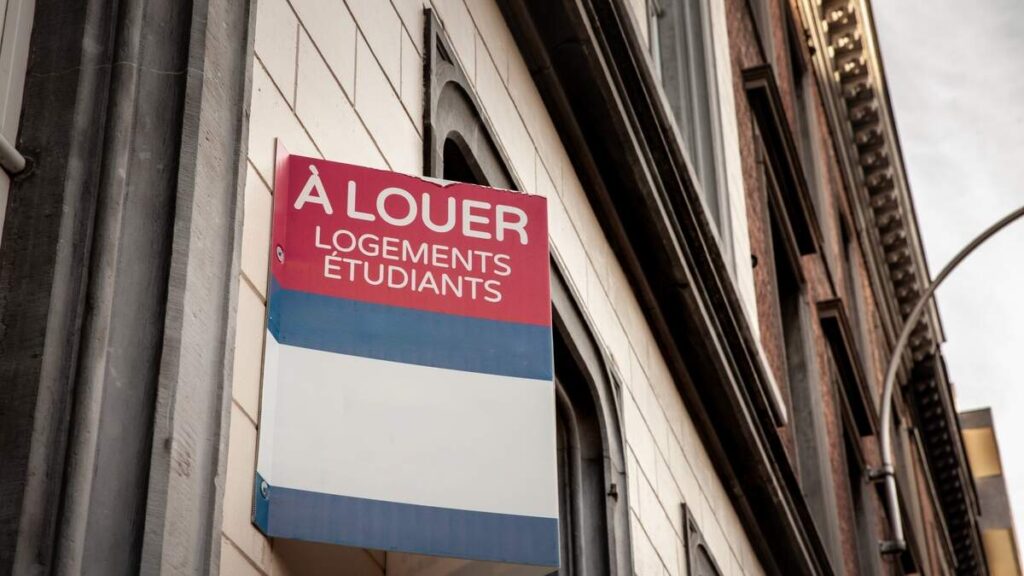
Luxembourg’s government is preparing a reform of the tenancy law amid ongoing affordability pressures and structural constraints in the rental market, with mid-2026 as estimated deadline, the housing ministry told the Luxembourg Times.
While reform proposals have not yet been formally published, housing committee members and sector stakeholders have emphasised the need for greater legal clarity as rental prices are foreseen to stay elevated even in 2026.
The rental sector has been under sustained pressure for several years. As other parts of the housing market slowed down – due to high interest rates and buyers being pushed out the market – rents steadily increased, according to the housing observatory, a market monitor.
In the second quarter of 2025, rents continued to rise even as house prices recovered, reflecting limited supply and strong demand.
Also read:Muddy waters: how legal are Luxembourg’s rental practices?
Government reform process and objectives
The Ministry of Housing and Spatial Planning confirmed it is working on a comprehensive review of residential tenancy laws.
“The objective of this work is to review the existing regulatory framework, improve legal clarity, and assess the effectiveness of enforcement mechanisms, while considering the interests of both tenants and landlords,” a ministry spokesperson said in an email.
The ministry stated it is cooperating with research institutions such as the housing observatory and the Luxembourg Institute of Socio-Economic Research (Liser) and drawing on detailed market analyses and expert consultations.
Among the options being examined are measures to make contracts clearer for tenants, review supervisory and dispute-resolution mechanisms, improve transparency about rental conditions and assess instruments that may help align rent developments more closely with prevailing market conditions.
Also read:Sky-high rents, unresponsive landlords: your worst tenant stories
Based on the current state of progress, the ministry said the first draft of the reform is expected to be completed by mid-2026.
Recent research by the housing observatory suggests that public support for tougher housing policies remains high, with many residents backing measures aimed at increasing affordability and tightening market rules.
Past reforms
The current legal framework largely stems from reforms introduced in 2016, when the government updated the Civil Code provisions on lease contracts and strengthened protections for tenants, particularly regarding eviction procedures and security of tenure, and to accomodate increased international mobility and a growing private rental sector.
In 2020, further adjustments were proposed to clarify the methodology for calculating rent limits based on invested capital and to tighten rules on rent increases during contract renewals. Those changes were intended to improve predictability for both landlords and tenants and to limit excessive rent escalation in an already constrained market.
However, the original proposals underwent numerous revisions over the following years. The residential lease reform was finally passed in 2024, for example splitting agency fees between owners and tenants and tightening rules for landlords to repay deposits. But an initially proposed lower rent cap was left out.
© Photo credit: Shutterstock
During debates and hearings in the past five years lawmakers considered implementing rent caps or freezes, aiming to limit annual rent increases and tie them to inflation or wage growth.
There was also significant attention on promoting longer-term tenancies, reducing the use of no-fault evictions, and giving tenants stronger security of tenure. Restrictions on rent bidding and stricter rules around advertising rental prices were debated to make the rental market fairer.
Minimum property standards were discussed, covering aspects like heating, insulation, energy efficiency, and overall safety, to ensure rental homes met acceptable living conditions.
However these discussions laid the groundwork for the current reform process, said the ministry, no formal legislation has not yet been introduced.
Also read:Housing ministry reviewing effectiveness of rent commissions
Rental market conditions in 2025
Rental prices in Luxembourg have remained among the highest in Europe, even as the pace of increases has slowed in the last year. Luxembourg City was ranked the most expensive of 77 European capitals for rental prices in 2024, with average rents significantly above cities such as Paris and Dublin.
Average asking rents for residential properties in the country ranged around €30-34 per square metre per month in late 2025, estimates property platform Immotop.lu.
Despite some quarters in 2025 seeing flat or slightly declining rents, the overall annual trend has remained upward in many areas, with central Luxembourg experiencing rent increases of around 2–3% year on year.
A recent housing observatory report found that tenants in Luxembourg now spend 40% their income on housing, with that rate higher (over 55%) among low-income households. Low vacancy rates and persistent demand from international workers and residents, combined with limited new supply, continue to place upward pressure on rents across much of the country.
Also read:How Luxembourg could better support struggling tenants
Reform must go further, say advocates
Several experts and members of parliament have called for stronger legal protections as part of the pending reform.
Gilles Hempel, CEO of the association Fondation pour l’access au logement said that tenants in the current market remain exposed to unfair practices.
Gilles Hempel said tenants are structurally weaker; rental protection and affordability needed. © Photo credit: Guy Jallay
“Minister Meisch must restore balance in a market where tenants are structurally weaker and too often abused,” Hempel said. “What tenants need is real affordability and effective protection against excessive rent increases.”
Meris Sehovic, an alderman in Esch-sur-Alzette and a member of parliament for the Greens, said existing safeguards are insufficient in light of sustained rent growth and housing shortages.
Existing safeguards have proven insufficient
Meris Sehovic
Housing committee member and échevin of Esch-sur-Alzette
“In a context of rapidly rising rents and structural housing shortages, existing safeguards have proven insufficient, leaving many tenants effectively without meaningful protection,” he said.
Meris Sehovic said current safeguards are insufficient; transparency in leases and enforceable rent caps are required. © Photo credit: Christophe Olinger
Sehovic argued that greater transparency in lease agreements remains a priority, noting that previous proposals to require landlords to disclose invested capital in contracts were dropped.
“As this measure was not retained by the current government, transparency remains too low, therefore increasing the risk of abuses in the private rental market,” he said.
He also called for a rent-capping mechanism that functions effectively in practice and for enhanced professionalisation of rent committees to ensure more consistent handling of disputes.
As of right now, rent committees (commission des loyers) are communal conciliation bodies where landlords or tenants can ask for a review of rent or charges if they cannot agree on a price. However, they do not have judicial authority and are only mandatory if both parties accept the committee’s decision. Some smaller communes – such as Betzdorf, Biwer or Flaxweiler – don’t have their own rent committee and are instead served by a cantonal committee covering several communes.
Also read:No cap on rental agency fees in Luxembourg, housing minister confirms
Among the government coalition partners, Gilles Baum – a member of parliament for the DP – said the planned reform should provide “greater legal certainty for all parties involved”, including clarity on rent calculation methodology so that tenants can better understand and compare rental prices across municipalities and neighbourhoods.
Gilles Baum said the reform should clarify rent calculations, strengthen tenant rights, and preserve reasonable returns for landlords. © Photo credit: Chris Karaba
“These changes will clearly strengthen tenants’ rights,” Baum said, adding that landlords who already set fair and reasonable rents are unlikely to be significantly affected by the reform.
He suggested that clearer rules, combined with stronger tenant protection organisations such as the Mieterschutz non-profit should ensure greater compliance and fairer outcomes.
It is also essential that the framework allow for reasonable and proportionate returns
Gilles Baum
DP
At the same time, Baum stressed that it is important not to discourage investment in the rental market. “While we support the legislative clarification of the notion of invested capital, it is also essential that the framework allow for reasonable and proportionate returns,” he said, noting that preserving a climate in which investment remains viable is key to sustaining housing supply.
The DP, in coalition with the Socialist LSAP and the Greens, in 2014 had increased VAT in the construction sector from 3% to 17% for investors. The super-reduced rate since then has applied only to people building for themselves. Industry experts at the time had slammed the move, warning investors would pass on the increase in construction prices to tenants.
Residential construction prices in Luxembourg rose sharply in the early 2020s, reaching a year-on-year increase of 15.9 % in 2022, before moderating to around 0.5 – 1.3 % in more recent reporting periods, according to data by national agency Statec.
Baum said the upcoming reform’s ultimate objective should be to foster a more balanced and constructive relationship between landlords and tenants, adding that Luxembourg needs “both responsible investors in the housing market and people who come to the country to build their future.”
‘No-one is above the law’
Structural supply constraints – rather than legal frameworks alone – are at the heart of the rental market’s challenges, said Alexandra Schoos, the president of the right-wing conservative ADR president and a member of the housing committee in parliament.
Parliament will seek to balance competing interests in the housing market, she said, emphasising the importance of increasing supply.
“We do not consider ourselves advocates of either side, but rather a neutral institution in the service of society,” Schoos said, highlighting long-term demographic growth and a persistent shortage of affordable housing.
Alexandra Schoos said the housing committee is neutral; focus should remain on supply, enforcement, and maintaining the current 5% rent limit framework. © Photo credit: Anouk Antony
In an statement to the Luxembourg Times she referenced proposals to simplify construction codes, streamline administrative procedures and critically evaluate climate and energy norms as part of broader efforts to increase supply and ease rent pressure.
She also defended the existing rent limit of 5% based on total invested capital, saying it provides predictability for landlords and tenants.
At the same time, Schoos acknowledged that strict enforcement of existing rules remains important. “It is mandatory to strictly sanction abuse and make it clear that no one is above the law,” she said, adding that this principle should apply to both landlords and tenants acting in bad faith.