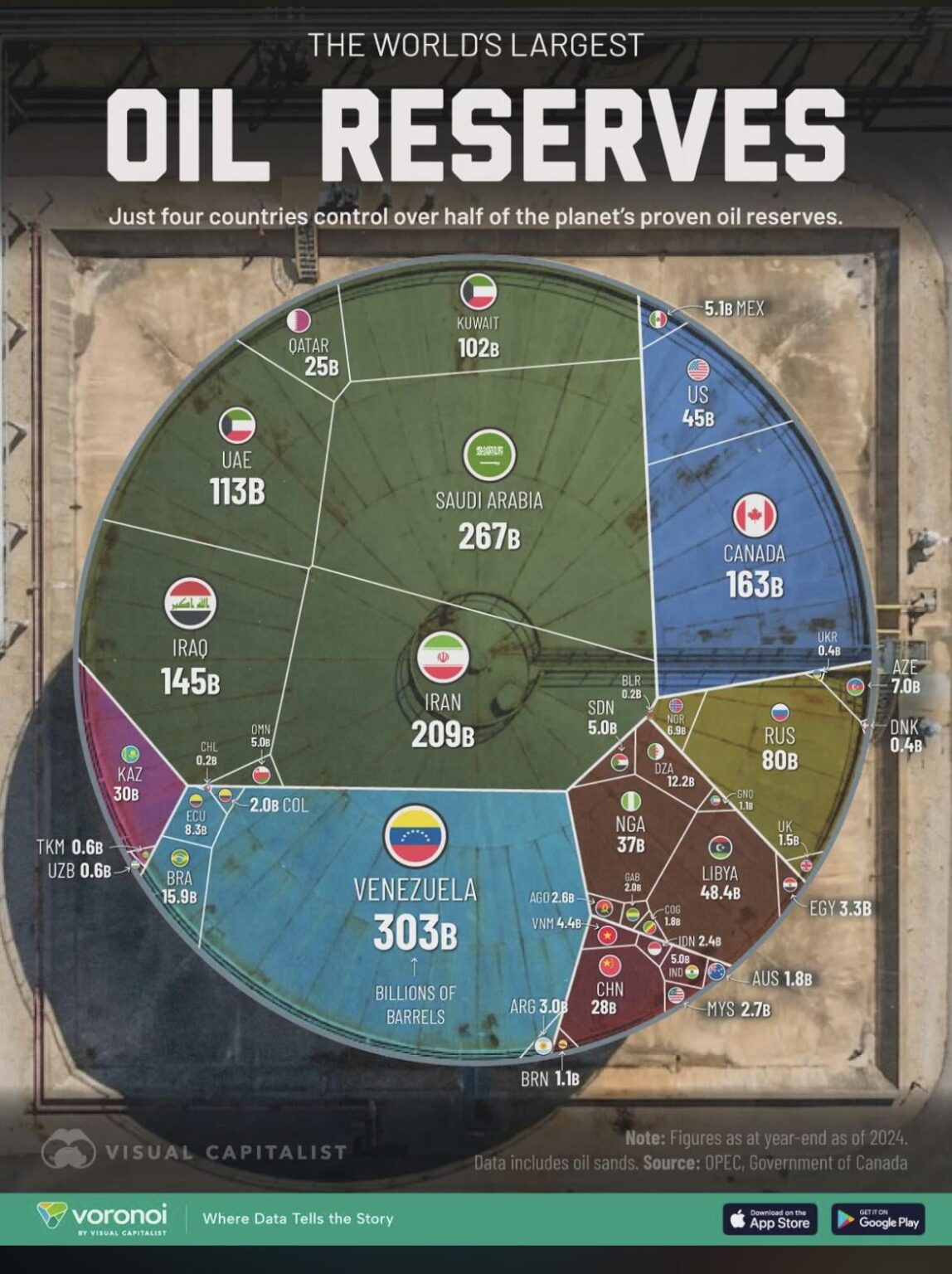
Serious question, why is Norway so rich with so low oil compared to the rest (not necesarilly Venezuela or Iran as I know the regimes are awful there, but Canada? )
Serious question, why is Norway so rich with so low oil compared to the rest (not necesarilly Venezuela or Iran as I know the regimes are awful there, but Canada? )
Because Norway puts most of the profits into our sovereign wealth fund, also compared to many other oil rich nations we have relatively little corruption and political stability
SlipperyWidget on
Because the state has control of it and its funds.
In other countries private companies got the rights to drill and keep the profits
Creative-Sound-7876 on
It’s the sovereign wealth fund which makes it richer than other countries. They’ve managed and invested the oil money very well.
Kindly-Following4572 on
Because Norway’s oil wealth is mostly put into a fund, not spent. Norway’s “active” wealth comes from what is left of wealth distribution policies. Also tiny population.
Zakath_ on
Low population, we’ve, mostly, avoided Dutch disease, we’re a stable country, and we’ve been planning for the future since the 90s.
Moonshiner_no on
Because we have sensible and forward looking government that invest the money into a wealth fund
DSandleman on
The state almost immediately introduced a high tax rate on oil extraction after its discovery. Since the 1990s, gas production has increased significantly, but the profits have been placed into a fund that is regularly replenished and well managed. No single company or individual has ever controlled the majority of the revenue. As a result, on paper, the Norwegian state is extremely wealthy.
AdImaginary8633 on
Because the Norwegian government started a soverign wealth fund pretty much right after they discovered the oil. This fund is actively managed by “Norges Bank”.
Here is a live tracker of the oil fund: [Oljefondet | Norges Bank Investment Management](https://www.nbim.no/no)
Its about 2.1 trillion USD, which in turn “makes” it so each Norwegian has 380K USD.
To clarify this is not money each and every citizen gets, its just a “saying” so to speak.
IncoherrentRecursion on
Norway never sold it’s oil reserves. Companies are given consessions, which secures a good return for the state – which is then largely invested in the oil fund. At present the yield from the oil fund exceeds the oil & gass income by 2-300%. So yeah, right now we’re just a hedge-fund…
Weak_Guarantee_7 on
The regimes are awful??? or the regimes refuse to be the puppet of America and because of that they’re sanctioned for decades now.
You need to read a little before embarrassing yourself in public.
aLmAnZio on
Because we have treated our oil as a collective resource, so private companies have not been allowed to secure all of the profits for themselves. (Extra high taxes), as well as having a publicly owned oil company.
asd456lol on
Because we tax every operator 72%. And we put it into a wealthfund and very marginally invest it and barly beats the index.
Tax is the key… the tax makes us so rich from oil
CubicChimp on
A secondary point, perhaps, but alot of Canada’s oil isn’t as accessible like North sea oil. Its costly and not as profitable to extract petroleum from oil sands of which Canada has plenty.
Engineering_Spirit on
The role of Farouk Al Kasim should not be underplayed. This Iraqi geologist came at the exact right moment and with first hand knowledge about how the oil companies operate, he was vital in laying the legal foundation for hindering the oil companies in literally screwing Norwegians completely over.
[Farouk Al Kasim](https://FaroukAlKasimhttps://share.google/HwCf4lXoN5C0s3l2t)
NilsTillander on
Saudi princes turn 747 into private jets, we tax the extractors to redistribute the wealth. Simple as that.
IllCombination4851 on
Norway has the belief that the resources should belong to the people of the nation instead of billionaires multi nationals. Well done Norway.
me: Looking at how Austalia gets stitched up by Chevron, Santos, Exxon and Woodside. It hurts to see such poor mismanagement and corruption. …and the general apathy of Australians.
Far_Strawberry9246 on
Because it didn’t let private / foreign companies rob its off its wealth, and it saved the wealth instead of spending it on consumption right away (like Iran did, for example).
Killswitchz on
One thing is reserves, but Norway has produced approx 100 billion barrels of oil equivalents since the start. A lot of those profits has been transferred and managed in our sovereign wealth fund.
ComradeRasputin on
Because oil production and oil reserves are not the same thing
elmarcelito on
Canada has a lot of oil but it’s extremely expensive to extract. I don’t remember why but something like it’s really deep underground. Therefore extracting it would not be profitable at nowadays market prices.
Saudi Arabia, on the other hand, has the “cheapest” oil, meaning it’s easy to extract and therefore they make hefty profits out of it.
ravnsulter on
When this started we were 3-4 million people in Norway. So we have quite a lot per capita.
Then the state have direct ownership in (all) licenses, typically 20-30%.
And there is a special profit tax, you get cash refund for investments, but pay a high tax for profits. So total tax for oil profit is 78%. Very much goes to the state, but it’s still extremely profitable for the oil companies.
And finally, all income from oil profit goes into a fund. Tax income may not be used by the government, only the dividends from the fund. This prevents varying governments from doing stupid shit just because we are so rich.
TheUpperHead on
Most answers here are missing the mark. The answer is not mainly policy driven (i.e. sovereign wealth fund albeit that it contributes with significant returns), but that the chart shows 2P reserves and not cumulative historical production per capita. The Norwegian petroleum industry is mature and we have extracted most of the value already and with a small population, that provide significant value per capita.
Awkward_Arugula_9881 on
I just wanted to add a small detail, the chart shows the oil that is left, not the oil that has been sold.
danikensanalprobe on
Taxes, taxes taxes. Also, Candas oil reserves are generally more expensive to extract when compared to the reserves of Norway (or iran and Venezuela for that matter). The existing infrastructure on the norwegian seabed is capable of distributing oil from new reservoires with limited investment, making it possible to add smaller reservoires to the system while keeping the operation profitable, even in a high tax environment
Konglehus on
We are not rich compared to other countries. We have a small population, so the government is rich per capita.
squirrel_exceptions on
A lot of people rightly points out that Norway has had a smart system that ensures most ofte profits stay in the country, and that much of it (not all!) is saved rather than spent. Plus a small population and low corruption.
But the other part of it is simply that Norway never had reserves as large as those other countries, most of the found oil is already out of the ground.
Oil production peaked in 2001, oil/gas combined in 2004. Gas has not peaked, but has much more variable profitability, although high since Russia started that war.
The other large oil exporters just have much more left over.
Lindberg47 on
Look at the other Scandinavian countries. They rank among the richest in the world with no or very limited oil (Denmark has a little). If you add 500 billion Norwegian kroner on top of that in oil income each year, you get one of the world’s richest countries.
Annual-Screen-9592 on
Off topic, but its easy to understand why the US is pursuing regime change in Venezuela and Iran from that infographic
thicc_llama on
Low corruption, and the oil money has been used in a smart investment strategy

30 Comments
Because Norway puts most of the profits into our sovereign wealth fund, also compared to many other oil rich nations we have relatively little corruption and political stability
Because the state has control of it and its funds.
In other countries private companies got the rights to drill and keep the profits
It’s the sovereign wealth fund which makes it richer than other countries. They’ve managed and invested the oil money very well.
Because Norway’s oil wealth is mostly put into a fund, not spent. Norway’s “active” wealth comes from what is left of wealth distribution policies. Also tiny population.
Low population, we’ve, mostly, avoided Dutch disease, we’re a stable country, and we’ve been planning for the future since the 90s.
Because we have sensible and forward looking government that invest the money into a wealth fund
The state almost immediately introduced a high tax rate on oil extraction after its discovery. Since the 1990s, gas production has increased significantly, but the profits have been placed into a fund that is regularly replenished and well managed. No single company or individual has ever controlled the majority of the revenue. As a result, on paper, the Norwegian state is extremely wealthy.
Because the Norwegian government started a soverign wealth fund pretty much right after they discovered the oil. This fund is actively managed by “Norges Bank”.
Here is a live tracker of the oil fund: [Oljefondet | Norges Bank Investment Management](https://www.nbim.no/no)
Its about 2.1 trillion USD, which in turn “makes” it so each Norwegian has 380K USD.
To clarify this is not money each and every citizen gets, its just a “saying” so to speak.
Norway never sold it’s oil reserves. Companies are given consessions, which secures a good return for the state – which is then largely invested in the oil fund. At present the yield from the oil fund exceeds the oil & gass income by 2-300%. So yeah, right now we’re just a hedge-fund…
The regimes are awful??? or the regimes refuse to be the puppet of America and because of that they’re sanctioned for decades now.
You need to read a little before embarrassing yourself in public.
Because we have treated our oil as a collective resource, so private companies have not been allowed to secure all of the profits for themselves. (Extra high taxes), as well as having a publicly owned oil company.
Because we tax every operator 72%. And we put it into a wealthfund and very marginally invest it and barly beats the index.
Tax is the key… the tax makes us so rich from oil
A secondary point, perhaps, but alot of Canada’s oil isn’t as accessible like North sea oil. Its costly and not as profitable to extract petroleum from oil sands of which Canada has plenty.
The role of Farouk Al Kasim should not be underplayed. This Iraqi geologist came at the exact right moment and with first hand knowledge about how the oil companies operate, he was vital in laying the legal foundation for hindering the oil companies in literally screwing Norwegians completely over.
[Farouk Al Kasim](https://FaroukAlKasimhttps://share.google/HwCf4lXoN5C0s3l2t)
Saudi princes turn 747 into private jets, we tax the extractors to redistribute the wealth. Simple as that.
Norway has the belief that the resources should belong to the people of the nation instead of billionaires multi nationals. Well done Norway.
me: Looking at how Austalia gets stitched up by Chevron, Santos, Exxon and Woodside. It hurts to see such poor mismanagement and corruption. …and the general apathy of Australians.
Because it didn’t let private / foreign companies rob its off its wealth, and it saved the wealth instead of spending it on consumption right away (like Iran did, for example).
One thing is reserves, but Norway has produced approx 100 billion barrels of oil equivalents since the start. A lot of those profits has been transferred and managed in our sovereign wealth fund.
Because oil production and oil reserves are not the same thing
Canada has a lot of oil but it’s extremely expensive to extract. I don’t remember why but something like it’s really deep underground. Therefore extracting it would not be profitable at nowadays market prices.
Saudi Arabia, on the other hand, has the “cheapest” oil, meaning it’s easy to extract and therefore they make hefty profits out of it.
When this started we were 3-4 million people in Norway. So we have quite a lot per capita.
Then the state have direct ownership in (all) licenses, typically 20-30%.
And there is a special profit tax, you get cash refund for investments, but pay a high tax for profits. So total tax for oil profit is 78%. Very much goes to the state, but it’s still extremely profitable for the oil companies.
And finally, all income from oil profit goes into a fund. Tax income may not be used by the government, only the dividends from the fund. This prevents varying governments from doing stupid shit just because we are so rich.
Most answers here are missing the mark. The answer is not mainly policy driven (i.e. sovereign wealth fund albeit that it contributes with significant returns), but that the chart shows 2P reserves and not cumulative historical production per capita. The Norwegian petroleum industry is mature and we have extracted most of the value already and with a small population, that provide significant value per capita.
I just wanted to add a small detail, the chart shows the oil that is left, not the oil that has been sold.
Taxes, taxes taxes. Also, Candas oil reserves are generally more expensive to extract when compared to the reserves of Norway (or iran and Venezuela for that matter). The existing infrastructure on the norwegian seabed is capable of distributing oil from new reservoires with limited investment, making it possible to add smaller reservoires to the system while keeping the operation profitable, even in a high tax environment
We are not rich compared to other countries. We have a small population, so the government is rich per capita.
A lot of people rightly points out that Norway has had a smart system that ensures most ofte profits stay in the country, and that much of it (not all!) is saved rather than spent. Plus a small population and low corruption.
But the other part of it is simply that Norway never had reserves as large as those other countries, most of the found oil is already out of the ground.
Oil production peaked in 2001, oil/gas combined in 2004. Gas has not peaked, but has much more variable profitability, although high since Russia started that war.
The other large oil exporters just have much more left over.
Look at the other Scandinavian countries. They rank among the richest in the world with no or very limited oil (Denmark has a little). If you add 500 billion Norwegian kroner on top of that in oil income each year, you get one of the world’s richest countries.
Off topic, but its easy to understand why the US is pursuing regime change in Venezuela and Iran from that infographic
Low corruption, and the oil money has been used in a smart investment strategy
We gotta…. “bomb Venezuela”