
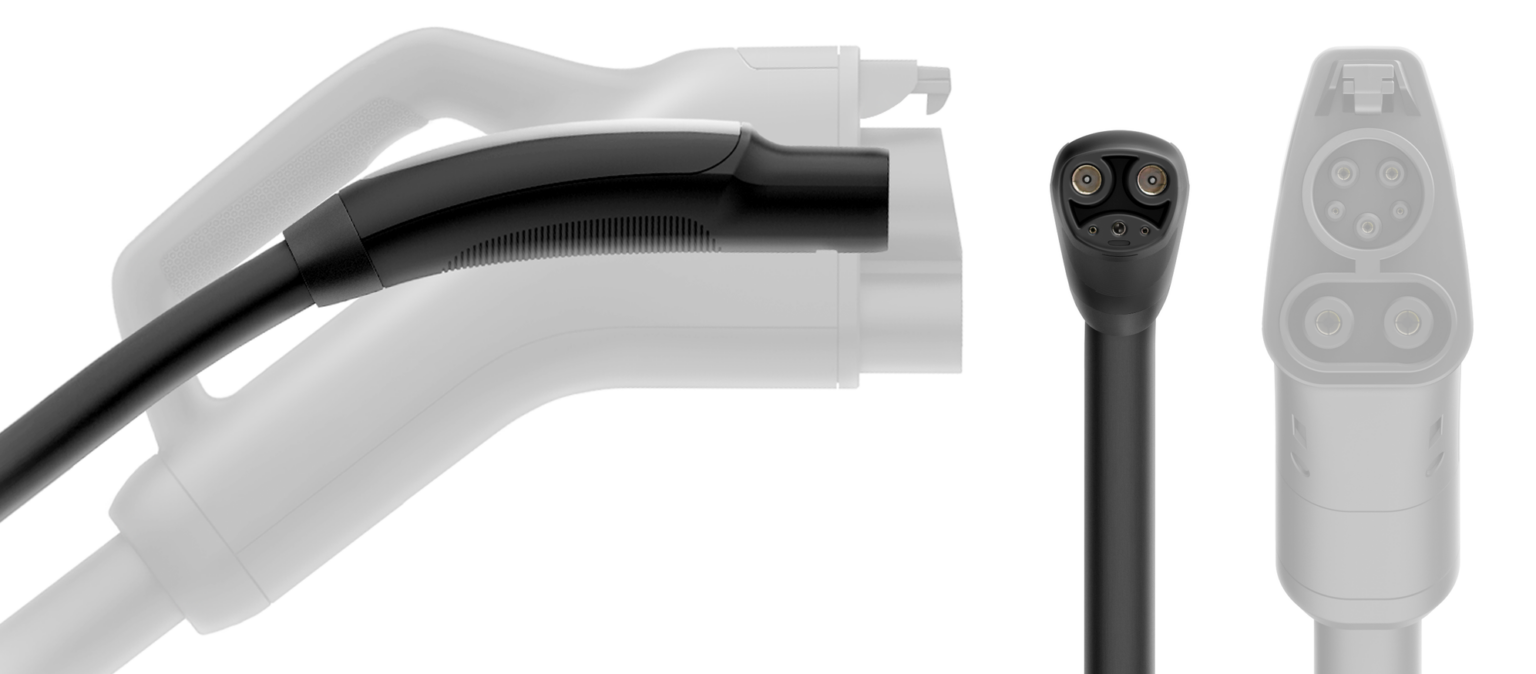
The ongoing shift from the CCS1 to the NACS (SAE J3400) charging connector standard in North America sent an industry-wide shock wave that could soon reach some other markets — primarily in Japan and South Korea.
Implications of a Switch to NACS in Japan and South Korea
I wrote about the expected implications of the switchover from the CCS1 to the Tesla-developed NACS (standardized as SAE J3400) a few years ago for InsideEVs. At the time, North America was the primary market for the CCS1 charging standard. Europe and many other markets have the CCS2 with three-phase AC support, while China continues to use the GB/T (these markets will not be affected).
Once North America orphaned the CCS1, a few smaller CCS1 markets basically have no choice but to join the NACS bandwagon. There is no economic rationale for maintaining a separate (orphaned) standard in a handful of smaller markets.
The best example of such a smaller market is South Korea. The local automotive industry must have a real headache with charging connectors — CCS1 for domestic models, NACS for models exported to North America, and CCS2 for models exported to Europe and many other markets. It is just a matter of time before the CCS1 will be ditched, we believe.
The Japanese CHAdeMO standard lost its battle for global adoption years ago and currently holds a dominant position solely in Japan. However, the CHAdeMO connector appears inferior to NACS (in terms of power, size, and the necessity to use a separate AC port), so it seems it will lose its home market as well. There is no economic sense in keeping it, especially since local manufacturers already install the NACS for EVs exported to North America.
First Signs
The first signs of the upcoming switch from CCS1 to NACS (SAE J3400) in South Korea and from CHAdeMO to NACS (SAE J3400) in Japan are evident.
In both countries, Tesla operates a relatively dense Supercharging network with NACS connectors. That’s the foundation.
In 2024, we learned that Sony Honda Mobility adopted the NACS for the Afeela brand (the first company to do so in Japan). It’s hard to imagine that Honda itself would stick with the SAE J1772 for AC charging and CHAdeMO for DC fast charging if its joint venture with Sony is switching to the NACS.
In May 2025, Mazda announced its adoption of the NACS in Japan, starting in 2027, and most recently, Stellantis announced the switch to the NACS in Japan (and South Korea). On top of that, Tesla is quickly expanding its Supercharging network in Japan.
Similar signs are evident concerning South Korea. In early 2025, we reported on a charging network deploying NACS charging connectors in parallel to CCS1.

An Afeela at a Tesla Supercharging station. (Source: Afeela)
The Decision
The one missing piece seems to be the final decision — an agreement between the local automotive industry and the government.
Max de Zegher, Tesla’s Director of Charging North America (@MdeZegher / X), pointed out that manufacturers and consumers want clarity regarding EV charging standards: “Building CHAdeMO vehicles just for Japan, or CCS1 vehicles just for South Korea, no longer makes sense.”
He also noted that nearly all 150+ kW DC fast chargers in Japan are Superchargers (NACS). The aging CHAdeMO chargers are often 20-50 kW, with some portion of 100 kW.
Car manufacturers and consumers want clarity on a standard for Japan (NACS & CHAdeMO market) and South Korea (NACS & CCS1 market). Building CHAdeMO vehicles just for Japan, or CCS1 vehicles just for South Korea, no longer makes sense.
With such a strong NACS presence already… https://t.co/Af7spsFkU7
— Max (@MdeZegher) November 19, 2025
In our opinion, the fate of the CCS1 and CHAdeMO is sealed. Even if there will be some reluctance, probably mainly to avoid giving Tesla an edge and the need to develop parallel NACS (SAE J3400) infrastructure, both standards will eventually fade. Defending the CCS1 and CHAdeMO would only generate more costs.
Nonetheless, the CCS2 standard in Europe and most of the rest of the world, and the GB/T standards in China, are not going anywhere.