
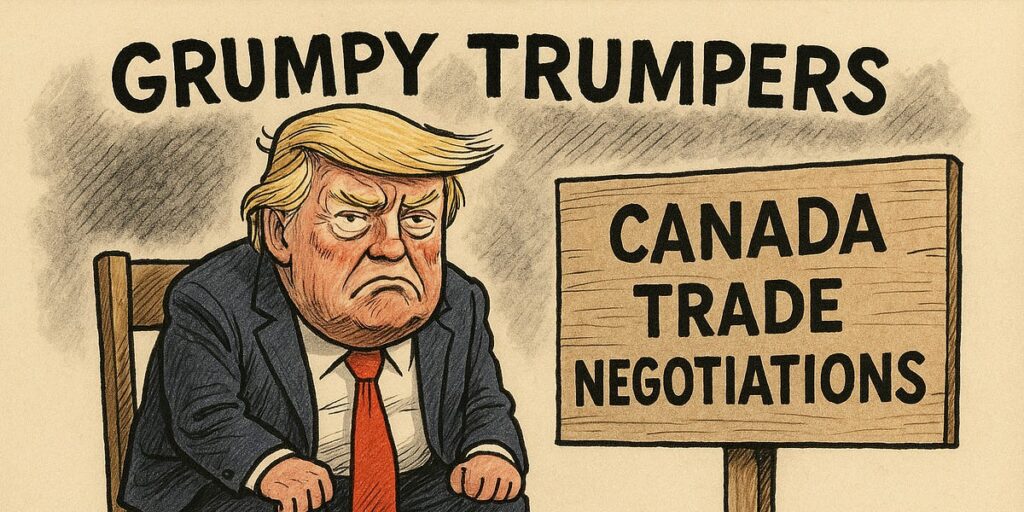
As 2026 begins, a curious mood is taking shape inside the coalition that returned Donald Trump to the White House last year.
The red-hot glow of the MAGA movement hasn’t disappeared, but it has cooled into something more conflicted, a voter bloc that still prefers Trump to the alternative but isn’t getting what it thought it voted for. They’ve even earned a label I wish I’d coined myself. Thank you to UK pollster Lord Ashcroft for the perfect term: the Grumpy Trumpers.
They’re not the diehard base. They’re the voters who backed him because they saw him as the lesser of two evils. My read of polling in the U.S., consistent with Ashcroft’s findings, shows that roughly one in eight Trump voters last year made a pragmatic choice rather than an enthusiastic one.
And as we approach the midterms, twelve months away, many of those reluctant supporters are signalling that the trade they made is starting to feel unbalanced.
Half of them now believe the United States is heading in the wrong direction, and more say they are worse off today than better off. They expected Trump’s return to bring relief from the cost-of-living pressures that defined the Biden years. Instead, they see a President whose aggressive tariff agenda is making their household budgets even tighter.
For Canadians watching this from across the border, there’s more than political theatre at stake. Unhappiness inside the Trump coalition has always had policy consequences, and for a president who governs through pressure and drama, dissatisfied voters are both a warning light and a justification for turning up the heat. That matters even more now because next year will determine the future of CUSMA.
What remains uncertain is the posture Trump will bring to the table if he negotiates at all.
And that is where the Grumpy Trumpers matter most.
A Presidency Searching for Momentum
The data reveals a core challenge for Trump. His supporters applaud his focus on border control, but even there the optics of workplace raids and mass arrests are starting to wear thin. They think his second term is more disciplined, but disciplined in the wrong places. His legal battles against perceived enemies, including media outlets like the BBC, are playing like a “revenge tour” to voters who increasingly want results, not spectacle.
Since Trump first burst onto the political scene a decade ago, Americans have weighed his behaviour against the outcomes they hoped he would deliver. If they felt better off, Trump being Trump was simply the cost of doing business. But if they feel life isn’t improving, then the behaviour becomes the whole story.
As the midterms approach, Trump cannot afford to let disappointment settle into the narrative. His party certainly can’t.
Republicans looking ahead to 2028 know that if Americans decide they are not better off, the door swings wide open to the Democrats, who will no longer have Trump as the galvanizing force they’ve relied on for turnout.
This moment of vulnerability shapes the incentives in front of him. And Canada, as always, sits downstream of American domestic politics.
How CUSMA Could Become a Political Tool
With the CUSMA up for review, Canada’s central question isn’t whether the deal will be opened but what Trump needs politically when he sits down to rewrite it. From my read of the polling, two broad scenarios emerge.
Scenario 1: Trump plays offence to reassure his restless base
If the Grumpy Trumpers continue to feel economically squeezed, Trump may approach the CUSMA review as a high-visibility proving ground. A venue to show he is fighting for American workers, taking on foreign competitors, and forcing concessions that he can package as wins.