
DAUPHIN COUNTY, Pa. (WHP) — Medical centers across the country are keeping up with the demand for Artificial Intelligence-powered technology, and hospitals in central Pennsylvania are no exception.
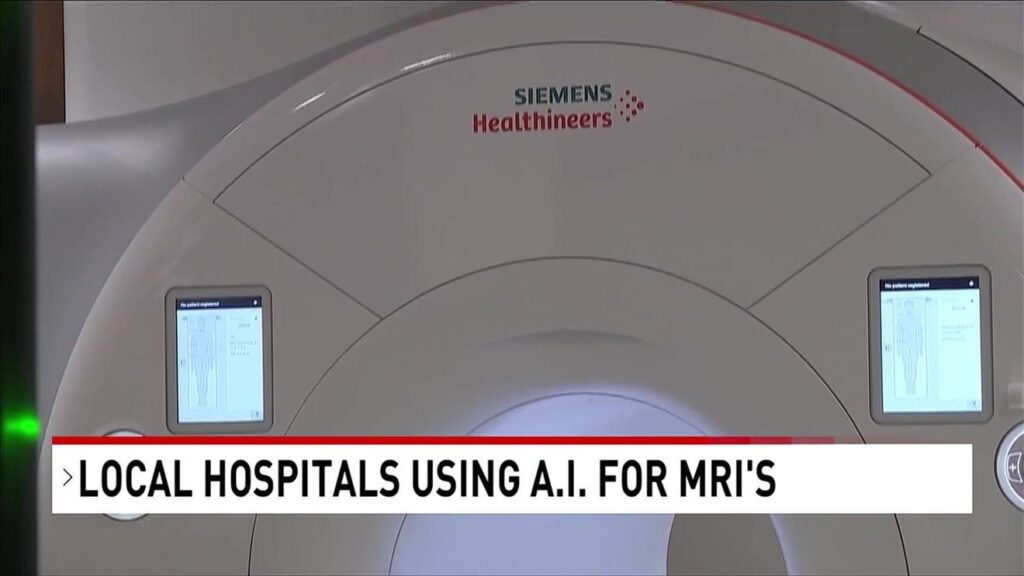
Penn State Health is now using “Deep Resolve,” an AI image reconstruction software, in its MRI scans, and Milton S. Hershey Medical Center is one of the first in the state to implement the tech.
“MRIs have come a long way, a long way; and now with the scans and how quick they are, it’s just amazing,” said Joan Hartman, a senior MRI technologist at Hershey Medical Center.
Seven of the nine MRI machines at the hospital are currently using Deep Resolve technology. Hartman said the new software greatly reduces the time it takes for experts to conduct an MRI scan.
“It acquires 50% and reconstructs 50% of the images using the AI technology,” Hartman said. “We used to do 20-minute sequences. Now the sequences are two minutes. So, we’ve done 45-minute time slots in the past, historically, and now we can do 30-minute time slots with getting the patient on and off the table, and with a 10-minute, 15-minute scan of the entire body part.”
Hershey Medical is the first children’s hospital in central Pennsylvania to offer the Deep Resolve Technology, but it’s also one of the only hospitals in the country that uses anesthesia to sedate patients who might have trouble with movement or anxiety before they go for their MRI.
“Kids developmentally, they’re just not able to hold still, for an extended period of time, and they may also have other medical conditions that prevent them from doing so,” Dr. Theodore Cios, an anesthesiologist at Penn State Milton S. Hershey, said. “[In] adults that can be either chronic pain for folk, from holding still for the scan, whether that’s formal diagnosis of chronic pain, or just simply having low back pain where you can’t lay flat for that long.”
Hartman said one thing that the new technology doesn’t work well with is excessive movement.
“If we have a patient that is moving a lot, we have to go back to traditional imaging. Therefore, that will back up our schedule,” Hartman said.
Cios noted that anesthesia has come a long way, but he said there are still some risks to undergoing sedation. He said this new deep resolve technology really helps by reducing the time they spend under sedation while getting imaging work done.
“I think it’s really changed what we do, on a daily basis,” Cios said. “Not only is it helpful for minimizing the risks to individual patients, but on a population health level, it increases access to medical care.”
Hartman said the significant decrease in imaging time also helps the hospital treat more patients.
“Instead of doing eight patients every eight hours or ten patients every eight hours, we add another five or six patients onto the schedule,” Hartman said. “The image quality is much better. Absolutely. It’s just amazing.”