
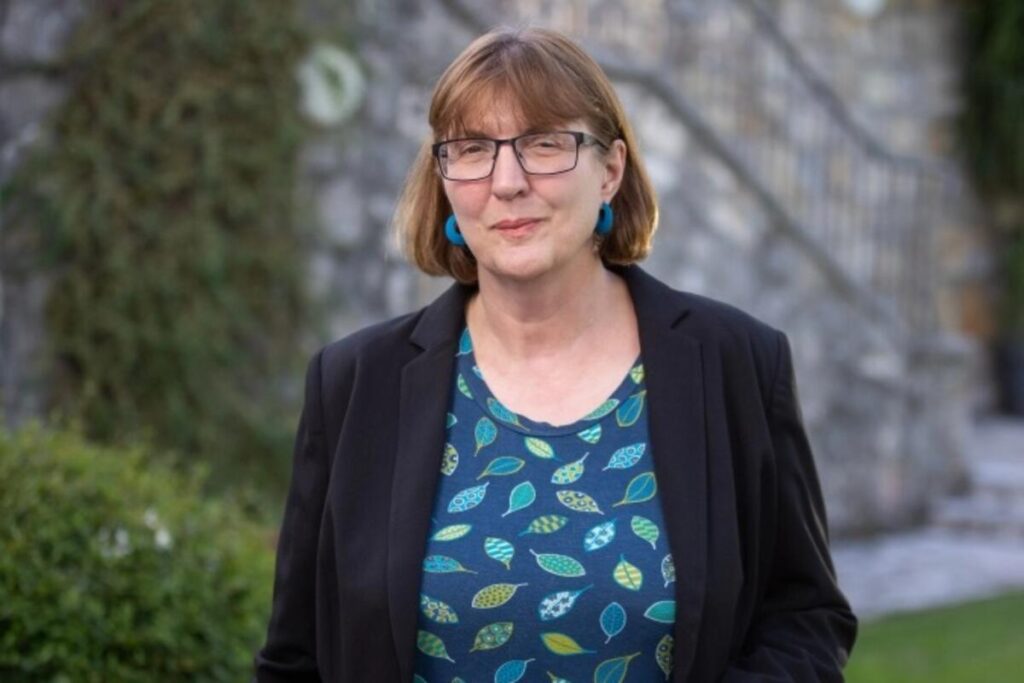
Despite the progress made, Montenegro still has much work to do to address long-standing challenges in the judiciary, including strengthening independence, improving efficiency and consistency in decision-making, and achieving visible results in complex cases, assessed British Ambassador Dawn McCann.
In an interview with the MINA agency, she said that the United Kingdom (UK) is strongly committed to supporting democracy in Montenegro and strengthening democratic resilience, emphasizing that restoring citizens’ trust in judicial institutions requires fair and evidence-based judicial decisions, as well as an institutional culture based on transparency.
According to McKen, Montenegro has made progress over the past year in the areas of rule of law and judicial reform, especially when it comes to re-establishing the functioning of key institutions.
“However, much work remains to address long-standing and deeper structural challenges, including the need to strengthen judicial independence, improve efficiency and consistency in decision-making, and achieve tangible results in complex cases, including those related to corruption,” McCann said.
She also emphasized that reform is not just about passing a law, but about its implementation and consistency over time.
“Restoring public trust in the justice system will require robust processes, fair and evidence-based judicial decisions, and an institutional culture based on transparency that is able to demonstrate convincing results in practice,” emphasized McCann.
She said that the UK would continue to support Montenegro’s reform efforts through advisory support, exchange of expertise and institutional cooperation, including the links established over the past year between the two countries’ supreme courts.
As McCann added, the UK will continue to support efforts to build strong judicial institutions and is ready to provide advice and establish cooperation to develop alternative dispute resolution mechanisms, including arbitration.
Commenting on allegations by certain actors that there is selective justice in Montenegro when it comes to cases of high-level corruption and organized crime, McCann said that she is aware that there are concerns in the country regarding selective justice.
“That is why it is of particular importance that investigations and court proceedings in Montenegro are conducted impartially and transparently, based on solid evidence and in accordance with the rule of law,” said McCann.
As she pointed out, Montenegro has taken certain steps in recent years towards strengthening its institutional framework in the fight against corruption and organized crime, including key appointments in the judiciary and prosecution.
“Sustaining measurable progress will depend on consistent application of the law, regardless of political affiliation. Achieving a credible track record in prosecuting high-level corruption and organised crime cases remains a key commitment as part of the European Union (EU) accession process,” said McCann, adding that the UK continues to support improving judicial processes and strengthening public confidence in the justice system.
Responding to a question about vetting in the police, McCann stated that it can play a constructive role in strengthening integrity, if it is implemented transparently, based on clear and objective criteria, but also with independent oversight.
“It is crucial that professional standards, fairness, shared values, effective control and institutional independence are ensured continuously, so that high standards of employee behavior become part of everyday work,” said Meken.
Electoral reform has made visible progress, but more work remains
When asked whether the past year brought progress in the area of electoral reform in Montenegro, McCann emphasized that it did and that it was encouraging to see that amendments to the laws relating to elections and the financing of political parties and election campaigns had been adopted.
“It is a significant achievement, but it represents the beginning, not the end, of the reform process,” McCann emphasized.
As she added, free and fair elections are the foundation of democracy, especially given the increasing risks of foreign malicious influence on electoral processes.
“Montenegrin citizens have the right to expect elections they can have confidence in. Over the past years, the UK has supported efforts to strengthen the integrity of elections in Montenegro and the resilience of electoral systems to foreign malicious influence, including support for election observation, the resolution of protracted disputes regarding election results, and technical and expert assistance to the Comprehensive Electoral Reform Committee,” McCann said.
However, she added, although visible progress has been made, much remains to be done.
“Continued political dialogue, commitment and unity of purpose among political actors are crucial, not only to maintain the momentum of reforms, but also to ensure the full and consistent implementation of the adopted changes in practice,” said McCann.
According to her, building lasting public confidence that elections in Montenegro are credible, free and fair will be of crucial importance, especially in the context of preparations for the 2027 elections.
Harmonization with EU standards is beneficial for citizens, but also for the region
Speaking about Montenegro’s European integration, McCann assessed that the closing of five more negotiation chapters in the EU accession process represents a significant milestone on Montenegro’s path to membership.
“The progress is also a reminder that accession is a process of continuous reform and alignment, not a one-time event,” said McCann.
She said that the UK encourages sustainable and inclusive progress that will further strengthen institutions, improve accountability and bring Montenegro closer to European standards that are of real importance to citizens across the country.
“The UK continues to support Montenegro’s European integration. This is not just a matter of institutional membership. We believe that deeper alignment of Montenegro with EU standards in the areas of the rule of law, economic governance, democratic accountability and regional cooperation brings concrete benefits to the citizens of Montenegro and contributes to the long-term stability and prosperity of the Western Balkans,” said McCann.
According to her, a stable, prosperous and democratic Western Balkans is crucial for Europe’s common security and economic interests.
McCann said that the UK, although no longer a member of the EU, welcomes Montenegro’s accession process, adding that it is initiating reforms that strengthen democratic institutions, the rule of law and economic resilience.
“These reforms are necessary because strong institutions, independent justice systems and accountable governance directly enhance stability, security and opportunities for citizens, and therefore indirectly contribute to a more resilient Europe. This outcome is in everyone’s interest,” McCann said.
Maintain focus on concrete results through the Berlin Process
Commenting on Montenegro’s preparations for assuming the chairmanship of the Berlin Process, McCann stressed that the UK, as the previous host, wanted the process to take place in partnership with the region and that the content and direction of discussions throughout the process were based on the priorities and needs identified by representatives from each country, in partnership with the region.
She said that they are pleased that Montenegro will host the chairmanship of the Berlin Process this year.
“This is a very good way to ensure that the Berlin Process properly supports the development of the region and addressing common challenges,” said McCann, adding that they are aware that the Montenegrin working group has carefully considered the goals they want to achieve during their chairmanship and that they have started preparations on time.
McCann stated that they expect Montenegro to maintain a strong focus on concrete results, with constructive dialogue, and that she looks forward to working closely with Montenegro “to build on what has been achieved in 2025.”
UK supports strengthening resilience in Montenegro
Speaking about cooperation with Montenegro in the field of defense, McCain pointed to a strong and growing partnership, based on shared values and responsibilities as a NATO ally.
“The focus of our cooperation is on strengthening regional security, building resilience, and improving interoperability through NATO frameworks and joint activities,” said McCann, adding that key elements of that cooperation are training and professional development.
McCann recalled that this year, a significant number of members of the Army of Montenegro (AVCG) were trained in the UK, but also in Montenegro, which helped strengthen skills, standards and long-term institutional ties.
“The UK supports the development of resilience in Montenegro through practical assistance, including search and rescue, by donating relevant equipment to the Ministry of the Interior and the Ministry of Defence. Taken together, these efforts reflect a purposeful, forward-looking defence partnership based on capability building, trust and shared commitments in NATO,” McCann said.
She also pointed to the visit of the Red Arrows to Montenegro, assessing that it was a visible symbol of friendship and partnership between the two countries.
“It demonstrated the professionalism, skill and discipline of the Royal Air Force, while also highlighting Montenegro’s role as a valuable and reliable NATO ally,” said McCann, adding that the visit also played a role in further strengthening ties between the countries.
Gender equality to be integrated into all reform processes
McCann said that support for gender equality is one of the British Government’s key priorities globally, adding that partners in Montenegro are supported in strengthening institutions and processes, including improving access to justice for women and ensuring women’s substantive inclusion in decision-making processes, particularly in areas where they remain underrepresented.
Meken emphasized that maintaining the progress achieved will depend on moving from declarative commitments to consistent implementation in practice, but also on ensuring that gender equality is integrated into all reform processes, and not treated as a separate topic.
This, she added, will also depend on continued support for those who work every day to ensure that the rights of women and girls in Montenegro are realized in reality.
UK strongly supports tradition of multicultural harmony in Montenegro
Commenting on warnings about the emergence of historical revisionism and divisive narratives, McCann said that they are closely monitoring all discussions taking place in the country on this topic, adding that they understand the concerns expressed by some civil society representatives and other stakeholders regarding the possible impact of divisions based on historical narratives on social cohesion.
According to her, the UK strongly supports the tradition of multicultural harmony in Montenegro, its democratic resilience and respect for human rights.
“Inclusive dialogue on sensitive historical issues, preserving the values of freedom and justice, and respecting the dignity of all communities, are essential for the long-term stability of Montenegro,” McCann said.
She added that the UK, as a partner and friend, is committed to encouraging approaches that strengthen social unity and contribute to seeing the past in a way that fosters understanding, rather than polarization and division.
Support for Ukraine is firm and unwavering.
When asked about the situation in Ukraine, McCann said that the UK’s support for Ukraine is strong and unwavering, adding that both the UK and Montenegro stand resolutely against the illegal Russian invasion of Ukraine and in defense of international law.
“The UK has provided significant military, humanitarian and economic assistance to Ukraine, totalling over £20 billion, and we commend Montenegro’s principled stance and contribution, including recent commitments under the NATO Support and Assistance Mission to Ukraine (NSATU) as well as the European Union Military Assistance Mission (EUMAM),” McCann said.
As she pointed out, the UK welcomes the progress made by the negotiating teams of the United States and Ukraine and calls on Russia to agree to the peace plan and end its illegal invasion.
She added that British Prime Minister Keir Starmer continues to work with Ukrainian President Volodymyr Zelensky, US President Donald Trump and other European leaders to reach an agreement that will bring about a just and lasting peace.
“It is clear that any peace solution must be just and lasting and must fully respect Ukraine’s sovereignty and security,” McCain stressed, stating that the UK will continue to support Ukraine, along with strong economic pressure on Russian President Vladimir Putin.
Montenegro is becoming a more attractive destination for foreign investors
Commenting on the economic cooperation between the UK and Montenegro, McCann said that it was encouraging that bilateral trade in goods and services had increased by 8,3 percent, as well as that the UK was one of the ten largest investors in Montenegro last year.
“This is a clear sign that Montenegro is becoming more than ever an attractive destination for foreign investors. I expect this trend to continue, as Montenegro continues with reforms and thus becomes a stronger and more attractive environment for doing business,” said McCann.
According to her, more and more tourists want to visit Montenegro, and she expects that trend to continue with direct flights by British Airways between Tivat and London.

News