
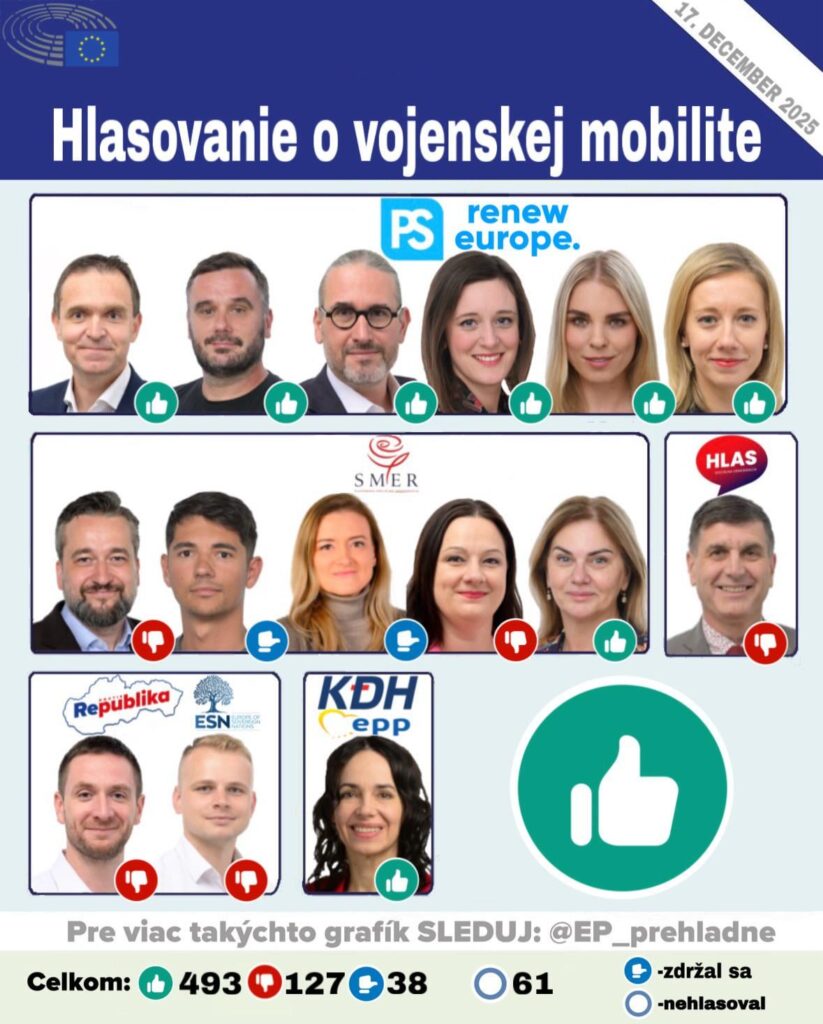
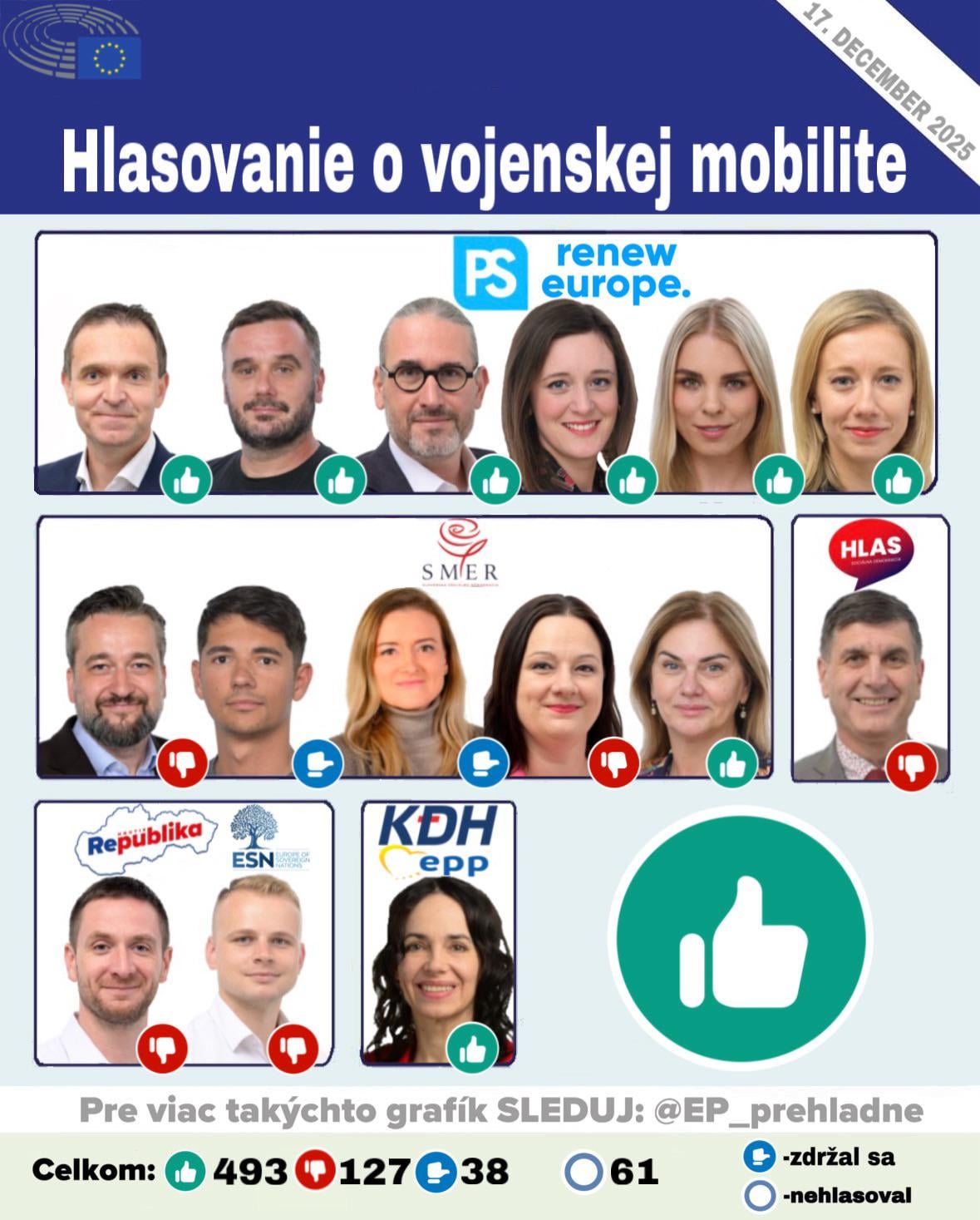
The European Parliament dealt with the issue of the so-called military mobility in the EU, i.e. the ability of member states to quickly and efficiently move armed forces, equipment and material across borders. This topic is linked to the worsened security situation in Europe and the experience of recent years, which showed that the EU is not always sufficiently prepared for a quick reaction in crisis situations. The Parliament therefore emphasizes the need for better coordination between states and the removal of practical obstacles that significantly slow down transfers today.
One of the main problems are administrative and technical barriers. Currently, the movement of military equipment across multiple Member States can take weeks to months, mainly due to different permits, rules and insufficiently adapted infrastructure. Parliament points out that many roads, bridges and railways are not designed for heavy military equipment, which significantly limits the ability to react quickly in the event of a crisis or security threat.
Cooperation between member states and coordination with international partners is also an important element. Parliament emphasizes that the strengthening of military mobility should take place in accordance with cooperation within NATO and with full respect for the sovereignty of individual states. It is not about creating a “European army”, but about improving the functioning of existing defense capabilities and their ability to react quickly when needed.
Improvements in military mobility are not only relevant in times of conflict. Investments in infrastructure, acceleration of administrative processes and better coordination can have a positive impact even in times of peace, for example in humanitarian interventions, crisis management or civil protection. Parliament therefore perceives this topic as part of a broader strategy for strengthening the security and resilience of the European Union.
The position of the European Parliament in this case has a political character and serves as a starting point for further negotiations with the European Commission and the Council of the EU. The goal is to gradually transform these recommendations into concrete measures that would improve the EU’s readiness to respond to security challenges in practice, without reducing the control of member states over their own defense.
https://i.redd.it/lwmud2bjkxag1.jpeg
Posted by Narrow_Pop3000
8 Comments

Beňova:
Na tomto krásne vidieť, kto by Slovensko nebránil v prípade konfliktu.
Monca zle pocula otazku…
A percenta mafii opat stupnu.
Monika missclick?
Diskutovať môžte aj na Lemmy (slobodný, decentralizovaný klon Redditu) 👇
https://sopuli.xyz/post/39007896
ach moji dvaja zlati bambulaci nesklamali.
Smer je prisambohu banda tradcov a kolaborantov s ruskom