
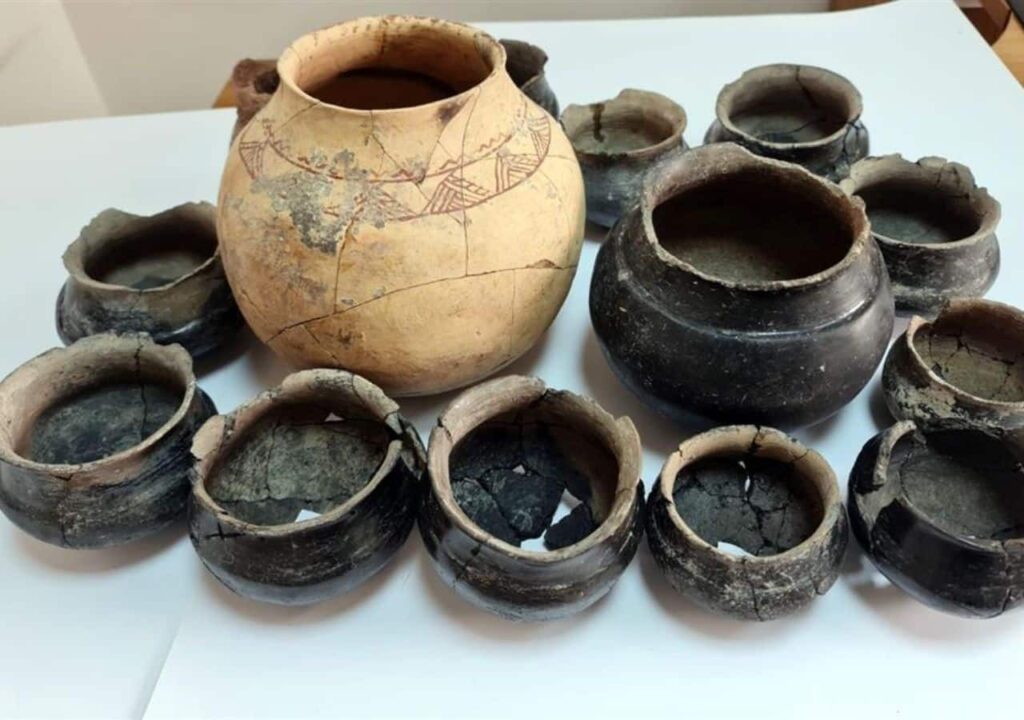
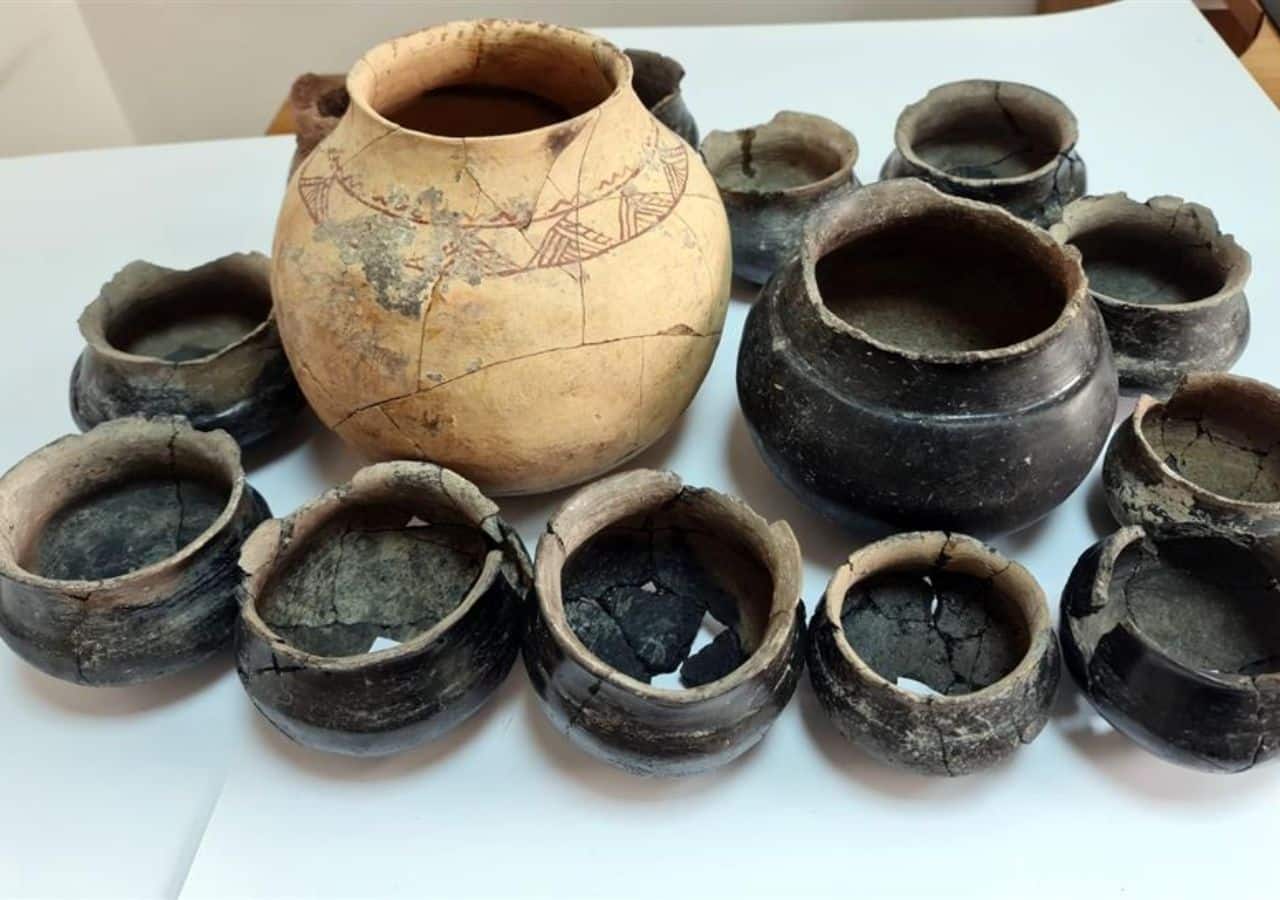
Karaz-type ceramics found at Tadım Castle in Turkey. Credit: Elazığ Provincial Directorate of Culture and Tourism
Archaeologists have uncovered a 7,500-year-old stone seal at Tadım Castle and Höyük, located in eastern Turkey’s Elazığ province. The artifact offers rare evidence of early social organization and is believed to be one of the oldest signs of administrative activity in the Upper Euphrates Basin, a region long known for its ancient settlement patterns.
Experts say the discovery confirms the area as one of the earliest organized communities in Anatolia. The stone seal, now housed at the Elazığ Archaeology and Ethnography Museum, is undergoing detailed study to determine its purpose.
Early interpretations suggest it may have been used to mark ownership, track goods, or serve as a symbol of identity in a pre-literate society. Researchers believe the object reflects the roots of administrative and economic systems in prehistoric Turkey.
Ceremonial artifacts suggest spiritual significance
Elazığ Governor Numan Hatipoğlu described the seal as unlike anything previously found in the region. He noted its potential link to early forms of property control and identity, saying it points to organized life dating back to around 7500 BC. He added that the find underscores Elazığ’s long-standing role as a settlement hub.
The excavation is part of the Heritage for the Future Project, led by the Elazığ Museum Directorate and supported by the Ministry of Culture and Tourism and the provincial government. Tadım Höyük’s deep cultural layers span thousands of years, including remains from the Neolithic, Seljuk and Ottoman periods.
A 7,500-year-old stone seal discovered at Tadım Höyük in Turkey is rewriting early history. 🏛️
The artifact points to prehistoric administration, trade, and identity—long before writing existed. pic.twitter.com/3S8Av7sluW— Tom Marvolo Riddle (@tom_riddle2025) January 2, 2026
In addition to the stone seal, archaeologists have unearthed a large bull-headed altar from the Late Chalcolithic and Early Bronze Age, measuring 160 by 130 centimeters (63 by 51 inches).
The bull motif is often associated with power, fertility and ritual in ancient Near Eastern cultures. Its presence suggests the site also served ceremonial and spiritual functions alongside daily life. Other ritual items such as hearths and figurines further support this interpretation.
Stone seal in Turkey adds context to prehistoric trade and society
Tadım Höyük lies along ancient trade and migration routes that once connected Mesopotamia, the Caucasus and Central Anatolia. Previous finds include Karaz-type ceramics, stylized figurines, geometric pottery, stamp seals, stone tools and arrowheads.
The variety of artifacts indicates that Tadım was not only a residential settlement but also a center for economic, ritual and possibly administrative activities. The seal reinforces theories that the community may have played a role in early agricultural organization and cross-regional trade.
Excavations in the region continue year-round. Ongoing efforts aim to preserve findings while boosting cultural tourism. Authorities are planning to expand excavation sites, improve visitor access and highlight Elazığ’s growing importance as an archaeological destination.