Executive Summary
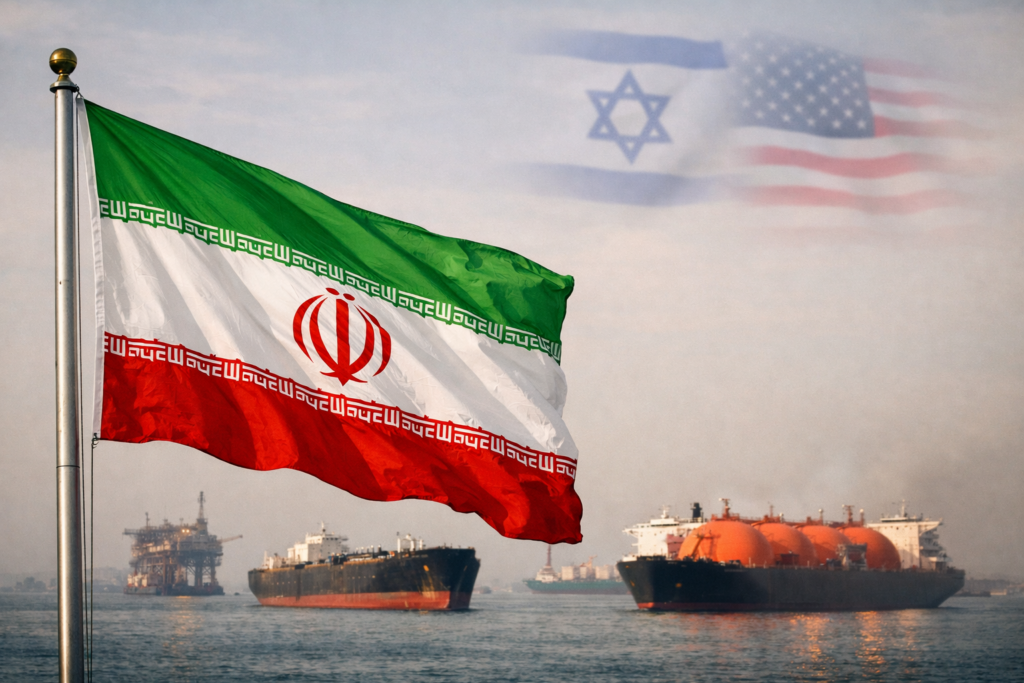
This report explains whether Iran will close the Strait of Hormuz considering a potential military conflict with Israel and the United States.
It analyses the military capabilities of the actors and the external constraints on Iran in closing the Strait for oil and gas shipments. The report divides the scale of the possible military operation against Iran into three scenarios, assessing the likelihood of the closure of the Strait by Iran in each scenario.
Key Takeaways
- The potential military operation of Israel and the US against Iran could threaten oil and gas shipments in the Gulf.
- The probability of the closure of the Strait of Hormuz depends mainly on the threat that the Israeli and US operations pose to the existence of the Ayatollah regime.
- Because of the significant complexity of conducting a full-scale debellation war against Iran, which could topple the regime in Iran, the possibility of the closure of the Strait is low to medium.
Background Information
During the visit to the United States at the end of December 2025, Israeli Prime Minister Benjamin Netanyahu presented to US President Donald Trump the attack plans against Iran. The potential escalation could affect regional logistics, including oil and natural gas shipments from the Persian Gulf. During the 12-day war in June 2025, Iran considered the possibility of closing the Strait of Hormuz to force the United States and Israel to stop the attacks.
The Strait of Hormuz is one of the major global transit routes from the oil-rich region of the Persian Gulf to its customers in America, Asia and Europe. Approximately 20% of the world’s oil is transported through the Strait, which makes the stability of shipments critically important for the global oil market.
Analysis
The military balance between Washington and its Gulf allies guarantees contemporary security of the shipments in the Gulf on the one side and Iran on the other. The US 5th Fleet is located in Bahrain, with air bases in Kuwait, Qatar and the UAE, and other military assets in the region. The US supplies large amounts of major weapons (aircraft, vehicles, SAM systems, etc.) to its Gulf allies that can protect the security of the shipments.
However, Iran retains plenty of instruments to affect the maritime logistics, including sea mines, submarines, anti-ship batteries and others. Among the main reasons for Netanyahu’s visit to Washington is the increase in production of Iran’s ballistic missiles after the 12-day war. Those missiles could threaten the port infrastructure and the US and Gulf monarchies’ military facilities in the Gulf if a direct military confrontation with Iran occurs. Earlier this month, Iran held missile drills at multiple sites across the country.
Despite both sides having the military potential to turn the Persian Gulf into a battlefield, the possibility of the closure of the Strait of Hormuz by Tehran depends on the threat that a new war with Tel Aviv and Washington will pose to the Ayatollah regime. Tehran has a few tools to force the United States and the international community to stop Israel’s military operation. Beijing, one of Tehran’s major political and economic partners, depends significantly on the oil and gas from the Gulf, which puts additional constraints on Iran in any disruptions of the oil supplies to China. Therefore, Iran will constantly threaten to close the Strait, but it will wait with the closure until the situation with its national security does not become too dangerous.
Risk Scenarios
Limited military operation against Iran: US and Israeli military operation will reiterate the same scale and tactics as during the June 2025 war – limited attacks from the air against anti-air defence systems, ballistic missiles production facilities and uranium enrichment facilities. Iran has little motivation to actually close the Strait because of minor threat to the government. Therefore, the possibility of closure of the Strait is low.
Broader military operation against Iran: escalation of the military operation by Israel and the US (compared to the June 2025), including an attack against Iran’s oil production facilities in the Gulf, Iranian oil production and exports logistics. The motivation to actually close the Strait will grow because of the significant economic threat that can lead to domestic instability and shake the regime in Iran. There is potential for a short-term (several days) closure of the Strait to demonstrate to the US and the global audience the seriousness of Iran’s threats. All in all, the possibility of the closure of the Strait is medium.
Debellation war against Iran (or the war of annihilation): significant escalation by Israel and the US of their military operation, including a full-scale military operation on the ground by the US and Israel military forces that will be directed to the toppling of the government in Tehran and the subsequent establishment of a pro-Western government in Iran or provocation of a civil war inside the country. In this scenario, Iran would probably shut down the Strait of Hormuz, aiming to compel Washington to halt the war or to persuade Asian nations to employ diplomatic means to end the military actions by the US and Israel. However, this scenario is unlikely because of the significant complexity and the enormous resources required for preparing such a military operation.
Conclusion
The growing possibility of a new military operation by Israel and the US against Iran poses significant threats to the maritime logistics of the Persian Gulf and depends also on the outcomes of the current protests, which are affecting the Iranian internal stability and dynamics.
Although Tehran has the military capabilities to close the Strait of Hormuz, this analysis demonstrates that the possibility of such an event is low to medium.
Oil and gas producing companies, which operate in the Persian Gulf, should increase their attention to the Israel-US negotiations over the potential military operation against Iran.
OSINT teams should pay attention to the movement of military cargoes and regiments in the Gulf to assess the scale of the potential military operation and the possible Iran’s payback.
Disclaimer: SpecialEurasia does not endorse or support the findings and conclusions presented in this report, which are solely attributed to the author. Any opinions expressed are those of the author and do not reflect the official position of the company.