
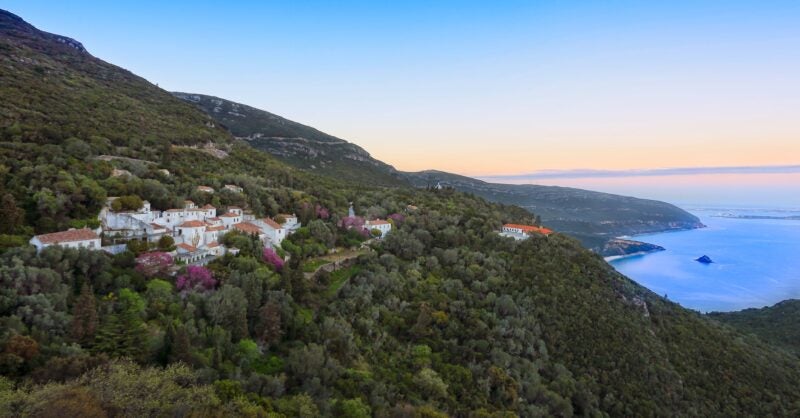
Just 40 minutes’ drive south of Lisbon, Arrábida Natural Park flies incongruously under the tourist radar, despite having some of Portugal’s most gorgeous beaches, nestled below the lush mountains of the Serra da Arrábida. Its near neighbor, Comporta, is far more crowded with both people and mosquitoes, and the seas are colder there, too.
Arrábida’s state of blessed quiet seems likely to continue despite Unesco approving its application for Biosphere Reserve status in September 2025. Despite publicity about this alerting more people to the area’s charms, the certification is also expected to bring Arrábida additional environmental protections. Already, traffic is strictly controlled inside the 43,520-acre park, while development has been strictly limited since 1975.
So, too, are hotels – the best is Casa Palmela, an L-shaped, 17th-century manor house with 21 bright, traditional-style bedrooms (though a more-private annex hosts five additional apartments) and a formal restaurant championing regional specialties such as cuttlefish, tuna and pumpkin alongside home-grown greens. Rooms and facilities have been carefully installed around 300-year-old azulejo tiles that festoon the property and an original first-floor chapel.
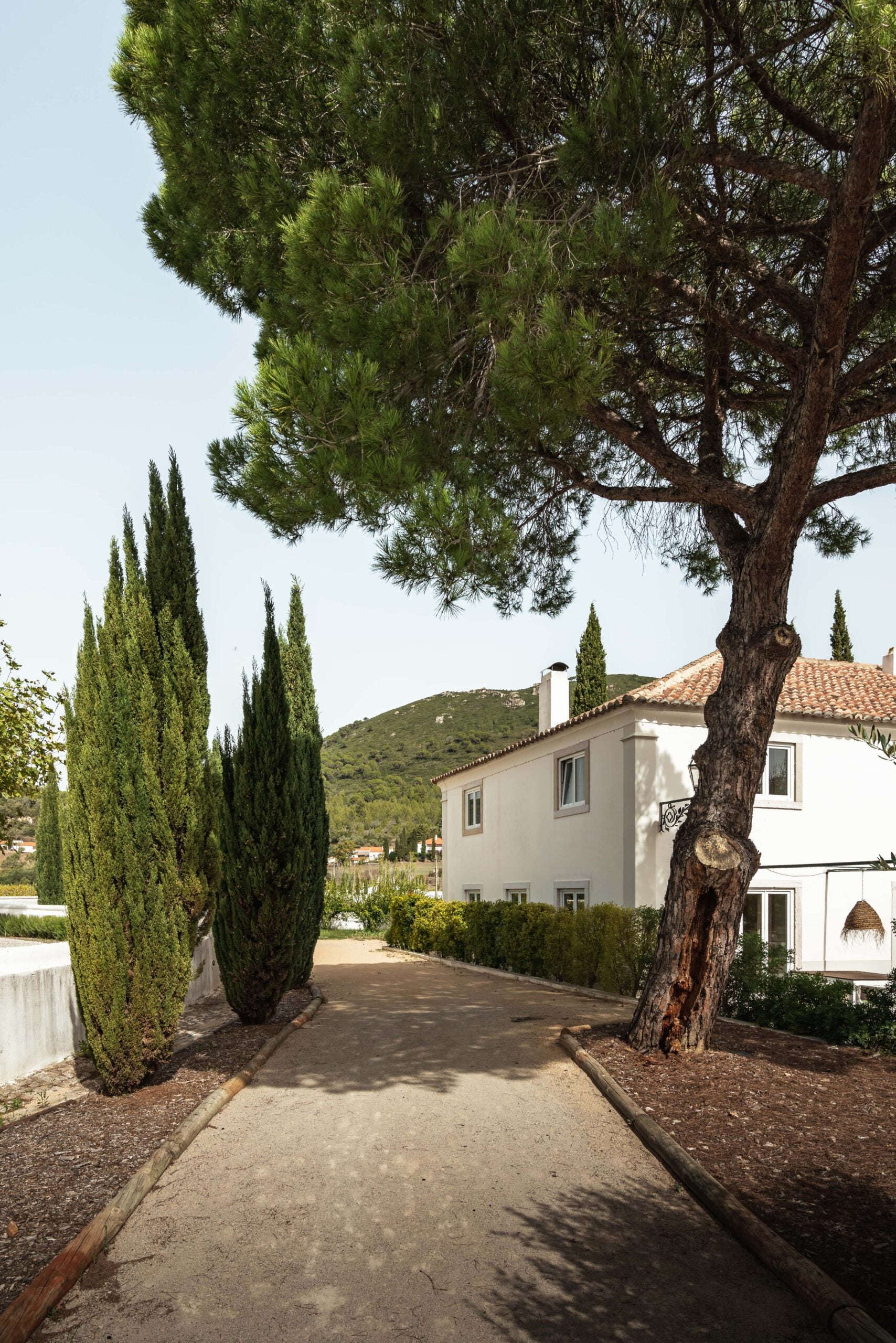 Casa Palmela is a historic manor house set within the Arrábida National Park @David Yawalka
Outside, beyond two pools and a bijou wellness studio, walking circuits traversing the bumpy, 175-acre estate pass aromatic banks of thyme, wild daffodils, orange trees and vineyards used to make rich Moscatel de Setúbal – one of Portugal’s most underrated fortified wines.
Tastings can be arranged here or at other nearby quintas, while private boat tours can be arranged for reliable bottlenose dolphin-watching in the Sado River estuary, followed by picnics on tidal sandbars.
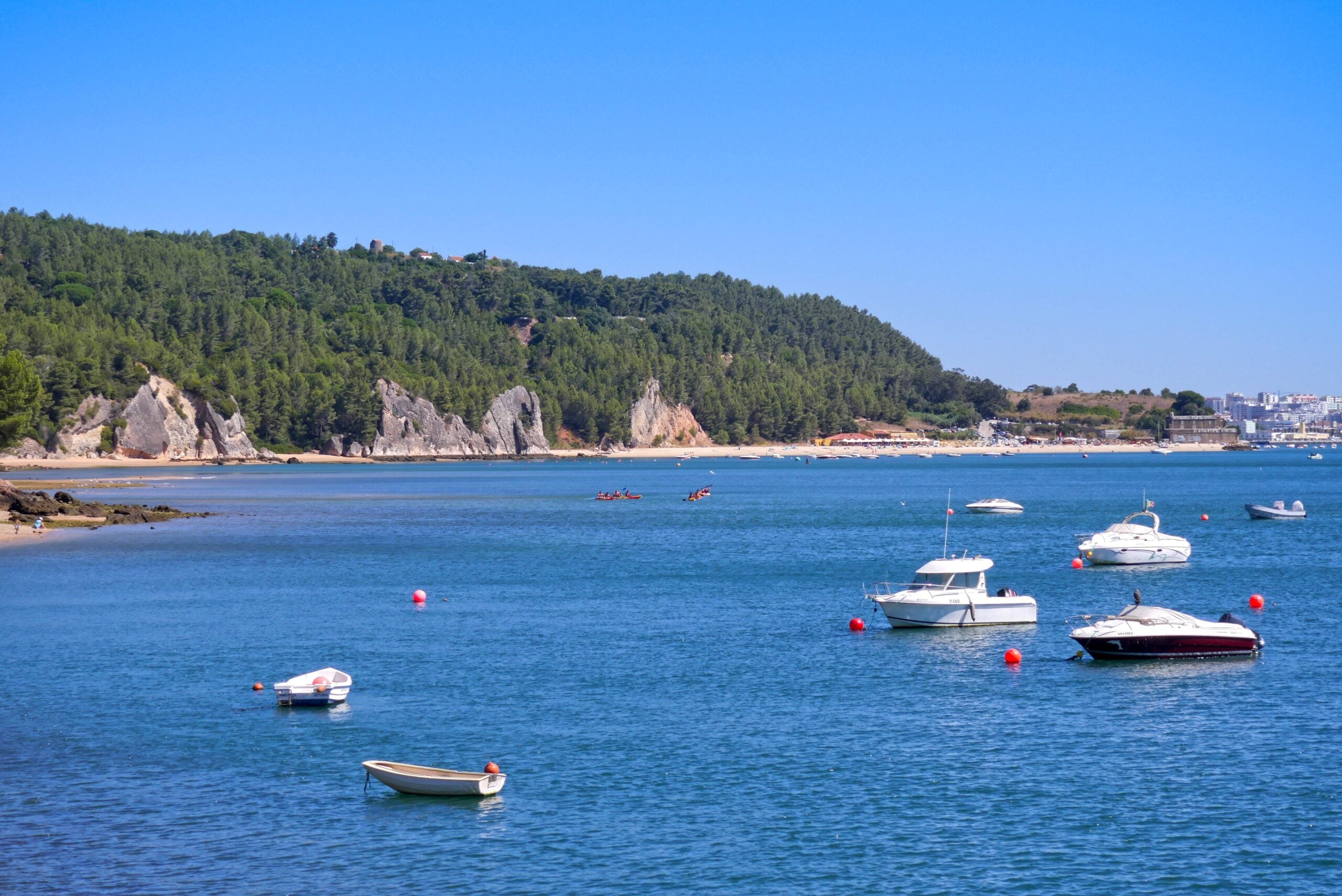 Book a private boat tour in the Sado River estuary
Those voyages run from Setúbal, a weathered-looking city bordering the Natural Park. Setúbal’s ancient, indoor Livramento food market is a must – to taste re-introduced Sado river oysters, gawp at bizarrelooking toadfishes and admire a 5,700-tile mural depicting the past lives of fishermen and farmers.
Setúbal’s old defensive fort is a treat, too, chiefly for its vistas over the spindly Tróia peninsula, where a terrace cafe capitalizes on those views (try the Muscatel-spiked twist on pastel de nata tarts). Further west, in the cobbled settlement of Azeitão, São Simão Arte is an artisan tile-maker – Elton John is a fan. The nearby dairy of Fernando e Simões, which manufactures a version of Azeitão’s namesake buttery sheep’s milk cheese, is worth a visit, too.
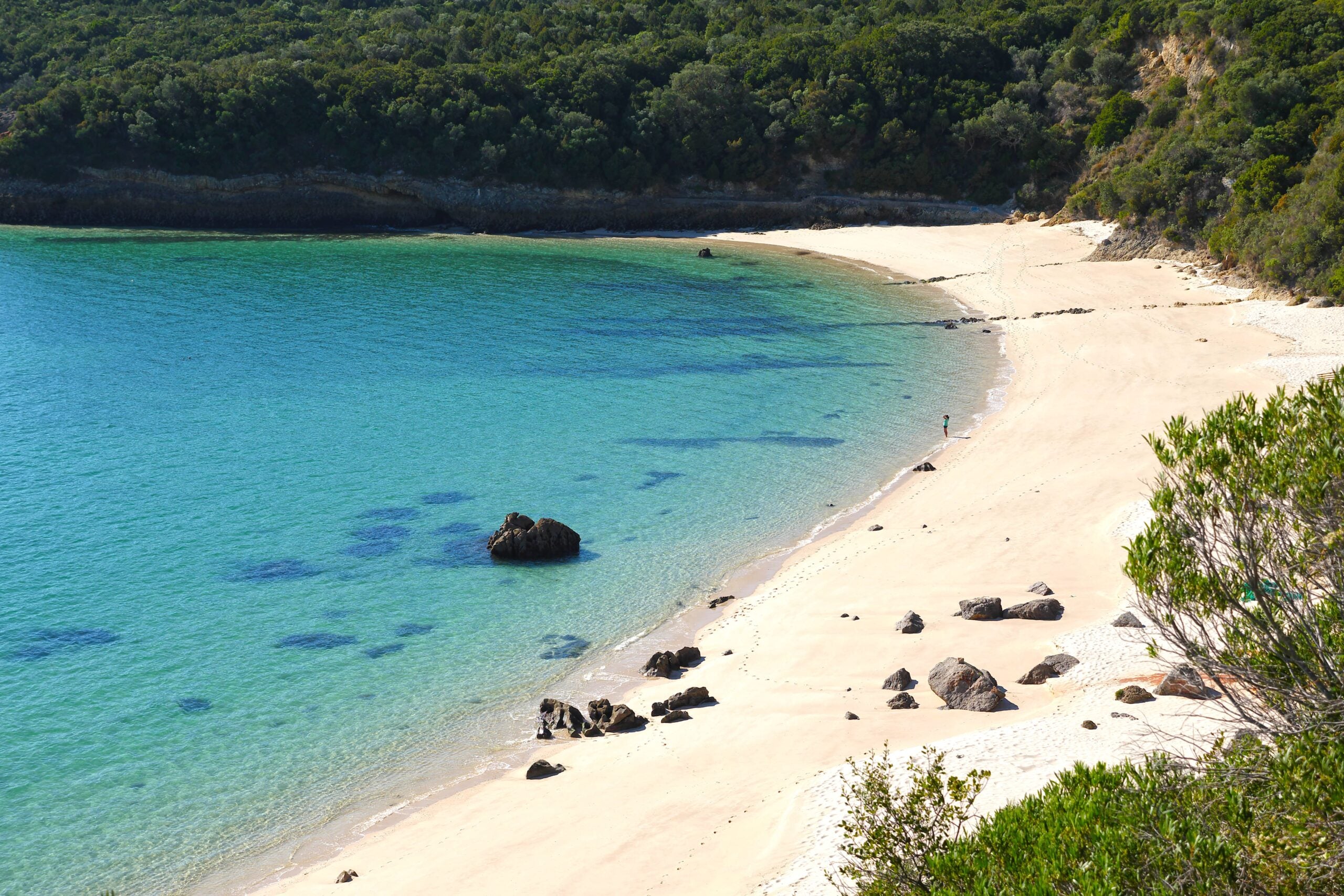 Arrábida is home to some of Portugal’s best beaches
Deeper inside Arrábida, the undulating ER379-1 road passes a series of ocean-facing viewpoints en route to the almost-500-year-old Nossa Senhora da Arrábida monastery – a pretty hillside complex whose flowery, whitewashed alleys recall Greek-island hamlets. Abandoned for more than a century but now restored, it opens for walking tours by appointment.
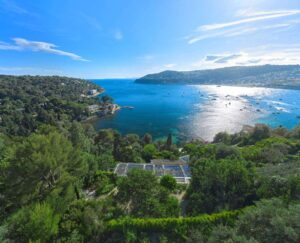
You’re also not far from the best of the region’s beaches. Figueirinha is bulbous and has its own vanishing sandbar below amber-hued cliffs. In high season, vendors here hawk custard-filled Bolas de Berlim donuts. To the west, the wilder Galapos has just one lonely house and a svelte beach bar. There are no facilities at all over at Galapinhos or Coelhos, both accessible only on foot (or by boat), yet both have the same powdery white sand. All face southwards, meaning calmer seas, and all captivate in a simple, undeveloped way – just like Arrábida as a whole.