
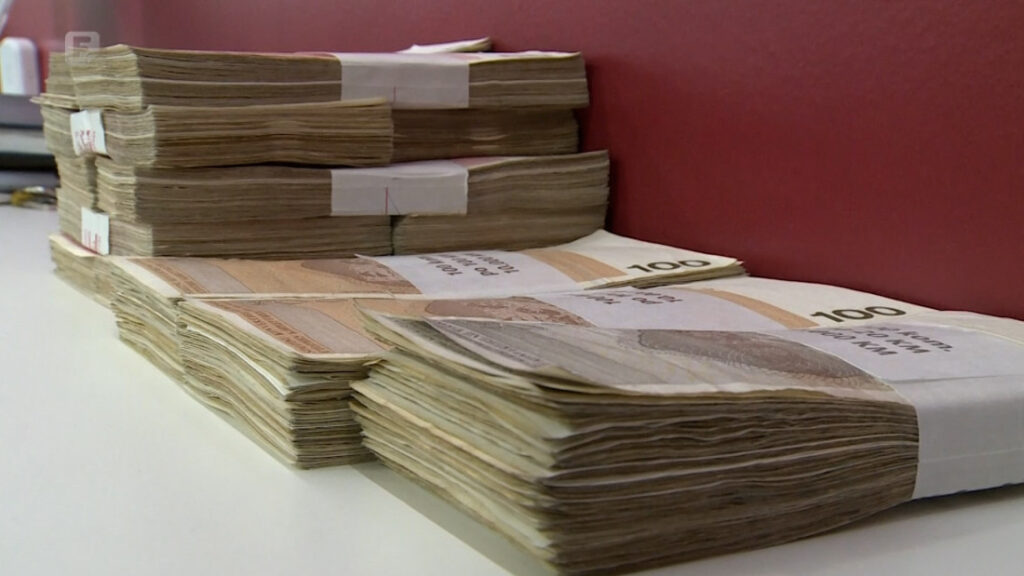
Bosnia and Herzegovina was financially undesirable and high-risk for investment in 2020. At that time, Moneyval reviewed its progress in the fight against money laundering and terrorist financing. New tasks, 70 of them – which need to be delivered, legally, but also through concrete measures – have been stuck in political obstruction.
February deadline
February is the deadline by which Bosnia and Herzegovina must adopt a state law on the management of illegally acquired assets, because there is currently a vacuum and ambiguities: who and how manages assets seized by final judgments of the Court of Bosnia and Herzegovina. This is based on an ad hoc system, the Court explained. Depending on the type, assets are managed by different institutions.
“When it comes to immovable and movable assets, they are kept by the institutions that previously seized them, and after the judgment becomes final, the assets are sold by court orders, most often through public sale procedures, and they can also be entrusted to other state bodies or public institutions for management,” the Court of Bosnia and Herzegovina explained.
“If it is money, it is paid into the budget of the institutions of Bosnia and Herzegovina. Some unofficial data say that it is a few percent of what is managed to be given as some value. A lot of this property is being lost and that is why we need this type of state institution,” points out Eldan Mujanović, a professor at the Faculty of Criminalistics, Criminology and Security Studies at UNSA.
Nine meetings, no solution
Property and the state are non-existent categories for RS, so this law is also blocked. The working group responsible for drafting the law, after nine meetings, cannot go any further.
“That is always the case in Bosnia and Herzegovina: you finish the law and there are always two or three members who lead to blockages. We are trying to avoid that and find a solution. I hope that we will be able to adopt this law by the second month,” says Davor Bunoza, Minister of Justice of Bosnia and Herzegovina (HDZBiH).
Even the gray list of Moneyval as a possible sanction is not enough to make them abandon the long-planned, anti-state course. RS does not want a new state agency, and their problem is also the registration of the confiscated property, which, according to Article 3 of this Draft Law, is exclusively the jurisdiction of the state of Bosnia and Herzegovina. For the Federation, this is a red line.
“There are controversial issues that colleagues from RS do not agree with, which could be a problem, and it concerns the registration of permanently confiscated property as the property of Bosnia and Herzegovina. For which they believe there is no argument, given that five other regulations in Bosnia and Herzegovina stipulate that property that has been confiscated and acquired through criminal or illegal means becomes the property of Bosnia and Herzegovina in the judgments of final courts in Bosnia and Herzegovina,” emphasizes Emir Bašić, Director of the Agency for the Management of Confiscated Property of the FBiH.
Instead of an agency – an office
“The proposal is that all property should be owned by the entities and the Brčko District. This is a proposal by the RS Ministry of Justice. As a member of the Working Group, I have the task of supporting all the guidelines given to me by the RS Ministry of Justice and the RS Government,” says Svjetlana Kusić, director of the RS Agency for the Management of Seized Property.
And so they go further, and instead of the Agency, as a compromise, an Office is being formed at the Ministry of Justice of Bosnia and Herzegovina, and the property, after the final judgments of the State Court, would be managed by the entity agencies, depending on where the property was seized.
“The Moneyval recommendations are not defined in such a way that a new agency should be formed at the level of Bosnia and Herzegovina. The recommendations are to adopt appropriate mechanisms that will regulate this activity,” says Kusić.
“I am not in favor of establishing an office, but rather for it to be a state agency, so that we can strengthen the institutions of Bosnia and Herzegovina. But the political circumstances are such and there is a lack of time to carry out this task, so we may have to go with the option of establishing an office, and for the entity agency to manage the assets,” Bašić points out.
There is no register of beneficial owners of companies either
“It is as if every day someone from the state takes away a part of the structure of its system, while assuring you that the state still exists. There should be no compromise regarding the fact that entity institutions service the court of Bosnia and Herzegovina”, warns Mujanović.
And this is part of the obligations that have not been fully implemented. Moneyval will assess whether our country has strengthened supervision over the financial sector, improved work on cases of organized crime and money laundering, and harmonized judicial practice. A special problem is the lack of a register of beneficial owners of companies. This system is burdened by politics and ethnic divisions, which could once again put Bosnia and Herzegovina on the list of unsafe countries that will be bypassed by billions of marks.