
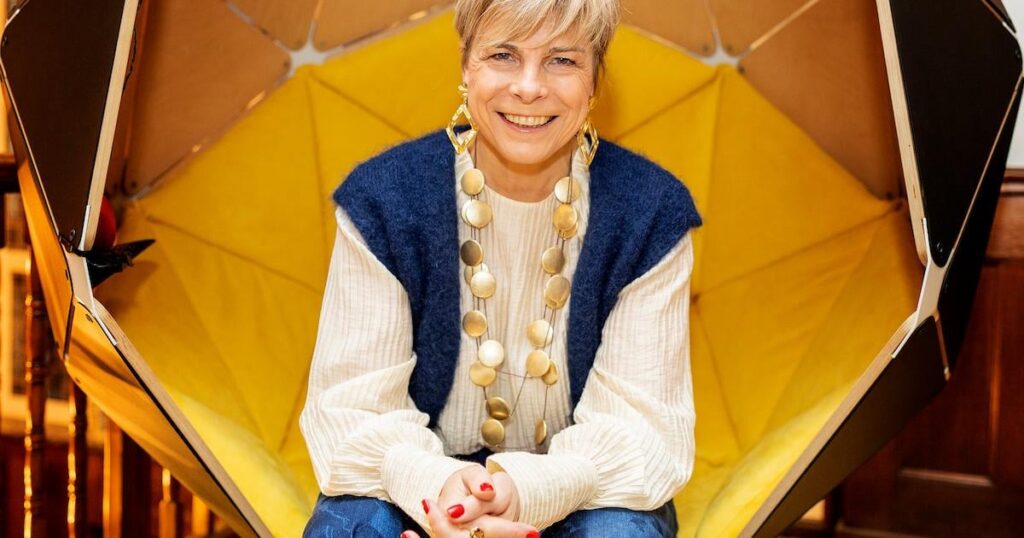
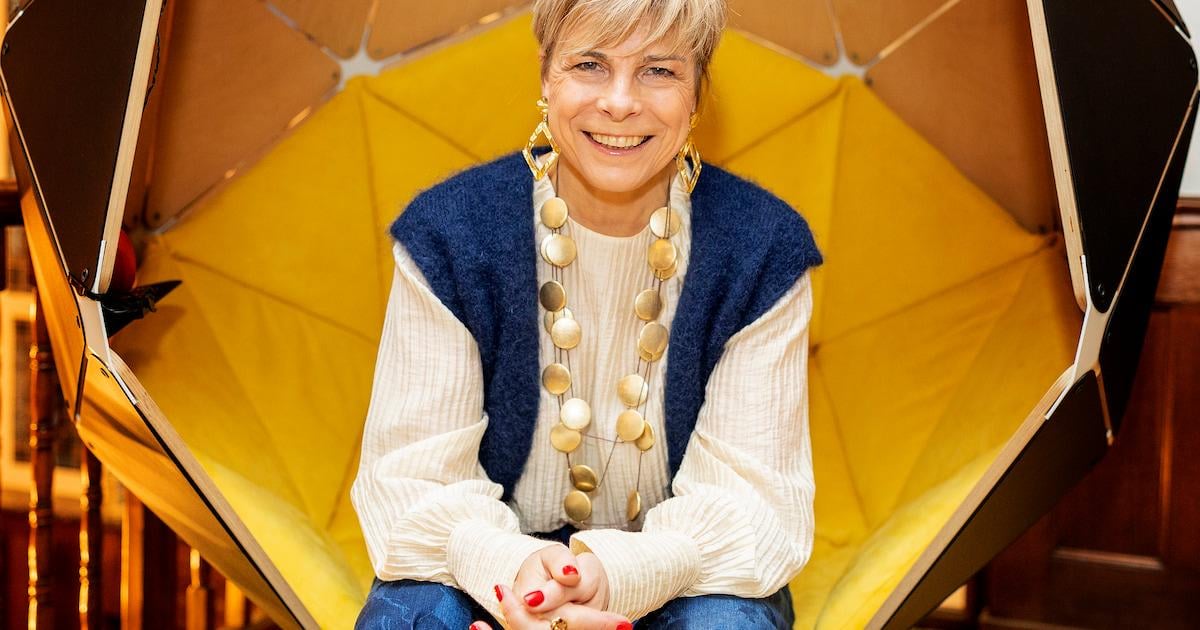
Princess Laurentien discovered that she is the descendant of both slave owners and enslaved women. She herself makes a connection between the injustice done to her foremothers and the accusations against her that she exhibited inappropriate behavior against civil servants in the benefits affair. ‘My ancestors are my silent partners.’
Princess Laurentien did not know much about her family history. Actually nothing at all, apart from a few embellished stories from the old box. And Laurentien and her family did not know whether they were correct: they were probably somewhat distorted or ‘made more beautiful by time’.
And then the television program Traces of Slavery comes her way, in which she discovers that her family history is more deeply intertwined with the colonial past than she could ever imagine.
In Batavia and Surabaya she follows the traces of her ancestors in Indonesia and discovers that she has foremothers from Malaysia, China and Java. But the most shocking discovery: they served as concubines, the concubine with the role of housekeeper and sexual partner for European men. They lived in relationships characterized by inequality, dependency and lack of recognition.
What did that discovery do for you? “I was a bit ashamed that I didn’t actually know this. What I did know, my grandmother had told me, my father’s mother. I had a very close bond with her. He died when I was 13, so I only had small pieces of the puzzle. I knew that my family had been in Japanese camps. And my grandmother said that there is Chinese blood in the family. But I felt ashamed that I actually did not know a lot. And when you hear it, on the one hand I feel embarrassment because my ancestors had slaves. And at the same time I feel the strength of those women who endured it.”
Can you still feel something about an event that goes back so far? “I can’t speak for others, but I do feel that. Apparently there is something in our brain that we want to keep the emotion and pain of others a little away from us. Because it is also uncomfortable. But then I think: just deal with it.”
What do you hope to achieve with the program? “Many people with an Indian background have a hidden story. And there is still so much sadness that is not talked about much. So I hope that I can bring a little bit of oxygen to that.”
Research into the family history of the family of your husband, Prince Constantijn, is also being conducted at the initiative of King Willem-Alexander. How do you talk about this with each other at home? “Actually in this way. Don’t avoid the discomfort, whatever it is. Because anything you avoid is a bit of pushing reality under the carpet. And that doesn’t benefit anyone. I’ve never really lived in the past. I live more now and forward. So yes, the fact that a lot is known about his family past and now also a little more about my past, that’s nice.”
Are your children, Eloise, Leonore and Claus-Casimir, also interested? “They find it very interesting. And I think it will only really come to life once they have seen the program. Because now it is a kind of fragments that I tell.”
Would you like to visit Indonesia with your family someday? “We’ve already been there once. And I can’t imagine that we won’t go there again.”
The king spoke of ‘not a period, but a comma’ when he apologized for the role of the Netherlands in the past of slavery. Do you put a period or a comma? “Everything is a comma. In any case, it offers the opportunity for new connections. I was full of this trip, and I now talk about it with many more people than before. I met a boy with an Indonesian background and he also became very enthusiastic about it. And it is so interesting to talk to such a young boy about this past.”
Have you talked to people about it a lot, even beforehand? “I of course talked to my father (former D66 politician Laurens Jan Brinkhorst, ed.) about it. He quickly said: just deal with it. He was also curious, after all, my father did not know more than the snippets that his mother had told him. And my partner (from the number 5 foundation, ed.) said: the program is also about healing and reconciliation, and also about injustice. And that has actually been done to you.”
It is the first time in the interview that the princess herself makes the link between the injustice done to her foremothers and – what she calls – the injustice done to her in the benefits affair. Princess Laurentien has long been the figurehead of the Foundation for (Equal) Worthy Recovery, which helps parents and children affected by the benefits affair.
However, conflict arose between the foundation and officials from the Ministry of Finance, with officials reporting ‘a pattern of intimidation’ by the princess.
She strongly denies this and says she has been falsely accused. When she brings it up, her attitude changes from open and enthusiastic to somewhat closed. “If you think about what my ancestors endured, there is a lot of that blood in me. A lot of injustice was done to them too, that is now in me. My ancestors are my silent partners.”
Officials accused you of ‘reacting emotionally, swearing at people, not allowing any contradiction’. You also stepped down as figurehead for that reason. “No, that’s another thing… I didn’t step down because of those reports. Look, the last thing that should concern me is me. It should concern those parents and children. And I had become a lightning rod. If it causes so much hassle… I have taken responsibility. But I didn’t step down because of reports and there were no complaints.”
There were no formal complaints, because ‘there is simply no complaints procedure against members of the Royal House’, officials stated anonymously in reports. “The context is: there is a government apparatus with power and an independent foundation that represents the interests of parents. It’s all about relationships. As if I have power, while I belong to a foundation.”
But your power also lies in your royal title, it is different for a civil servant when they have you in front of them than an anonymous foundation director. “But what is power?”
Power is sometimes a name, like Van Oranje… “Yes, but not in this context. If I were to talk about how victims are being talked about… Then I can use that to get my own point, but I keep that within me. I make that sacrifice. And it is also the question through which glasses you look at me, with what intention. It gives me a stomach ache, but parents have also said to me: I never thought that someone who is so important to the Netherlands would ever see us again. That I find it painful.”
The email exchanges between your foundation and officials, some of which have been made public, are downright hostile. “You will not read an unruly word from me in all those documents.”
But for civil servants, if the foundation sends an email, so does the princess. “No, if the foundation sends an email, that is the foundation.”
The cabinet decided that the secondary functions of the House of Orange must be strictly examined to prevent conflict with the position of the Royal House. What do you think about that? “I think it is good that there is clarity. There are only a few Oranges who fall entirely under ministerial responsibility. “The others, including us, just have to earn our own money. Which I have not been doing for five years because of the benefits affair, but that is besides the point. There was always uncertainty about it.”
Note that Pieter Omtzigt said that it is unwise to entrust the recovery operation of the benefits affair to someone from the Royal House. “It’s not investing, that’s another thing… We were once asked to help with the parents. Pieter Omtzigt knew that all those years.”
Omtzigt said: “It is high time that members of the Royal House no longer do things in addition to their ceremonial work.” “We don’t have any ceremonial work. It’s the other way around. There are four Oranges whose ceremonial work is their job. The others just have to live their own lives.”
Do you hope that outsiders will look at you differently because of the TV program? “I’m not concerned with that at all.” The princess then says that she received ‘a lot’ of books and letters from ‘known and unknown people’ as a show of support. She also mentions that her foundation still involves 8,000 volunteers. And points out that they would not remain involved ‘if something were going on’. She concludes: “But really, I want to be very clear. I am not out to be proven right.”
When our newspaper wrote about the reports by officials, your foundation threatened to sue our newspaper. That is a contradiction: you seem to care what people think of you. “I didn’t say that I don’t care what people think about me. That’s just nuance. But everyone makes of it what they want to make of it. That’s what I want to say.”
https://www.ad.nl/binnenland/prinses-laurentien-vergelijkt-haar-tot-slaaf-gemaakte-grootmoeders-met-onrecht-dat-haar-is-aangedaan~a0da4902/
Posted by Potential-Command863
5 Comments
Iemand van hoge komaf, met vrijwilligers die onbetaald werk doen, en slecht omgaan met werknemers…
Denk dat ze de verkeerde voorouders in gedachten heeft.
Nou nou, ze heeft het er maar moeilijk mee.
> Macht is soms een naam, zoals Van Oranje… „Ja, maar niet in deze context.”
Dan snap je het echt niet he. Van Oranje is juist macht voor ambtenaren. Hun bazen zitten in het kabinet en hebben rechtstreeks belang bij het koningshuis.
Denk dat ze haar eigen ouders direct onrecht aangedaan heeft door haar naam te veranderen van van Petra naar Laurentien. Hoe verzin je het
Zoals ene meneer Deelder zou zeggen:
“Hebbie dan een bord voor je kop? Dat kennie geen bord meer noemen, die loop met een hele bunker voor d’r taas”