
A law banning property purchases by Russian and Belarusian nationals has had only a limited impact on real estate transactions in Finland, according to official data.
The amended legislation entered into force in July. Statistics from Finland’s National Land Survey show that Russian buyers purchased 55 properties in Finland by the end of November last year, based on reports filed by public purchase witnesses. Of those deals, 35 were completed before the law took effect and 20 afterwards.
The final figure is likely to rise slightly, as transactions from December are not yet included and there has been a backlog in processing property registrations during the autumn, which can delay their appearance in the statistics.
Russian buyers continued to acquire properties in several regions in the latter part of the year, including Kymenlaakso, South Savo and North Savo.
Under the law, Russian buyers who do not fall under absolute prohibitions may still apply for and receive permission to purchase property.
Before the amendment came into force, Finland’s Ministry of Defence granted 39 permits to Russian nationals to buy property in early 2025. Since then, 11 permits have been approved, while some applications remain under consideration. Two applications have been rejected.
“In these two negative decisions, the so-called total prohibition under the permit law was applied,” said Rickard Lindholm, a specialist at the Ministry of Defence.
Corporate structures and loopholes
Several cases in south-eastern Finland have drawn attention to property transactions carried out through corporate structures rather than direct purchases.
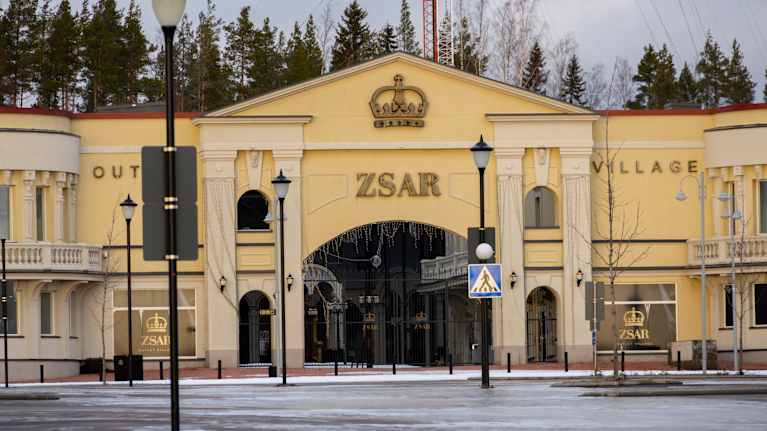
One such case involves the Zsar shopping centre near the Russian border, which went bankrupt three years ago. Its bankruptcy estate accepted a purchase offer in November, but the deal has been delayed beyond the end of the year.
The buyer is a Finnish-registered company linked to a rouble billionaire holding dual Russian and German citizenship. According to an investigation by Yle, he has connections to people close to Russian President Vladimir Putin.
The Ministry of Defence declined to comment on individual transactions, speaking instead in general terms.
Open image viewer
The Zsar shopping centre near Finland’s eastern border has sat dormant since Russia’s invasion of Ukraine. Image: Antro Valo / Yle
“An EU or EEA citizen is not covered by the law, regardless of whether they hold dual citizenship with Russia and Finland or Germany and Russia,” Lindholm said.
Asked whether the law allows for the use of citizenship arrangements to bypass restrictions, Lindholm said authorities were closely monitoring attempts to circumvent the legislation.
“The Ministry of Defence actively follows possible methods and attempts to evade the law, including the use of so-called ‘golden passports’,” he said.
The term refers to citizenship programmes in which nationality can effectively be purchased. Along Finland’s eastern border, some property owners of Russian background hold Cypriot passports, which grant access to the EU.
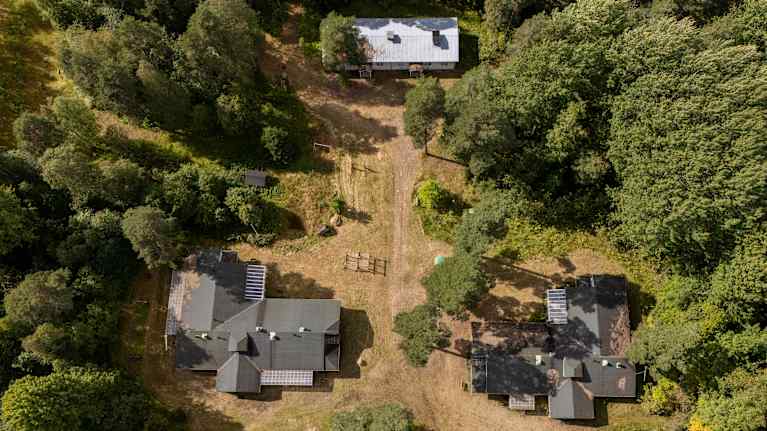
In Miehikkälä, a campsite that had stood empty for years was sold at a forced auction just days before the law took effect to a company registered in the neighbouring municipality of Virolahti. The enforcement authority concluded that no defence ministry permit was required, as the buyer was a Finnish company.
However, an Yle investigation found that the company is owned by three Russian nationals. The company has not yet applied to register its ownership with the National Land Survey.
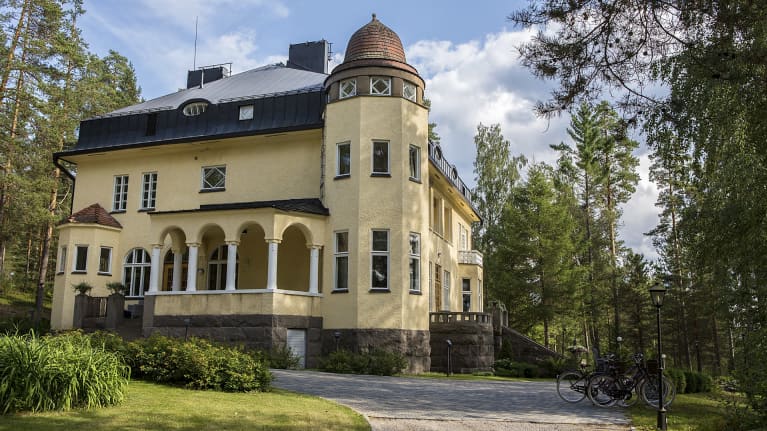
In November, Yle’s investigative programme MOT reported that the historic Rantalinna property in Ruokolahti had been acquired by a Canadian-Azerbaijani businessman with longstanding business ties to Russia. According to the investigation, he may be acting as a front man, purchasing property in his own name on behalf of another party.
Open image viewer
The camp centre in Miehikkälä stood empty for a long time. In the summer, it was sold for 40,000 euros to a Russian-owned company. Image: Antro Valo / Yle
No defence ministry permit was required, as the transaction involved the purchase of companies that own property rather than the property itself.
Lindholm pointed to a provision in the law addressing such arrangements.
“If we have reason to suspect that a property has been acquired through a front arrangement, we can require a permit to be applied for retroactively,” he said.
Border closures slowed the market
Property transactions in eastern Finland had traditionally been active before Russia’s invasion of Ukraine, when cross-border transport links were still operating.
Restrictions on entry for Russian nationals and difficulties in cross-border financial transfers following the outbreak of the war led to a sharp decline in transactions, even before the most recent legislative changes.
Since 2020, Finland has gradually tightened its rules on property purchases by buyers from outside the EU and EEA, making such transactions subject to permits. However, officials say the latest amendment was needed because not all security risks can be identified at the permit stage.
“Intervening in transactions afterwards is slower and more expensive, and it interferes more with individual fundamental rights,” Lindholm said.
According to the Ministry of Defence, Russia and Belarus could potentially exploit property ownership by their nationals in ways that threaten Finland’s security, particularly where buyers have weak ties to the country.
Open image viewer
In the 1910s, Rantalinna in Ruoakalahti was owned by a member of the Romanov family, the Russian tsarist dynasty. The main building has 13 hotel rooms, lounges, and a restaurant on the ground floor. Image: Tommi Parkkinen / Yle
In November, Yle’s MOT investigative programme revealed that the historic Rantalinna mansion in Ruokolahti had a new owner, a Canadian-Azerbaijani businessman who has long been involved in business dealings in Russia.
Based on MOT’s investigation, he may have purchased the property in his name, even though the actual owner is someone else.
The transaction did not require the permission of the Ministry of Defense because it exploited a loophole in the law. The businessman did not purchase the properties directly, but rather the companies that own them.
Lindholm pointed out the so-called “front-man clause” in the law.
“If we have reason to suspect that the property was acquired through a front man arrangement, we can require a permit to be applied for retrospectively.”
‘This law is not enough’
Professor Kari Liuhto, who specialises in intelligence studies at the University of Turku and Finland’s National Defence University, said extending the law to cover dual nationals would not necessarily solve the problem.
“Russia has used Moldovan, Georgian and even Ukrainian intermediaries in various operations and acts of sabotage,” Liuhto said. “The law can always be circumvented, but communication between authorities should be strengthened.”
He added that ownership linked to countries that support Russia or enable its war effort, such as China, should also be examined.
“When Russian intelligence begins conducting operations, this law is not enough.They do not use dual nationals for the most sensitive tasks, but people who are genuinely difficult for us to identify,” Liuhto said.