
From reproductive rights to climate change to Big Tech, The Independent is on the ground when the story is developing. Whether it’s investigating the financials of Elon Musk’s pro-Trump PAC or producing our latest documentary, ‘The A Word’, which shines a light on the American women fighting for reproductive rights, we know how important it is to parse out the facts from the messaging.
At such a critical moment in US history, we need reporters on the ground. Your donation allows us to keep sending journalists to speak to both sides of the story.
The Independent is trusted by Americans across the entire political spectrum. And unlike many other quality news outlets, we choose not to lock Americans out of our reporting and analysis with paywalls. We believe quality journalism should be available to everyone, paid for by those who can afford it.
Your support makes all the difference.
Read more
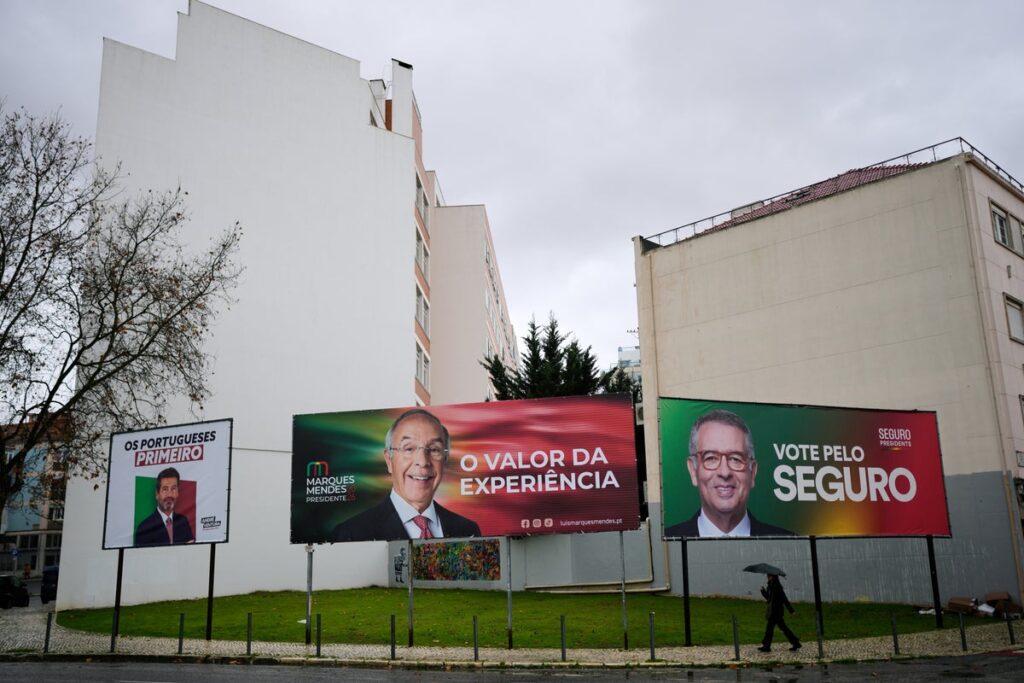
A record number of 11 candidates in Portugal’s upcoming presidential election kicked off their campaigns on Sunday.
The official two-week campaign period preceding the Jan. 18 election will see the contenders competing to capture voters’ support. However, the broad field makes it unlikely that any candidate will capture more than 50% of the vote, leaving the two top candidates to compete in a runoff ballot on Feb. 8.
Among the frontrunners, according to recent opinion polls, are the candidates from the country’s two main parties that have alternated in power for the past 50 years: Luís Marques Mendes from the center-right Social Democratic Party, currently in government, and António José Seguro of the center-left Socialist Party.
They are expected to face strong challenges from André Ventura, the leader of the populist anti-immigration Chega party, whose surge in support made it the second largest party in Portugal’s Parliament last year, and Henrique Gouveia e Melo, a retired rear admiral running as an independent who won public acclaim for overseeing the speedy rollout of COVID-19 vaccines during the pandemic.
In Portugal, the president is largely a figurehead with no executive power. Mostly, the head of state aims to stand above the political fray, refereeing disputes to defuse tensions. However, the president also possesses powerful tools, being able to veto legislation from Parliament, although the veto can be overturned, as well as dissolve Parliament and call for snap elections.
After Portugal’s third general election in three years in May, its worst spell of political instability for decades, the next head of state is likely to encourage compromises. But the next occupant of the president’s riverside “pink palace” in Lisbon will likely have to rule on some hot-button matters.
The pressing issues include a proposed new bill that introduces limits on who can obtain Portuguese citizenship and under what circumstances they can be stripped of it. The Constitutional Court last month struck down the proposal, which has been returned to Parliament.
A government package of labor reforms that has already brought street protests and a major strike will also land on the president’s desk, as could a law permitting euthanasia and physician-assisted suicide in Portugal that Parliament approved in 2022 but has been held up by constitutional objections.
Almost 11 million people are eligible to vote in the election.