
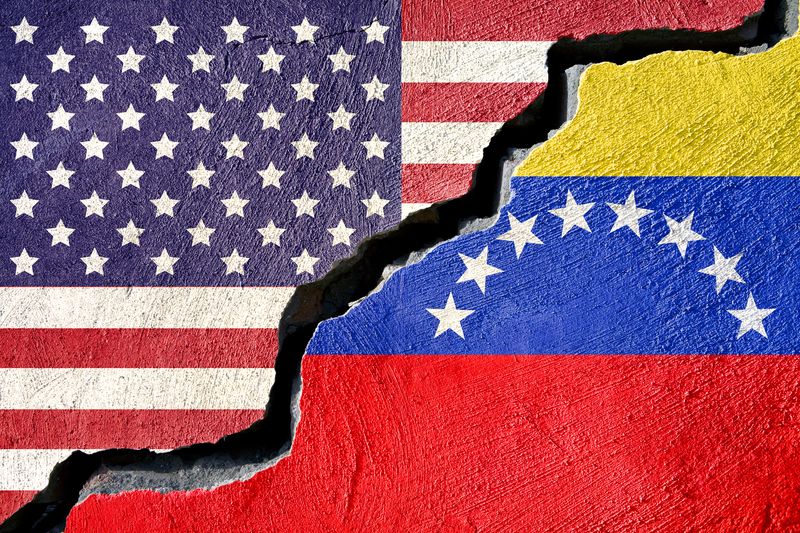
The United States’ military action against Venezuela and the forcible removal of President Nicolás Maduro mark more than a regional rupture. They illuminate a deeper and more uncomfortable truth: the central pillars of the post-1945 international order — the Nuclear Non-Proliferation Treaty (NPT), the United Nations, and the authority of international law — are eroding simultaneously.
Each was designed to civilise power. Each now bends before it.
Washington has made little attempt to disguise this reality. Announcing the operation, US Defence Secretary Pete Hegseth framed it not as a legal necessity but as a strategic demonstration, declaring that “our adversaries remain on notice: America can project our will anywhere, anytime.” The message was not meant only for Caracas. It was a signal to the wider world that deterrence today is enforced less by institutions than by demonstrable capability.
The Venezuelan episode is instructive precisely because it involves a recognised state, a member of the United Nations, formally protected by the same legal architecture as every other sovereign country. None of that proved sufficient. Once a major power concluded that its interests justified direct action, legal rationales followed rather than constrained it. Law explained force after the event; it did not prevent it.
This is where the NPT enters the argument. The treaty asked most of the world to accept permanent nuclear restraint in exchange for security guarantees embedded in international law and collective enforcement. Venezuela demonstrates how thin those guarantees have become. Non-nuclear status does not insulate a state from coercion; it exposes it.
Venezuela demonstrates why India rejected a system that asked states to trade permanent vulnerability for paper assurances. The NPT promised security through restraint; reality delivers security through deterrence. India chose accordingly — and history has vindicated that choice.
Few articulated this logic more clearly than K Subrahmanyam, the architect of India’s nuclear doctrine, who wrote in 1998 that “nuclear weapons are the currency of power in the international system.” The phrase was not an endorsement of war, but a recognition of how order actually functions in an anarchic world. What Venezuela suggests is that this currency has not depreciated; if anything, it has appreciated as norms weaken.
Nor is this insight uniquely Indian. It sits squarely within the mainstream of Western strategic thought. Henry Kissinger, reflecting on the Cold War balance, observed that “nuclear weapons are not weapons of war; they are weapons of deterrence. They exist to prevent coercion.” He was equally candid elsewhere about the limits of morality in great-power politics, noting that states ultimately act on interests rather than sentiment. The Venezuelan operation illustrates both propositions in action.
What makes the present moment historically unsettling is not merely the erosion of one treaty, but the convergence of institutional failure. The NPT promised restraint, the United Nations promised collective security, and international law promised predictability. Venezuela shows how easily all three can be set aside when power asymmetry is overwhelming.
This invites an uncomfortable comparison with the inter-war period. The League of Nations did not fail because it lacked rules or principles. It failed because it lacked enforcement and resolve. Leading powers acted outside it, weaker states learned that compliance did not guarantee protection, and rearmament followed. The authority of law dissolved not through repeal, but through selective disregard.
The United Nations is not the League of Nations. It is larger, more sophisticated, and vastly more active. It feeds millions, documents abuses, and provides indispensable humanitarian coordination. Yet functionally, it risks a similar fate: present in process, absent in decision. When force is used today, UN authorisation is increasingly treated as desirable but optional, useful but dispensable. Paralysis in the Security Council no longer signals balance; it signals irrelevance when stakes are highest.
International law has not disappeared. It still governs trade, arbitration, maritime disputes, and diplomacy among peers. What it no longer does reliably is restrain overwhelming power. Once that belief erodes, treaties become expressions of intent rather than instruments of security.
The consequences are already visible. Iran is drawing conclusions. So are Saudi Arabia, Japan and South Korea, all of which possess the technological or financial capacity to move rapidly if confidence in external guarantees weakens further. Any new wave of nuclear proliferation will not be driven by prestige or ideology, but by fear of exposure in a world where compliance no longer buys protection.
India stands apart in this landscape not because it rejected law, but because it rejected illusion. Its nuclear posture has been restrained, defensive and stabilising. It has not sought coercive leverage, but it has ensured that coercion against it carries unacceptable cost. That balance — restraint backed by capability — is now shaping behaviour far beyond South Asia.
We are not returning to 1939. But we are returning to a world in which power increasingly defines order, institutions trail events, and law follows force rather than preceding it. The Venezuelan episode does not prove that treaties are worthless. It proves that treaties without credible enforcement cannot substitute for power.
The League of Nations failed because it asked states to trust rules that could not protect them. The uncomfortable question now confronting the international system is whether it is repeating that mistake — with higher stakes, deadlier technologies, and fewer illusions about how order is enforced.