
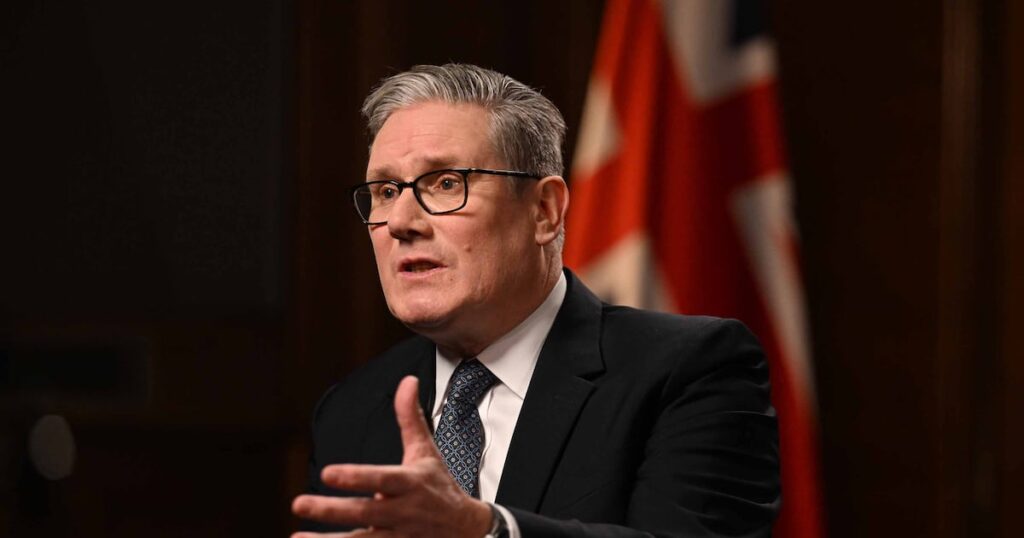
The UK is prepared to align even more closely with the EU single market if the move is in the national interest, Keir Starmer has said.
The prime minister insisted Britain should “go further” in strengthening post-Brexit ties with Brussels following agreement of a trade deal.
But he appeared to pour cold water on suggestions the UK should rejoin a customs union with the bloc after his health secretary Wes Streeting said the arrangement had “enormous economic benefits”.
Speaking to the BBC’s Sunday With Laura Kuenssberg show, Mr Starmer pointed to steps already taken to align with the EU more closely on agriculture and food, adding: “That’s the sovereign decision that we have taken.
“I think we should get closer, and if it’s in our national interest to have even closer alignment with the single market, then we should consider that, we should go that far.”
The Tories accused the prime minister of “surrendering our freedom” to appease his Labour backbenchers and trying to “undo” Brexit.
Mr Starmer added: “I think it’s in our national interest to go further.
“What I would say about the customs union is that I argued for a customs union for many years with the EU, but a lot of water has now gone under the bridge.
“I do understand why people are saying ‘wouldn’t it be better to go to the customs union?’. I actually think that now we’ve done deals with the US which are in our national interest, now we’ve done deals with India which are in our national interest, we are better looking to the single market rather than the customs union for our further alignment.”
He insisted freedom of movement – a core principle of the EU single market – was off the table as he faced questions about what concessions he was willing to offer in return.
Asked whether he was prepared to allow EU citizens with no limit to come to the UK, he said: “No. But we are looking at a youth-mobility scheme which will be for young people to travel, to work, to enjoy themselves in different European countries, to have that experience.”
It comes after speculation over the future of the UK’s post-Brexit relationship with the bloc was reignited when the health secretary backed a “deeper trading relationship” with Europe in an interview with the Observer.
The remarks were seen by some as a direct challenge to Mr Starmer from Mr Streeting, who last year was forced to deny plotting to unseat the prime minister after a Labour briefing war.
Mr Starmer has recently faced pressure from his own backbenchers to change course on a customs union, with 13 Labour MPs backing proposals that would pave the way for such an arrangement in a Commons vote last month.
Downing Street said later in December that the UK government will be sticking to its “red lines” on the EU relationship, which include not rejoining the single market, customs union or returning to freedom of movement.
Shadow foreign secretary Priti Patel said Labour’s “Brexit betrayal” was becoming “clearer by the day”.
“In a desperate bid to appease his backbenchers, Keir Starmer is pursuing alignment with the single market – surrendering our freedom to cut regulation and strike our own trade deals,” she said.
“Only the Conservatives will hold Labour to account for trying to undo the democratic decision of the British people.”
The Liberal Democrats said the government had been “too timid” in its ambitions for closer ties with Brussels and was merely “tinkering around the edges” as they reiterated calls for a UK-EU customs union.
Party leader Ed Davey said: “This year, the prime minister must finally get a grip on the cost-of-living crisis by negotiating an EU-UK customs union, to boost growth and put money back in people’s pockets.”