
In crypto trading, a long position means buying a cryptocurrency with the expectation that its price will rise. Meanwhile, a short position means selling an asset you don’t own or borrowing it from your exchange provider to profit from a price decline.
These two positions are fundamental for traders in 2025 because crypto markets are highly volatile, and leveraged products like futures, perpetual contracts, and margin trading allow traders to amplify gains or losses on both rising and falling prices.
Therefore, understanding long and short strategies is essential for managing risk, capitalizing on market swings, and navigating modern crypto trading platforms effectively. Keep reading to learn more about long and short positions in crypto, their benefits and risks, and common mistakes to avoid when going long or short.
What Is a Long Position in Crypto?
A long position in cryptocurrency involves buying an asset with the expectation that its price will rise, allowing the trader to sell later at a higher price for profit. This bullish strategy emphasizes price appreciation over time. Traders use long positions across spot, margin, and futures markets, with varying levels of leverage and risk.
In spot trading, a long position means buying the actual cryptocurrency outright at the current market price or at a later price and holding it until the price increases. For example, buying 1 BTC at $60,000 and selling it at $70,000 yields a $10,000 profit. On the spot market, no borrowing occurs, so risk is limited to your initial investment, making it straightforward for beginners.
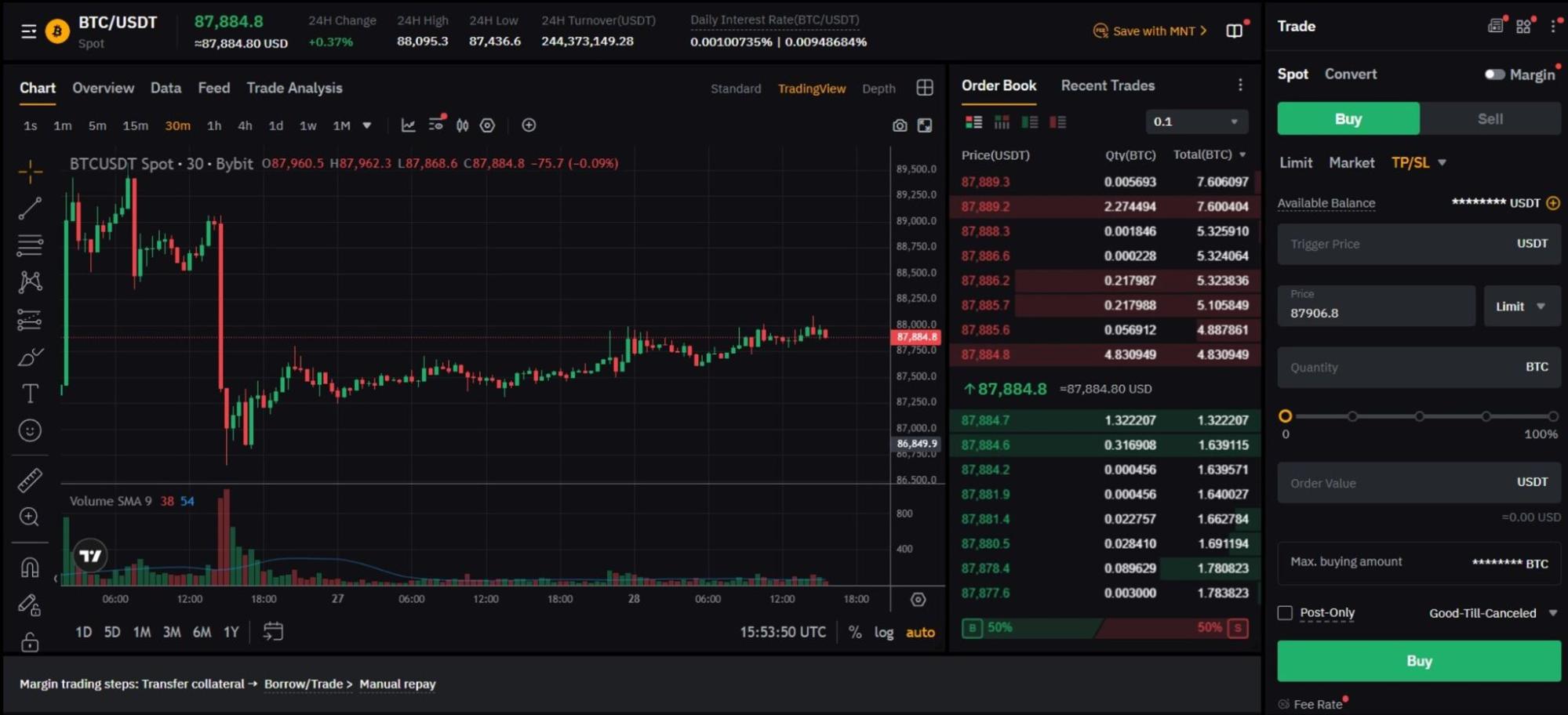
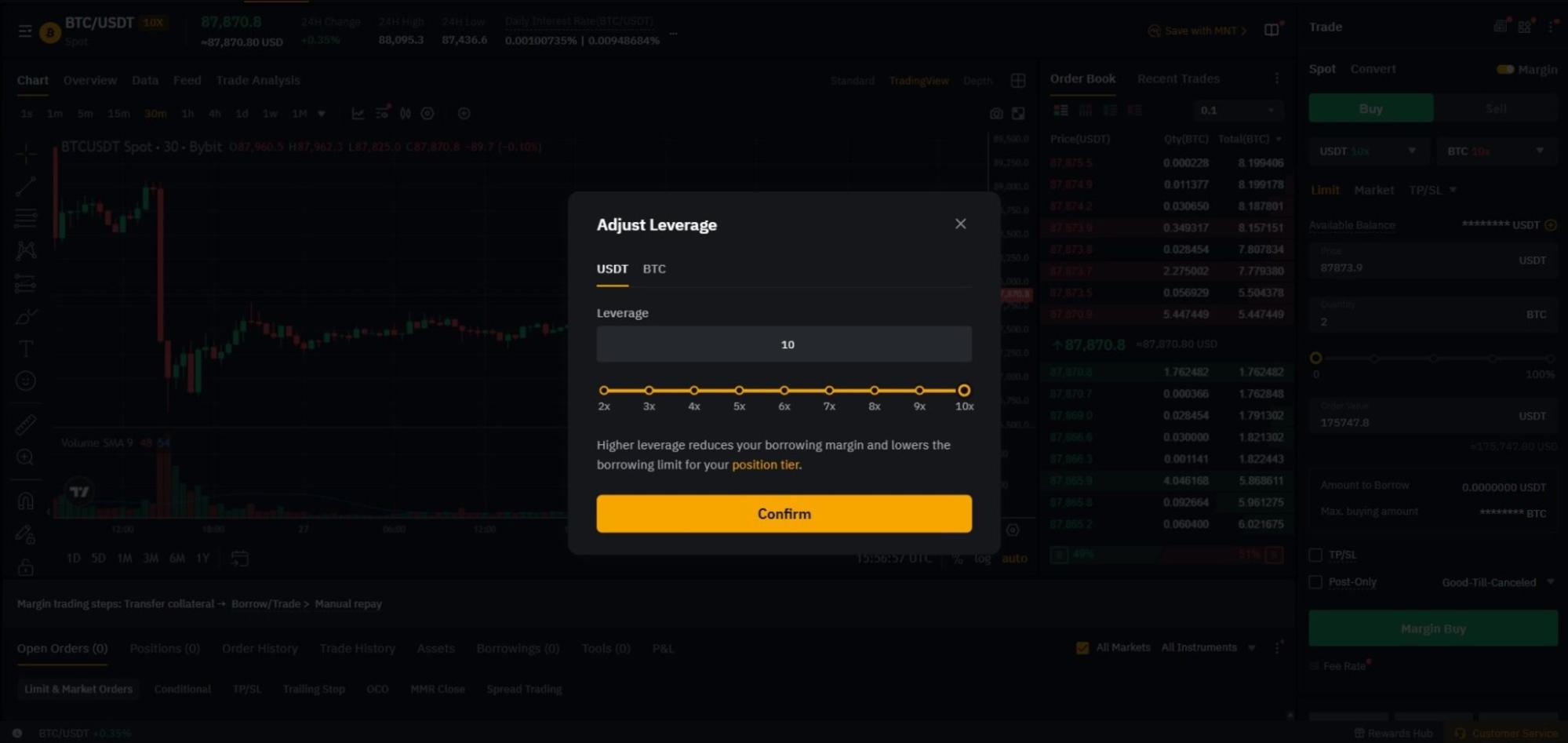
Margin trading amplifies a long position by borrowing funds from the exchange to buy more cryptocurrency than your capital allows. A trader might deposit $10,000 as margin for 5x leverage to control $50,000 worth of BTC at $60,000 per BTC.
The 5x margin will allow the trader profit more if the price rises to $70,000, but losses also magnify if it falls, potentially triggering a margin call. If you are using margin to amplify your trades, you have to watch it constantly to close trades when necessary to avoid liquidation.
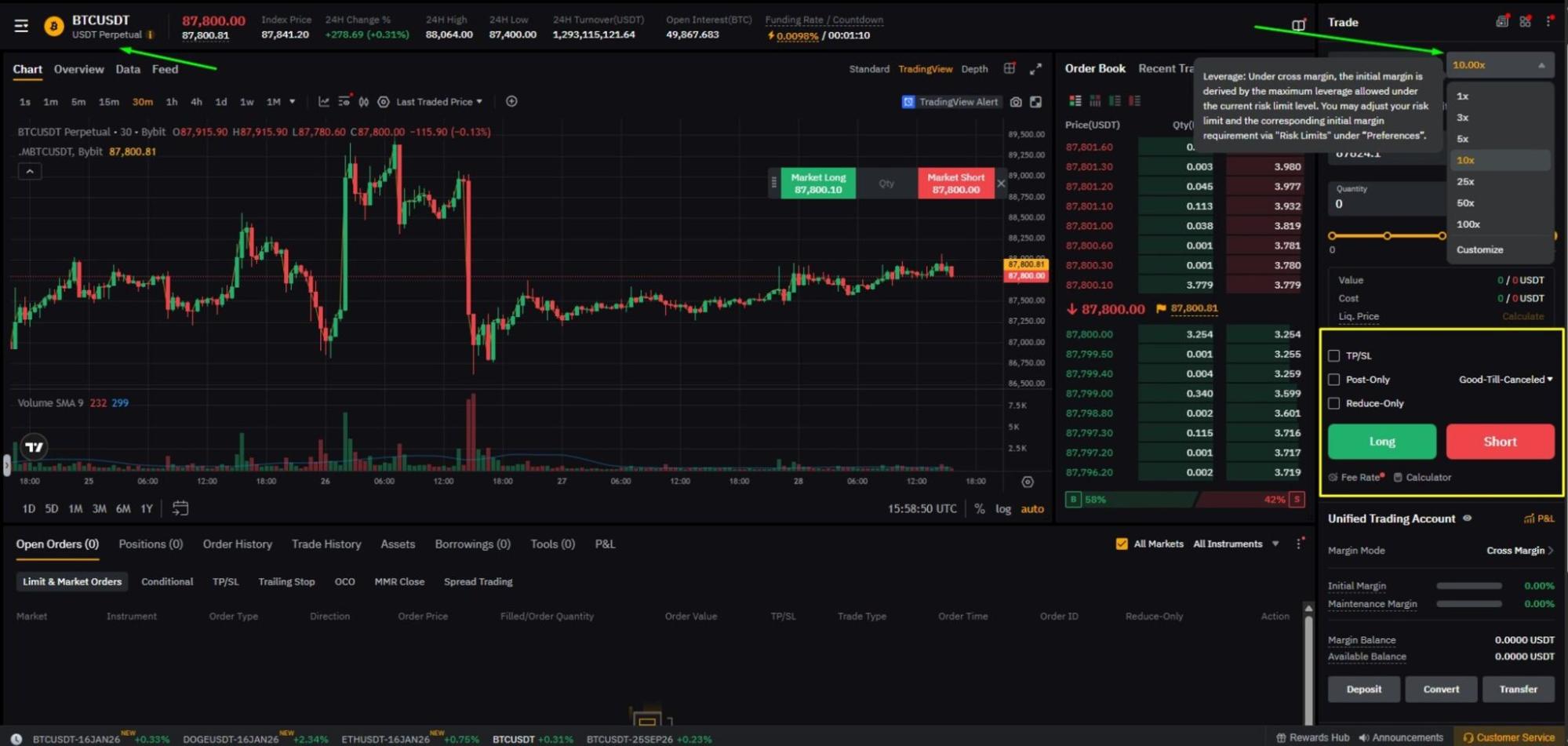
Meanwhile, futures trading lets traders open a long position on a contract speculating on future price without owning the asset, often with high leverage between 10x and 125x. For instance, with a $200 USDT margin at 10x leverage on ETH at $2,000 (controlling $2,000 worth), a rise to $2,200 yields 100% return on margin.
How a Long Position Works
A long position goes through three core phases: entry, holding, and exit, in which traders buy an asset expecting price appreciation. This process applies across spot, margin, and futures trading, with leverage optionally amplifying exposure in margin and futures markets. Below is a step-by-step breakdown using a simple BTC example at a $60,000 entry price.
Entry
Traders enter a long position by buying the cryptocurrency (or a contract) when anticipating a price increase. For example, in spot trading, it means you’re buying 1 BTC outright with available funds.
For margin or futures, you simply select leverage to control more BTC than your margin allows, such as a $10,000 margin buying $50,000 worth. Then set initial stop-loss and take-profit orders to manage risk right away.
Hold Assets
During holding, monitor price movements while the position remains open. Long positions allow you to profit from upward trends as unrealized gains accrue. No action is needed if prices rise steadily; adjust stop-losses to trail the price to lock in gains.
Close trade
Exit by selling the asset or closing the contract when the target price is hit, or conditions change. You will realize profit as the difference between entry ($60,000) and exit (e.g., $70,000 for a $10,000 gain per BTC). If you are trading on the spot market, sell the asset directly. Meanwhile, margin/futures settle automatically or manually, returning borrowed funds.
Risks of a Long Position in Crypto
Long positions in crypto carry significant risks due to the market’s unpredictability. Losses are generally limited to the invested capital in unleveraged cases, as asset prices cannot drop below zero. That said, here are some downsides to going long in crypto.
- Price Drops: Crypto prices can plummet rapidly from negative news, regulatory changes, or bear markets, diminishing the value of long-held assets. Holders face substantial unrealized losses during prolonged downturns, such as those seen in past crypto winters.
- Volatility: The crypto market is highly volatile, and extreme price swings amplify short-term losses, even if long-term trends are upward. Volatility often triggers stop-losses prematurely, locking in losses before potential recoveries.
- Emotional Trading: Traders holding long positions may cling to losers, hoping for rebounds, or sell winners too early out of fear, leading to poor decisions. Without strict risk management, like predefined exit strategies or automated bot trading, emotions can undermine profitability.
- Leverage Risks: Leveraged long positions magnify losses, where small wrong moves can trigger liquidation and wipe out your collateral entirely. High leverage, like 100x, risks total position erasure from just a 1% drop, exceeding initial capital.
What Is a Short Position in Crypto?
A short position in crypto, or short selling, involves profiting from an anticipated price decline. Traders do this by borrowing an asset, selling it immediately, then buying it back later at a lower price to return it to the lender. This strategy reverses the typical “buy low, sell high” approach of long positions, allowing traders to capitalize on bearish markets.
In practice, traders borrow cryptocurrency from an exchange, paying a borrowing fee, and sell it at the current market price. If the price drops as expected, they buy back the same amount at the reduced price, return it to fulfil the loan, and keep the difference as profit minus fees.
While short positions can be profitable, they expose traders to unlimited potential losses if prices rise, as they must buy back at higher prices. The common ways to go short are through futures contracts, perpetual futures, and margin.
Futures contracts let traders agree to sell crypto at a set price in the future without owning the asset, profiting if the market falls below that level. Perpetual futures (perpetuals) are popular on exchanges like Binance or Bybit.
They offer indefinite contracts with funding rates to mimic spot prices, enabling leveraged shorting without expiration. While margin trading on centralized or decentralized exchanges also facilitates shorting by borrowing funds or assets directly.
How Does Shorting Crypto Work?
Shorting crypto involves opening a position to profit from a price decline, through derivatives like futures or perpetual contracts rather than traditional borrowing in spot markets. Here’s an example using Ethereum (ETH) at its current price of about $2,928 USD.
A trader expects ETH to drop from $2,928 to $2,700. They open a short perpetual futures position on an exchange like Binance with 1 ETH worth of margin (no leverage). The platform effectively lets the trader sell 1 ETH short at $2,928, crediting $2,928 to the account (minus small fees).
Since the trader is betting on a price dip, say, ETH falls 7.8% to $2,700 over a day due to market news or sentiments. The trader will close the short by buying 1 ETH at $2,700 and returning it, pocketing the $228 difference ($2,928 – $2,700) minus funding fees (e.g., $5).
In this case, the trader’s net profit is roughly $223 gain on a $2,928 margin, or 7.6% return. Profit equals the price drop multiplied by position size, reversed from long positions. If ETH rises to $3,100 instead, the trader loses $172 plus fees, highlighting unlimited upside risk.
Risks of a Short Position in Crypto
Short positions in crypto expose traders to higher risks than long positions due to asymmetric loss potential and complexities. Unlike long investing, where losses cap at invested capital, shorting demands constant monitoring against adverse moves. Some of the risks of going short include:
- Unlimited Loss Potential: Short sellers profit only if prices fall, but crypto can surge indefinitely. The market is highly volatile and unpredictable, so hype or adoption news can force buybacks at much higher prices and losses beyond the initial margin.
- Margin Calls and Liquidation: Exchanges issue margin calls if collateral dips below maintenance levels. At this point, you are required to add funds to avoid forced liquidation at unfavorable prices. Leveraged shorts amplify this. For instance, a 10% rise on a 10x-leveraged position wipes it out entirely.
- Fees and Costs: Borrowing fees, funding rates on perpetuals, and spreads can eat into profits, especially in sideways markets where shorts pay to maintain positions. These ongoing costs make shorting less favorable than spot longing.
Shorting is riskier than going long due to unlimited upside exposure, borrowing dependencies, and emotional pressure. A contrast from long longing’s simpler “buy and hold” nature with defined downside.
Shorts vs. Longs in Crypto Trading: Key Differences
Long and short positions in cryptocurrency trading differ in their market outlook, entry logic, risk profiles, profit mechanics, and ideal time horizons. These differences make them suitable for different types of traders and strategies.
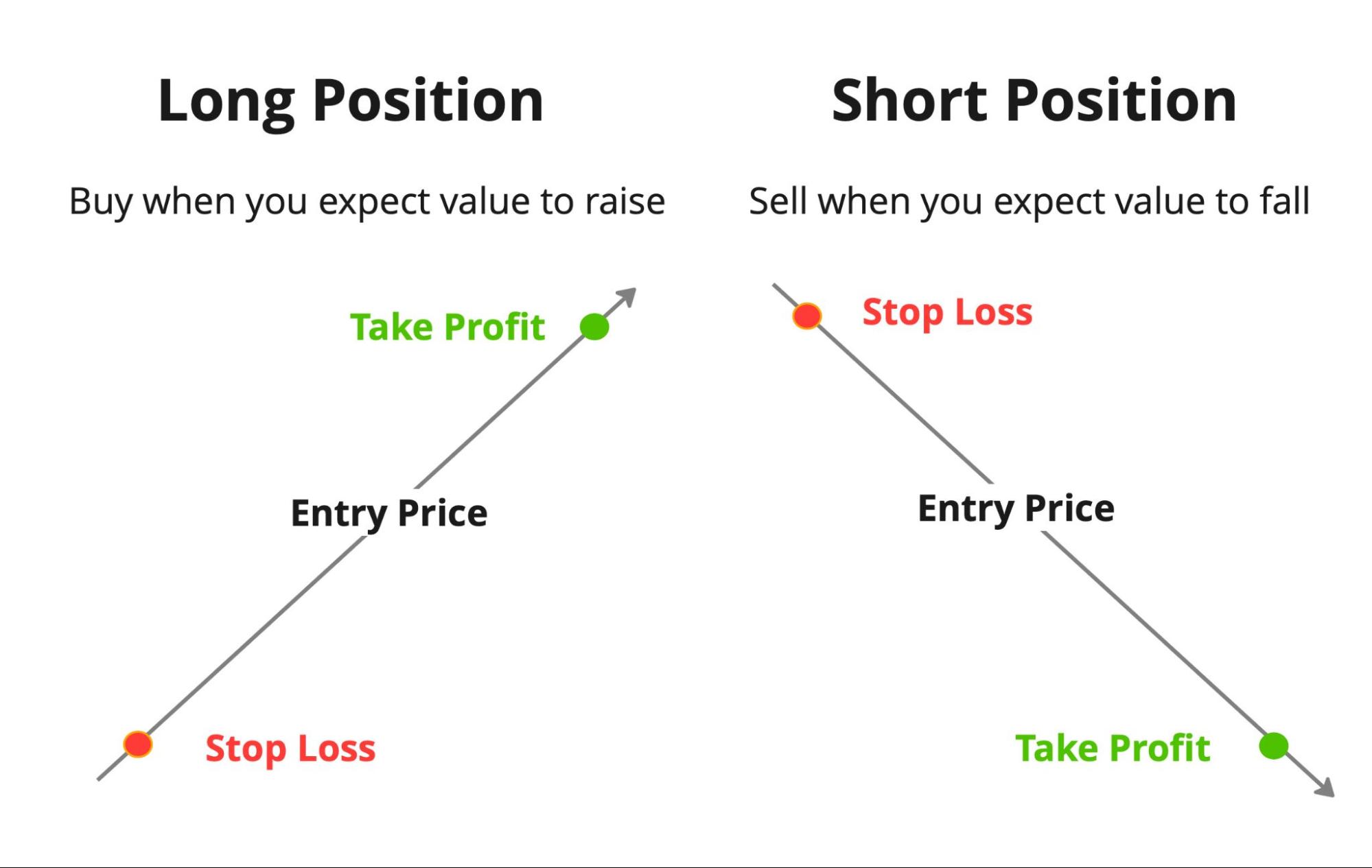
- Market Outlook: Longs thrive in bullish environments where prices are expected to rise. On the other hand, shorts target bearish scenarios like corrections or crashes, profiting from downward momentum driven by news or overvaluation.
- Entry Logic: Traders enter longs by buying the asset outright or via futures, holding until prices rise, for a simple buy-low, sell-high strategy. Shorts reverse this: they borrow or synthetically sell high first, then repurchase lower to return the asset, capturing the spread, but this requires precise timing.
- Risk Level: Longs cap losses at the invested capital in spot trading (prices can’t go below zero), though leverage adds liquidation risk. Meanwhile, shorts expose traders to unlimited losses since prices can surge indefinitely, compounded by margin calls and forced liquidations.
- Profit Potential: Longs offer unlimited upside as assets like Bitcoin and ETH have historically multiplied in value. Shorts cap gains at the asset reaching zero, which is rare and slow in crypto, making outsized wins harder without leverage.
- Typical Time Horizon: Longs suit medium to long-term cholds, riding trends or HODLing through volatility. Meanwhile, short positions favor short-term trades, often using perpetual futures for quick scalps or swings in high volatility environments.
Here’s a summary of how long positions differ from short positions in crypto.
Long positions match bullish outlooks, profiting from rising prices in bull markets driven by hype, adoption, or supply squeezes. Short positions fit bearish views, gaining as prices fall amid fear, sell-offs, or corrections.
Market Outlook: Bullish vs Bearish
In bull markets, longs profit as assets like Bitcoin climb indefinitely on positive sentiment and demand outpacing supply. Shorts excel in bear markets, capturing drops when panic selling floods liquidity, though crypto’s wild swings demand precise timing, unlike steadier traditional markets.
Risk and Profit Potential
Long positions limit losses to invested capital, e.g., $ 10,000 drops to zero max. Meanwhile, shorts risk unlimited losses, such as being forced to buy back at double the price after a rally, potentially bankrupting accounts. For profits, long positions chase endless upside, anticipating ETH will go from $2,900 to $3,500; shorts anchor on asset zeroing out completely, which is rare and slow in the crypto market.
Long and Short Positions in Margin & Futures Trading
Long and short positions in margin and futures trading amplify gains or losses using borrowed funds, making them powerful yet risky tools in crypto.
In margin trading, traders deposit collateral (e.g., USDT or crypto) to borrow additional assets from an exchange. Long positions borrow stablecoins to buy more crypto, expecting price rises, and sell later to repay and profit. While short positions borrow crypto to sell high now, repurchase low later to return it, pocketing the difference.
In both margin and futures, tradesmen use leverage to amplify their gains. Some of the best crypto exchanges offer up to 125x leverage on major assets, giving traders room to get more profit than they normally would. Although it also means that losses are amplified with higher leverage.
Leverage multiplies exposure: 10x leverage on $1,000 collateral controls a $10,000 position. A 5% favorable move yields a $500 profit (50% return). However, if the trade goes the opposite direction, it loses half of its collateral fast.
The collateral backs the loan. Exchanges set maintenance margins (e.g., 20%). Adverse moves clean out this margin, triggering margin calls for more funds. If you ignore them, liquidation forces closure at market price, wiping collateral plus fees, which is common in the volatile crypto market.
Role of Leverage in Long and Short Trades
Leverage in long and short crypto trades multiplies both gains and losses by allowing control of larger positions with less capital. It uses borrowed funds from exchanges, expressed as ratios like 5x or 10x.
With a $1,000 margin at 10x leverage, a trader controls $10,000. A 5% price rise in a long (or drop in a short) yields $500 profit, which is a 50% return on margin. The same 5% adverse move causes a $500 loss, or 50% drawdown, facilitating liquidation.
While the idea of higher profit potential is attractive, higher leverage shrinks the margin buffer. 10x wipes out on a 10% wrong-way move. Losses stay within collateral in isolated modes but can go beyond it in cross-margin setups.
What Traders Often Get Wrong About Long and Short Trading
Below are some of the most common things traders get wrong when dealing with long and short positions.
- Treating shorts as reverse longs: Short positions have a different risk profile from longs. While losses on long trades are limited to the capital invested, short trades have theoretically unlimited risk since prices can keep rising. Applying the same position sizing and risk rules to both can quickly lead to outsized losses.
- Poor timing, especially on short trades: Markets tend to move upward over time, making short positions far more sensitive to timing. Even when a trader’s analysis is correct, entering a short too early can result in liquidation before the expected price drop happens.
- Ignoring funding rates and holding costs: In perpetual futures trading, funding rates can significantly impact profitability. Traders often focus on price movement while overlooking how negative funding can slowly eat into gains or increase losses, especially when positions are held for long periods.
- Letting emotions drive decisions: Fear and greed affect longs and shorts differently. Shorts can trigger panic due to rapid price spikes, while profitable longs may encourage overconfidence and delayed exits. Emotional reactions often replace disciplined execution, leading to impulsive entries and exits.
- Overconfidence after early wins: Experentially, a few successful trades can create a false sense of mastery. Traders may increase leverage, ignore stop-losses, or take lower-quality setups. This overconfidence is especially dangerous in short trading, where small mistakes can lead to large losses.
Best Platforms for Long and Short Crypto Trading (2026)
When it comes to opening long and short positions in crypto markets, you can generally choose between centralized exchanges (CEXs) and decentralized trading protocols (DEXs). Both options allow leveraged positions and directional bets, but they differ significantly in how they operate, who controls your funds, and the kinds of tools and user experience they offer.
Centralized vs Decentralized Trading Platforms
Here’s a clear comparison of the two approaches:
Custody of Funds
Centralized exchanges hold and manage your assets for you once you deposit them. This makes trading quick and straightforward, but it means you’re trusting the platform with custody of your funds. On the other hand, decentralized protocols let you trade directly from your own wallet. You retain control of your keys, meaning you have full custody, but also full responsibility for your wallet and the assets therein.
Ease of Use
Centralized platforms offer polished, beginner-friendly interfaces with clear order forms, TradingView integration with charts and technical indicators, and help resources. While decentralized trading platforms can feel more technical, requiring users to connect wallets, manage approvals, and understand network fees.
Security Model
CEXs concentrate user assets in their own wallets. While many work hard to secure funds, this centralization has made them target points for hacks or internal mismanagement. On the flip side, DEXs operate via smart contracts on blockchain networks, reducing single points of failure. However, users must trust the contract code and be aware of risks like exploitable bugs.
Liquidity and Order Types
Centralized exchanges often have deeper liquidity and a broader suite of order types (e.g., stop-loss, trailing stops), which can benefit active traders. Meanwhile, decentralized exchanges are improving rapidly, and some now offer competitive liquidity through automated market maker (AMM) models or aggregated liquidity pools. Advanced order types are also emerging on DEXs but are not yet as standardized as on CEXs.
Learning Curve
Centralized platforms are usually easier for beginners because they mirror traditional trading systems and handle technical details behind the scenes. They also provide in-depth educational resources to help traders familiarize themselves with the platform. On the flip side, decentralized trading requires familiarity with wallets, gas fees, network settings, and smart contract interactions, which can take time to master.
Common Mistakes When Going Long vs Going Short
Understanding the common mistakes traders make when going long and short and how to manage risk around them can help you avoid unnecessary losses.
Common mistakes when going long
- Skipping stop-losses in strong markets: Many traders assume bullish trends will continue and avoid placing stop-losses. When the market reverses suddenly, losses can grow quickly. Even in strong uptrends, pullbacks and sharp corrections are normal.
- Over-leveraging due to confidence in upside: Long trades often feel safer because prices tend to rise over time. This can tempt traders to use excessive leverage, increasing the risk of liquidation during normal market dips.
- Holding losers too long: Traders may refuse to exit losing long positions, believing the market will eventually recover. This mindset can turn small, manageable losses into significant losses.
- Taking profits too late: Greed often leads traders to ignore profit targets. When momentum fades, unrealized gains can disappear before an exit is made.
Common mistakes when going short
- Underestimating upside risk: Unlike longs, short positions have unlimited loss potential. Many traders fail to adjust position size accordingly, exposing themselves to outsized losses during sudden price spikes.
- Shorting too early: Being early on a short trade can be just as costly as being wrong. Markets can remain irrational longer than expected, and early shorts are often stopped out before the anticipated downturn occurs.
- Ignoring funding and carry costs: Shorts frequently face unfavorable funding rates, especially in bullish conditions. Holding a short position without accounting for these costs can slowly erode capital.
- Emotional exits during short squeezes: Sharp upward moves can trigger panic, leading traders to exit shorts at the worst possible moment. Emotional decision-making often replaces planned risk controls.
Risk management best practices for both strategies
- Always define risk before entering a trade by setting stop-loss levels based on structure, not emotions.
- Use leverage conservatively, especially in volatile markets. Lower leverage provides more room for price fluctuations.
- Size positions based on risk, not conviction, ensuring no single trade can cause significant damage to your account.
- Stick to a trading plan with clear entry, exit, and profit-taking rules to reduce emotional reactions.
Long and short trading each come with unique challenges, but disciplined risk management can give you a solid foundation no matter the strategy you are using.
Do You Need to Trade Long or Short to Profit?
It’s easy to assume that successful traders are constantly opening long and short positions, reacting to every price move. However, long and short trading is not a requirement for profitability, but only one of many ways to participate in the crypto market.
For instance, many crypto investors never actively trade. Instead, they take a long-term approach, buying the best long-term cryptos they believe in and holding them through market cycles. Others lean toward passive or automated strategies that reduce hands-on involvement or constant monitoring.
These approaches use predefined rules or systems to manage exposure, rebalance portfolios, or execute trades automatically. Automated strategies also minimize emotional input, which in turn, helps investors avoid common mistakes such as panic selling or chasing short-term price movements.
At the end of the day, profitability is not hinged on whether you trade long or short. It is determined by how well your approach aligns with your goals, risk tolerance, and available time.
FAQ: Long and Short in Crypto TradingWhat Is an Example of a Long Position in Crypto?
A long position in crypto means buying a cryptocurrency with the expectation that its price will increase so you can sell later at a profit. For example, imagine BTC is trading at $80,000. A trader opens a long position by buying 1 BTC at this price. If Bitcoin rises to $85,000, the trader closes the position and makes a $5,000 profit before fees.
If Bitcoin instead falls to $78,000 and the trader exits the position, the loss would be $2,000. This is a standard BTC long trade: buy first, profit if the price goes up. When comparing BTC longs vs shorts or ETH longs vs shorts, the key difference is direction. Long positions profit from rising prices, while short positions profit when prices fall.
How to Long and Short in Crypto?
To long or short crypto, traders decide whether to buy an asset expecting its price to rise (long) or sell it expecting the price to fall (short). The decision is based on technical analysis, market sentiment, market cycles, and personal risk tolerance.
Technical analysis is one of the most common decision tools. Traders study price charts, trends, support and resistance levels, and indicators like moving averages or RSI to identify potential entry and exit points. A long trade is often taken when price shows strength or an upward trend, while a short trade is considered when price shows weakness or signs of reversal.
Market sentiment also plays a major role by reflecting how traders and investors feel about the market, whether optimistic or fearful. Strong bullish sentiment often supports long positions, while excessive optimism can signal potential pullbacks. Bearish sentiment, panic selling, or negative news may create short-selling opportunities.
Market cycles help traders understand the broader context. Crypto markets move through accumulation, uptrend, distribution, and downtrend phases. Long positions are more common during uptrends and early recovery phases, while short positions are mostly used during downtrends or late-cycle distribution periods.
Risk tolerance determines how aggressive a trader can be. Long positions generally carry lower risk because losses are limited to the amount invested. Short positions involve higher risk since prices can rise sharply and unexpectedly. Traders with lower risk tolerance often favor long trades or smaller position sizes.
Are Long Puts Bullish or Bearish?
A long put is bearish. In options trading, a long put means buying a put option because you expect the price of an asset to fall. When the underlying asset declines, the value of the put option increases, allowing the trader to sell the option at a higher price or exercise it for profit.
For example, if a trader buys a put option on an asset trading at $100 and the price drops to $85, the put becomes more valuable because it gives the right to sell the asset at the higher strike price. If the asset rises instead, the put loses value, and the maximum loss is limited to the premium paid.
In simple terms, long puts are bearish because they profit from falling prices, while long calls are bullish because they profit from rising prices.
Conclusion: Understanding Long and Short in Crypto (2026)
Long and short trading in crypto offers opportunities to profit from both rising and falling markets, but it also carries distinct risks. Long positions benefit from price increases, while short positions profit from declines, yet shorts often involve higher risk due to unlimited potential losses.
Successful trading requires careful consideration of technical analysis, market sentiment, cycles, and personal risk tolerance. And you can’t properly achieve these, without the proper knowledge, which is why education is crucial.
Understanding how long and short positions work, how funding rates and leverage affect trades, and the differences between centralized and decentralized platforms can prevent costly mistakes. Equally important is disciplined risk management, including position sizing, stop-losses, and clear exit strategies.