
Here’s the first of six primers for the election year ahead, with one each day of this first week back, including:
-
Monday (Today below) – #1 The Economy: PM Christopher Luxon promised 2025 would be a year of ‘growth, growth, growth,’ but real disposable income per capita fell slightly again for a second year. Some improvement is (again) expected in 2026, but the usual suspects to fire up real growth, house price and migration-led population growth, are both missing in action early in an election year.
-
Tuesday – #2 Politics: Luxon kept his job through 2025, despite an aborted discussion in National’s caucus about swapping him out for Chris Bishop in late November. The Prime Minister remains the least popular elected leader in our political history at this point in a first term, but enthusiasm among voters and his caucus for a replacement is barely any higher.
-
Wednesday – #3 Housing: Homelessness doubled in Auckland and worsened elsewhere in 2025 as the Government’s closure of motels and slashing of housing grants in 2024 took effect. Building of more affordable and social housing remains mostly stalled, but falling rents are expected to provide some short-term relief, albeit because of stagnant employment and low(er) population growth.
-
Thursday – #4 Costs of Living: The Government, councils and power companies administered inflation of 10% in fees, rates and prices in 2025, which delayed and shrunk mortgage rate reductions late in the year. The Reserve Bank has signalled no more rate cuts in 2026, which pushed up fixed mortgage rates in late December.
-
Friday: #5 Economic & tax reform: Fonterra sold its consumer brands and 16 factories late in 2025, giving up on adding value to its mostly commodity exports so farmers could repay debt and convert more land into farms. Neither major party is signalling the substantial tax reform for land values that would change the fundamental incentives for investment to improve productivity.
-
Saturday: #6 A second term beckons: The governing National-NZ First-Act coalition kept its lead over the Labour-Green-Te Pāti Māori Opposition in most opinion polls in 2025, and would have been re-elected if those polls were replicated in an election due before December 19 this year. A second term for National-NZ First-Act depends on at least some real economic growth feeling meaningful for voters, along with an ongoing lack of enthusiasm for Labour and Green policies, and ongoing division within a broken Te Pāti Māori.
I’ve opened up this Primer #1 for 2026 for all paying subscribers, free subscribers and non-subscribers to read immediately in full below and to listen to in podcast form above. I’ll open up all of these six Primers for 2026 this week immediately and to all if we get 100 likes on this one. I can’t do this every day, but appreciate the support of paying subscribers to allow me to do this on occasion in the public interest.
2025 was supposed to be the year the economy ramped up into growth mode to boost jobs and real incomes that contracted in 2024. Instead, overall GDP stagnated and real gross national disposable income per capita fell again slightly.
The year started with a hiss and a roar and plenty of speeches in hotel conference rooms, including an international investment conference in March that yielded little by year end.
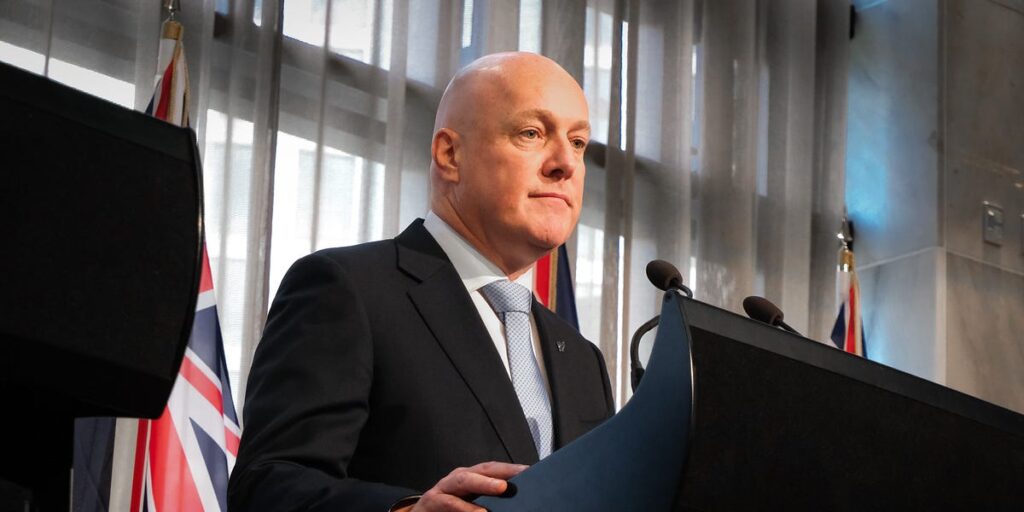
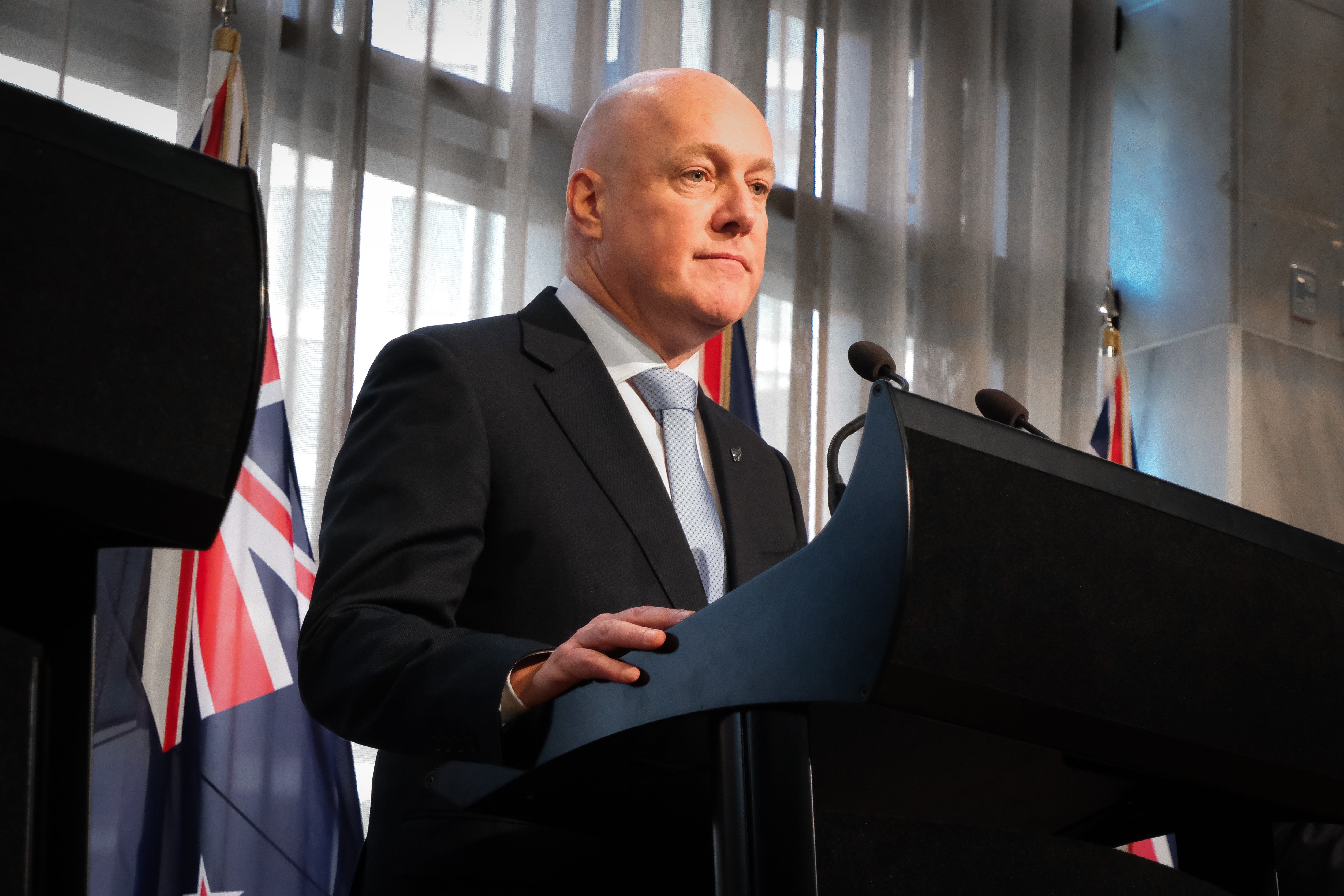
PM Christopher Luxon promised 2025 would year of ‘growth, growth, growth’ in a speech on January 28, trying to reset the political momentum after a contraction in 2024 caused by the Reserve Bank’s tight monetary policy combined with the start of a fiscal contraction worth 0.35% of GDP in the year to June 30, 2025.
But Real Gross National Disposable Income per capita in the year to the end of September fell 0.5% from the previous year, and was still 0.05% below GNDI in the last year of the previous Labour Government.
The Luxon-Willis doctrine for the economy is to repeat the recipe adopted by both National and Labour Governments after recessions since 1990. They have constrained growth in Government spending to reduce public borrowing in the expectation that this will help interest rates fall even further. In turn, this was designed tempt households and businesses to step forward and replace debt-funded Government stimulus with private stimulus for the economy in the form of spending, investment, employment and wage growth funded with mortgages and business or farming loans.
It worked in the wake of the 1990/91, 1997/98, 2007/08 and 2020 recessions because firstly businesses (1991-2000 & 2002-08) and then households (especially from early 2000s onwards) were able to reinvest profits and/or borrow significantly more to pump extra money through the economy and fire up growth in consumer spending and house-buying and building.
That increase in household debt was possible and encouraged through the early 2000s as banks unshackled from lending and capital controls increased household debt from 60% of disposable income in 1990 to almost 180% by 2009. Since 2013, the Reserve Bank has restricted household borrowing through Loan to Value Ratio (LVR) and now Debt to Income (DTI) Ratio controls to reduce financial stability risks.
It removed the controls just briefly in 2020, which sparked the biggest bout of house price inflation in our history. Those controls are now firmly back on, including the DTI introduced last year, which is design to subdue lending growth to rental property investors as interest rates fall. There was an business and Government investment surge from 2013 to 2017 or so, but that was largely driven by $40 billion of reinsurance payments coming into New Zealand after the Canterbury earthquakes.
Businesses have also been reluctant to invest heavily since Covid, with net bank lending to businesses and farmers actually falling over the last five years. Spare household, business and farmer cash has often been used to repay debt and to build up term deposits and savings accounts. Small businesses used to accessing rising home equity to fund investment or tide over losses have been confronted by a 26% fall in real house prices in the past four years.
In essence, the growth model the Government is relying on doesn’t work any more. There may be some modest lending growth to households this year, but not enough to generate significant growth in house sales volumes and prices. For homeowners, the last four years has turned from an interest rate shock to a balance sheet recession without an obvious end, given house prices are not expected to recover to their real peak in late 2021 for at least another 15 years. For businesses and farmers, they are using any extra cash from the likes of the Fonterra capital return to repay debt, mostly.
There are green shoots appearing in some areas, but another slowdown in housing market activity in November and December, as well as a rise in fixed mortgage rates just before Christmas, may have exposed those green shoots to some mid-summer hot breezes.
The Jim Bolger-led Government used the consolidation strategy most aggressively in 1990 to 1993 and was rescued by economic growth of 6.4% in 1993, thanks largely to a currency devaluation and rising exports. This year begins with dairy farmers repaying debt and job creation only just barely above zero. It may not be enough to be judged as ‘growth, growth, growth,’ but it gives the Government a platform to base an attack on the Opposition as not in a fit state to govern.
I’ll look at this more in the primers in the coming days.
Ka kite ano
Bernard